THE ADVENTURE COLLECTIVE® · Independent discovery and booking for outdoor travel

The Museum of Fine Arts, Houston stretches across a lively 14-acre campus where three distinct buildings host global art from ancient tapestries to contemporary installations. This all-access ticket gives you self-guided entry to permanent collections and current traveling exhibitions.
The Museum of Fine Arts, Houston stretches across a lively 14-acre campus where three distinct buildings host global art from ancient tapestries to contemporary installations. This all-access ticket gives you self-guided entry to permanent collections and current traveling exhibitions.
You enter through wide glass and a plaza that opens like a city room — concrete, live oaks and the occasional sculpture punctuating the air. Inside, galleries branch into different eras and geographies: medieval tapestries in one wing, glazed ceramics in another, and modern canvases that seem to tilt toward the skylights. The campus feels deliberate: three buildings stepping down a 14-acre site, each with a different tempo.
Verified experiences and guided adventures in the surrounding area.
Operated by The Museum of Fine Arts, Houston · Houston, Texas
You enter through wide glass and a plaza that opens like a city room — concrete, live oaks and the occasional sculpture punctuating the air. Inside, galleries branch into different eras and geographies: medieval tapestries in one wing, glazed ceramics in another, and modern canvases that seem to tilt toward the skylights. The campus feels deliberate: three buildings stepping down a 14-acre site, each with a different tempo.
Founded at the turn of the 20th century, the Museum of Fine Arts, Houston has grown alongside the city’s cultural arc. The Caroline Wiess Law Building houses collections from Asia, Africa, and the Americas; the Audrey Jones Beck Building holds older European and American works; and the Nancy and Rich Kinder Building—opened recently—centers modern and contemporary art. Geologically, you’re on the Gulf Coastal Plain, where flat streets and bayous shaped the city’s expansion; architecturally the campus responds with shaded plazas and reflecting pools.
Local culture shows in rotating exhibitions and community programs; current highlights include the Pavia Tapestries and a Toshiko Takaezu retrospective. Expect a self-guided, museum-pace visit: moments of quiet study in galleries, brief crowds at special exhibitions, and a pause at the sculpture garden.
Practical guidance: exchange your voucher at the admissions desk at 5601 Main Street, allow 1–4 hours depending on your interest, and plan for paid parking or public transit. Wear comfortable shoes, carry a small water bottle, and check gallery rules—some exhibitions restrict flash photography. The museum is wheelchair- and stroller-accessible and offers café and shop options for breaks between galleries.
easy.
1–4 hours.
Suitable for all fitness levels; mostly walking on paved indoor/outdoor surfaces.
Show the mobile or printed voucher at any open admissions desk at 5601 Main Street to exchange it for your entry ticket.
No — parking fees are not included in the ticket price; check mfah.org for the latest parking options and rates.
Yes, the museum buildings and outdoor sculpture areas are wheelchair-accessible; ask admissions staff about additional services and accessible restrooms.
Yes, the All Access admission grants entry to permanent collections and special traveling exhibitions that are open on the date of your visit.
The Museum of Fine Arts, Houston was founded in 1900 and has expanded into a multi-building campus on a 14-acre site; the Nancy and Rich Kinder Building opened recently to house modern and contemporary collections.
The museum maintains strict climate control and handling standards to protect collections; visitors are encouraged to follow gallery rules, avoid flash photography in sensitive exhibitions, and support conservation through donations or membership.
The Museum of Fine Arts, Houston operates guided outdoor trips and adventures with an emphasis on safety, stewardship, and memorable experiences.

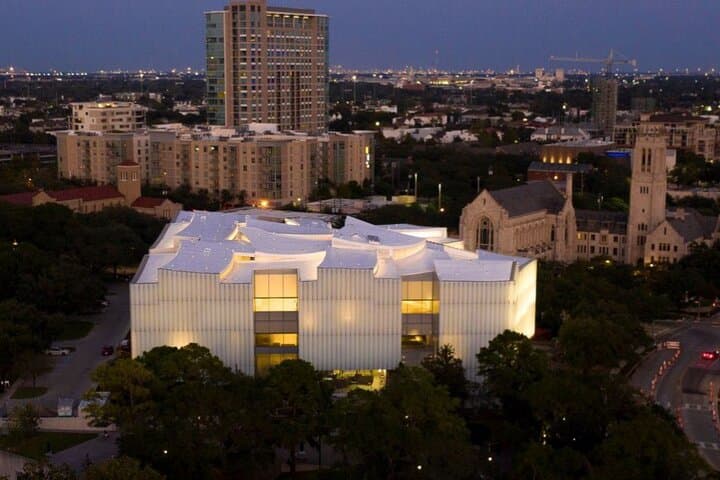


You enter through wide glass and a plaza that opens like a city room — concrete, live oaks and the occasional sculpture punctuating the air. Inside, galleries branch into different eras and geographies: medieval tapestries in one wing, glazed ceramics in another, and modern canvases that seem to tilt toward the skylights. The campus feels deliberate: three buildings stepping down a 14-acre site, each with a different tempo.
You enter through wide glass and a plaza that opens like a city room — concrete, live oaks and the occasional sculpture punctuating the air. Inside, galleries branch into different eras and geographies: medieval tapestries in one wing, glazed ceramics in another, and modern canvases that seem to tilt toward the skylights. The campus feels deliberate: three buildings stepping down a 14-acre site, each with a different tempo.
Founded at the turn of the 20th century, the Museum of Fine Arts, Houston has grown alongside the city’s cultural arc. The Caroline Wiess Law Building houses collections from Asia, Africa, and the Americas; the Audrey Jones Beck Building holds older European and American works; and the Nancy and Rich Kinder Building—opened recently—centers modern and contemporary art. Geologically, you’re on the Gulf Coastal Plain, where flat streets and bayous shaped the city’s expansion; architecturally the campus responds with shaded plazas and reflecting pools.
Local culture shows in rotating exhibitions and community programs; current highlights include the Pavia Tapestries and a Toshiko Takaezu retrospective. Expect a self-guided, museum-pace visit: moments of quiet study in galleries, brief crowds at special exhibitions, and a pause at the sculpture garden.
Practical guidance: exchange your voucher at the admissions desk at 5601 Main Street, allow 1–4 hours depending on your interest, and plan for paid parking or public transit. Wear comfortable shoes, carry a small water bottle, and check gallery rules—some exhibitions restrict flash photography. The museum is wheelchair- and stroller-accessible and offers café and shop options for breaks between galleries.