THE ADVENTURE COLLECTIVE® · Independent discovery and booking for outdoor travel

Stand beside the world’s largest carved Buddha on a private day trip from Chengdu. This guide explains what to expect—travel time, site layout, history and practical tips to make the most of your visit.
Stand beside the world’s largest carved Buddha on a private day trip from Chengdu. This guide explains what to expect—travel time, site layout, history and practical tips to make the most of your visit.
Morning light slices across the river and the cliff face where the Leshan Giant Buddha watches three rivers meet. On arrival you step into a scale that compresses time: carved by hand over centuries, the statue’s head alone takes several minutes to circle. The guide leads you down narrow staircases, past weathered stone and moss, and the air carries the river’s hush—currents daring you to look closer.
Verified experiences and guided adventures in the surrounding area.
Operated by Private China Tours · Leshan, Sichuan
Morning light slices across the river and the cliff face where the Leshan Giant Buddha watches three rivers meet. On arrival you step into a scale that compresses time: carved by hand over centuries, the statue’s head alone takes several minutes to circle. The guide leads you down narrow staircases, past weathered stone and moss, and the air carries the river’s hush—currents daring you to look closer.
Carved during the Tang Dynasty (8th century) into Lingyun Mountain, the 71-meter sculpture was designed to calm the powerful confluence below. The cliff’s sandstone and lateritic bedrock tell a geological story of river erosion and human engineering; drainage channels hidden in the Buddha’s hair prevent rain damage. Culturally, Leshan is a pilgrimage site and an emblem of Sichuan’s Buddhist heritage, framed by local communities and regional cuisine served nearby.
Practical guidance: the trip includes about a 2.5-hour drive from Chengdu (≈160 km) each way and 3 hours on-site; walking from the statue’s head to torso takes roughly 35 minutes, then another 35 to the feet. Expect many stairs, uneven stone paths and viewpoints with narrow ledges. Consider a short river cruise for a frontal view (extra cost).
Bring sunscreen, small cash for vendors, and allow time for photography and a relaxed lunch at the included local restaurant. Passport and accurate booking details are required for ticketing. The private format gives flexibility for pace and photo stops—plan mornings for cooler light and fewer crowds.
easy.
8–9 hours.
Light to moderate fitness; able to manage long stair descents and climbs and several hours on foot.
The private transfer is approximately 2.5 hours each way (about 160 km), depending on traffic and road conditions.
Entrance fees to the Leshan Giant Buddha are included in this tour, but optional river cruises are paid locally.
The site is suitable for most ages but involves many stairs and uneven surfaces; those with mobility issues should plan carefully or enjoy viewpoints instead.
Yes—passport details are required at booking and the physical passport must be carried on the day for ticketing and verification.
Carved during the Tang Dynasty to placate river currents, the Buddha reflects both Buddhist devotion and large-scale medieval engineering.
Heavy visitation stresses the sandstone and local infrastructure; stick to marked paths, avoid touching carved stone, and support local conservation efforts by using official services.
Private China Tours operates guided outdoor trips and adventures with an emphasis on safety, stewardship, and memorable experiences.
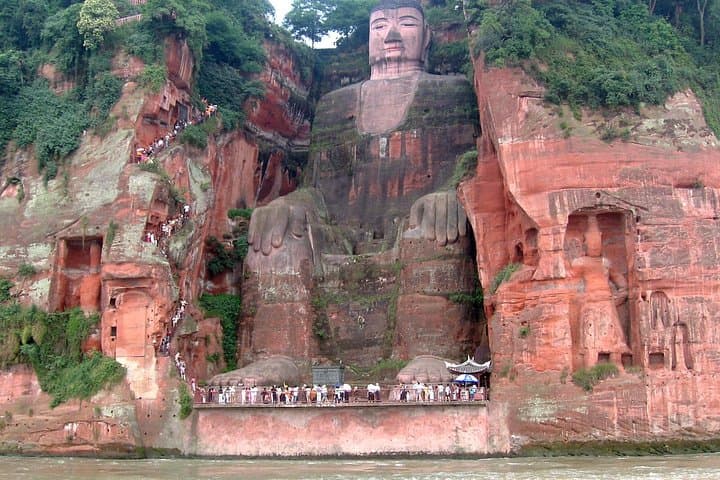
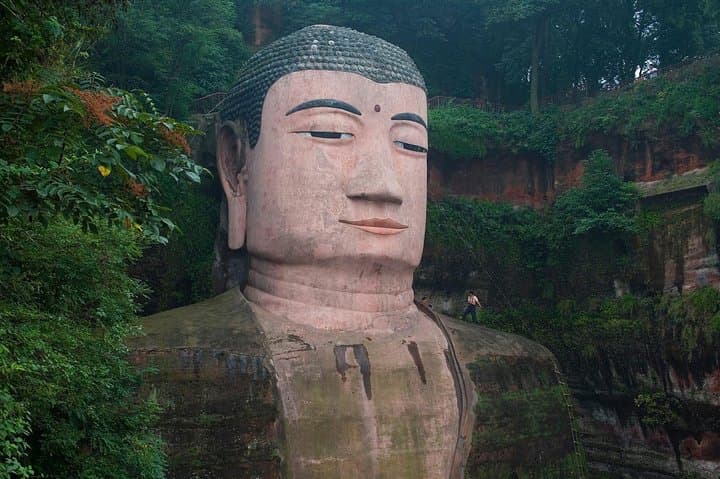
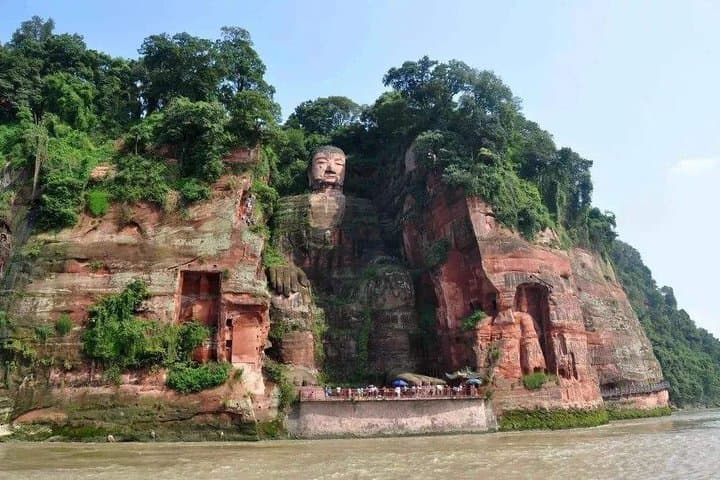
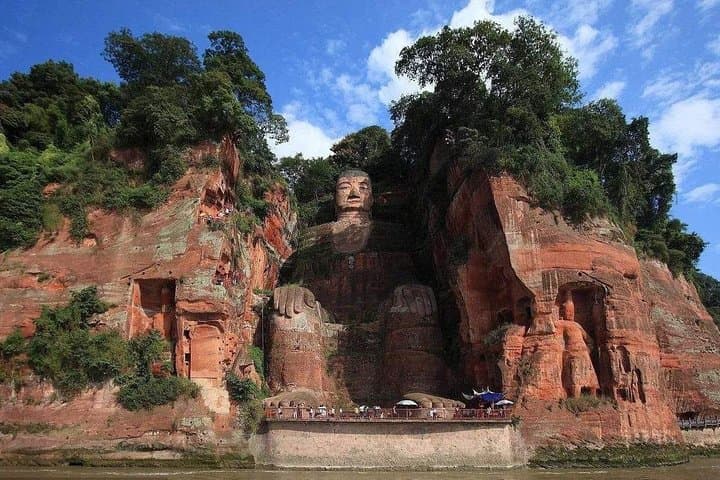
Morning light slices across the river and the cliff face where the Leshan Giant Buddha watches three rivers meet. On arrival you step into a scale that compresses time: carved by hand over centuries, the statue’s head alone takes several minutes to circle. The guide leads you down narrow staircases, past weathered stone and moss, and the air carries the river’s hush—currents daring you to look closer.
Morning light slices across the river and the cliff face where the Leshan Giant Buddha watches three rivers meet. On arrival you step into a scale that compresses time: carved by hand over centuries, the statue’s head alone takes several minutes to circle. The guide leads you down narrow staircases, past weathered stone and moss, and the air carries the river’s hush—currents daring you to look closer.
Carved during the Tang Dynasty (8th century) into Lingyun Mountain, the 71-meter sculpture was designed to calm the powerful confluence below. The cliff’s sandstone and lateritic bedrock tell a geological story of river erosion and human engineering; drainage channels hidden in the Buddha’s hair prevent rain damage. Culturally, Leshan is a pilgrimage site and an emblem of Sichuan’s Buddhist heritage, framed by local communities and regional cuisine served nearby.
Practical guidance: the trip includes about a 2.5-hour drive from Chengdu (≈160 km) each way and 3 hours on-site; walking from the statue’s head to torso takes roughly 35 minutes, then another 35 to the feet. Expect many stairs, uneven stone paths and viewpoints with narrow ledges. Consider a short river cruise for a frontal view (extra cost).
Bring sunscreen, small cash for vendors, and allow time for photography and a relaxed lunch at the included local restaurant. Passport and accurate booking details are required for ticketing. The private format gives flexibility for pace and photo stops—plan mornings for cooler light and fewer crowds.