THE ADVENTURE COLLECTIVE® · Independent discovery and booking for outdoor travel

Walk a garden where thousands of carved stone heads stare back. The Enchanted Castle of Sciacca is an open-air museum of art brut by Filippo Bentivegna — an unforgettable, accessible experience on the slopes of Mount Kronio.
Walk a garden where thousands of carved stone heads stare back. The Enchanted Castle of Sciacca is an open-air museum of art brut by Filippo Bentivegna — an unforgettable, accessible experience on the slopes of Mount Kronio.
A dry wind from the slopes of Mount Kronio stirs olive branches as you step through a low gate and into a garden where stone heads watch you move. The Castello Incantato is less a building and more an open-air gallery: thousands of carved faces and shaped trunks rise from terraces, sunk into terraces of almond trees and scrub, each one carrying the blunt, direct hand of Filippo Bentivegna.
Verified experiences and guided adventures in the surrounding area.
Operated by CASTELLO INCANTATO · Sciacca, Sicily
A dry wind from the slopes of Mount Kronio stirs olive branches as you step through a low gate and into a garden where stone heads watch you move. The Castello Incantato is less a building and more an open-air gallery: thousands of carved faces and shaped trunks rise from terraces, sunk into terraces of almond trees and scrub, each one carrying the blunt, direct hand of Filippo Bentivegna.
Bentivegna — locally known as “Philip of the heads” — worked in the tradition labeled art brut, creating roughly 3,000 sculptures that cluster, pile and stand alone across the hillside. The site sits on the western flank of Sicily, where volcanic soils from ancient activity around Mount Kronio give way to limestone outcrops, and the landscape alternates between terraced orchard and rough scrub.
Culturally the garden is a local oddity: part folk expression, part private monument, opened to the public as a museum-garden experience. Expect to move slowly; the most compelling views come from pausing at a rim overlooking Sciacca’s coastal plain.
Practical guidance: visits typically run about 60 minutes — enough to see the main groupings without rushing. The paths are generally flat but uneven in places; the site is listed as accessible, yet some routes may challenge a wheelchair. Bring sun protection, carry water in summer, and treat every sculpture as fragile: don’t climb or lean on works. Tickets are mobile-friendly; confirm pickup details if you prefer a printed voucher. The Castello Incantato rewards unhurried observation — look closely and the faces begin to answer back.
easy.
1 hour.
Accessible to most visitors; some short uneven pathways mean basic mobility and balance are useful
The standard visit is about 60 minutes, enough to see the primary sculpture groupings and take photos at a relaxed pace.
The museum lists wheelchair access, but some outdoor paths are uneven; contact the venue ahead of time to confirm route accessibility and assistance options.
Service animals are allowed; other pets may have restrictions—check the museum’s policy before bringing non-service animals.
Tickets are available as mobile entry and are often sold for a specific time; booking ahead is recommended during peak season to guarantee entry.
The collection was created over decades by Filippo Bentivegna, an outsider artist whose carved heads and altered tree trunks grew into a landscape-scale exhibition of art brut.
The sculptures are exposed to weathering and visitor impact; stick to paths, avoid touching works, and support local preservation efforts when offered.
CASTELLO INCANTATO operates guided outdoor trips and adventures with an emphasis on safety, stewardship, and memorable experiences.
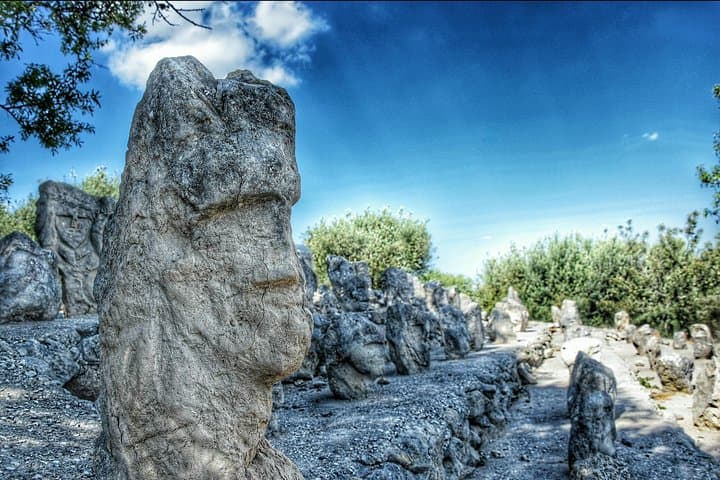
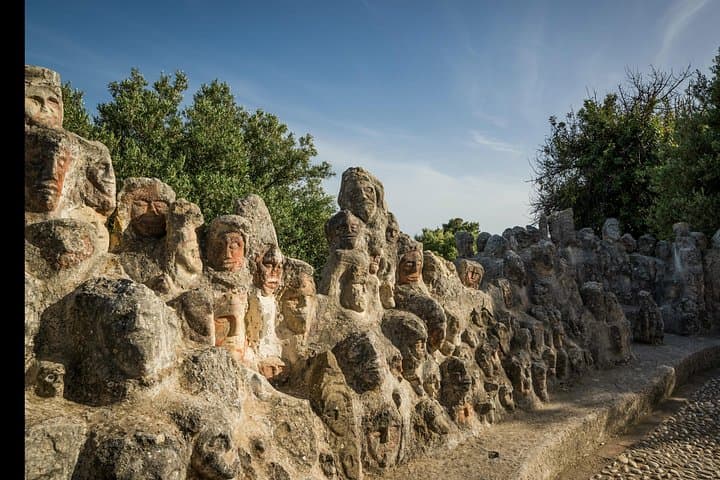
A dry wind from the slopes of Mount Kronio stirs olive branches as you step through a low gate and into a garden where stone heads watch you move. The Castello Incantato is less a building and more an open-air gallery: thousands of carved faces and shaped trunks rise from terraces, sunk into terraces of almond trees and scrub, each one carrying the blunt, direct hand of Filippo Bentivegna.
A dry wind from the slopes of Mount Kronio stirs olive branches as you step through a low gate and into a garden where stone heads watch you move. The Castello Incantato is less a building and more an open-air gallery: thousands of carved faces and shaped trunks rise from terraces, sunk into terraces of almond trees and scrub, each one carrying the blunt, direct hand of Filippo Bentivegna.
Bentivegna — locally known as “Philip of the heads” — worked in the tradition labeled art brut, creating roughly 3,000 sculptures that cluster, pile and stand alone across the hillside. The site sits on the western flank of Sicily, where volcanic soils from ancient activity around Mount Kronio give way to limestone outcrops, and the landscape alternates between terraced orchard and rough scrub.
Culturally the garden is a local oddity: part folk expression, part private monument, opened to the public as a museum-garden experience. Expect to move slowly; the most compelling views come from pausing at a rim overlooking Sciacca’s coastal plain.
Practical guidance: visits typically run about 60 minutes — enough to see the main groupings without rushing. The paths are generally flat but uneven in places; the site is listed as accessible, yet some routes may challenge a wheelchair. Bring sun protection, carry water in summer, and treat every sculpture as fragile: don’t climb or lean on works. Tickets are mobile-friendly; confirm pickup details if you prefer a printed voucher. The Castello Incantato rewards unhurried observation — look closely and the faces begin to answer back.