THE ADVENTURE COLLECTIVE® · Independent discovery and booking for outdoor travel

Climb the canopy tower, stroll elevated walkways and learn why the Daintree is a living window into Earth’s botanical past. This practical guide covers what to expect, how to prepare, and where to look for wildlife during a two-hour visit.
Climb the canopy tower, stroll elevated walkways and learn why the Daintree is a living window into Earth’s botanical past. This practical guide covers what to expect, how to prepare, and where to look for wildlife during a two-hour visit.
You step off the coastal road and the air changes—thick, green and almost tactile. Sunlight filters through layered leaves as the Daintree Discovery Centre’s aerial walkways lift you above the understory; the canopy tower rises 23 metres, giving a view that demands a deep breath and a steady camera hand.
Verified experiences and guided adventures in the surrounding area.
Operated by Daintree Discovery Centre · Daintree, Queensland
You step off the coastal road and the air changes—thick, green and almost tactile. Sunlight filters through layered leaves as the Daintree Discovery Centre’s aerial walkways lift you above the understory; the canopy tower rises 23 metres, giving a view that demands a deep breath and a steady camera hand.
Opened in 1989, the Centre is an early leader in ecotourism and interpretation, built to reveal one of the world’s oldest lowland rainforests. Geologically the Daintree sits on ancient soils that predate many modern plant lineages; botanically it’s a living link to Gondwana. The local Kuku Yalanji people have managed this landscape for millennia—look for cultural notes in the displays and bush tucker interpretation.
The typical visit moves from interactive exhibits to self-guided audio trails, then out onto the aerial walkway and canopy tower. Short circuits—like the Cassowary walk and the Jurassic Forest—let you see understorey ferns, strangler figs and epiphytes up close, while listening towers creak and birds call.
Practically: allow two hours, arrive early to avoid the midday heat and school groups, and factor in the Daintree River ferry if coming from the south. Wear sturdy shoes for uneven boardwalks and bring a lightweight rain layer—tropical showers come fast. Keep to marked trails to protect habitat and give wildlife distance; cassowaries and other species are shy but present. The Centre is wheelchair-accessible in many areas and offers multilingual audio guides, making it an informative, low-effort way to experience this ancient rainforest.
easy.
2 hours.
Suitable for most fitness levels; involves walking on boardwalks and stairs but no technical hiking
The single pass is designed for about two hours, which covers interpretive displays, short walks, the aerial walkway and the canopy tower at a relaxed pace.
Yes—many exhibits and walkways are wheelchair accessible. Some elevated structures have stairs, so check on-site maps for fully accessible routes.
The pass is primarily for self-guided exploration with audio tours in multiple languages; check the Centre’s schedule for any specialist guided talks or events during your visit.
If you’re coming from the south (Cairns/Port Douglas), you will use the Daintree River ferry on the coastal road—allow a few extra minutes for the crossing, especially in peak season.
Established in 1989, the Centre helped pioneer rainforest interpretation and sustainable ecotourism; it highlights both scientific research and Kuku Yalanji cultural links to the land.
The Centre focuses on low-impact access and education to reduce visitor footprint; staying on boardwalks and avoiding feeding wildlife helps protect fragile understory communities.
Daintree Discovery Centre operates guided outdoor trips and adventures with an emphasis on safety, stewardship, and memorable experiences.
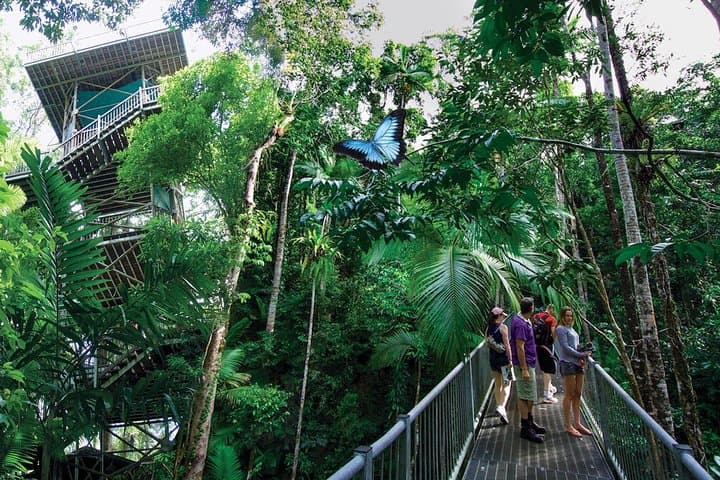
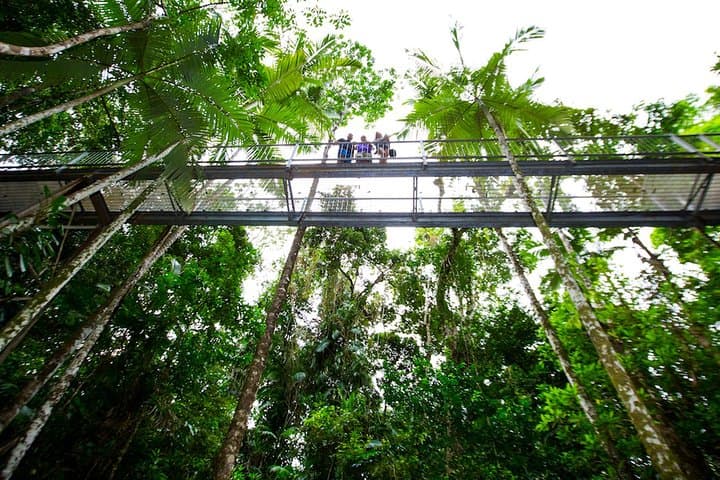
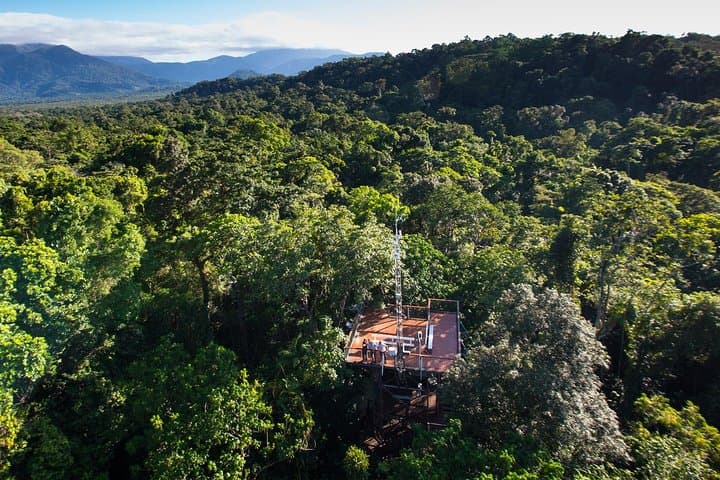
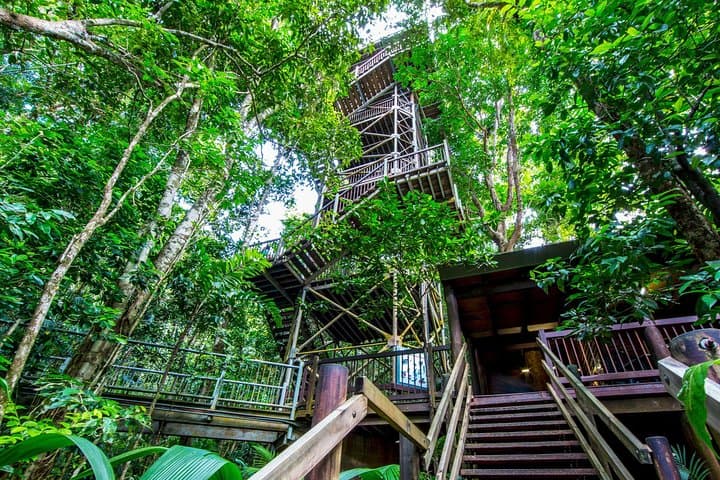
You step off the coastal road and the air changes—thick, green and almost tactile. Sunlight filters through layered leaves as the Daintree Discovery Centre’s aerial walkways lift you above the understory; the canopy tower rises 23 metres, giving a view that demands a deep breath and a steady camera hand.
You step off the coastal road and the air changes—thick, green and almost tactile. Sunlight filters through layered leaves as the Daintree Discovery Centre’s aerial walkways lift you above the understory; the canopy tower rises 23 metres, giving a view that demands a deep breath and a steady camera hand.
Opened in 1989, the Centre is an early leader in ecotourism and interpretation, built to reveal one of the world’s oldest lowland rainforests. Geologically the Daintree sits on ancient soils that predate many modern plant lineages; botanically it’s a living link to Gondwana. The local Kuku Yalanji people have managed this landscape for millennia—look for cultural notes in the displays and bush tucker interpretation.
The typical visit moves from interactive exhibits to self-guided audio trails, then out onto the aerial walkway and canopy tower. Short circuits—like the Cassowary walk and the Jurassic Forest—let you see understorey ferns, strangler figs and epiphytes up close, while listening towers creak and birds call.
Practically: allow two hours, arrive early to avoid the midday heat and school groups, and factor in the Daintree River ferry if coming from the south. Wear sturdy shoes for uneven boardwalks and bring a lightweight rain layer—tropical showers come fast. Keep to marked trails to protect habitat and give wildlife distance; cassowaries and other species are shy but present. The Centre is wheelchair-accessible in many areas and offers multilingual audio guides, making it an informative, low-effort way to experience this ancient rainforest.