THE ADVENTURE COLLECTIVE® · Independent discovery and booking for outdoor travel

A private day tour from Klaipėda that delivers the Curonian Spit’s dramatic dunes, fishermen’s villages and bird colonies in a single, customizable outing. Expect sand, sea light and cultural stops from the Hill of Witches to Thomas Mann’s house.
A private day tour from Klaipėda that delivers the Curonian Spit’s dramatic dunes, fishermen’s villages and bird colonies in a single, customizable outing. Expect sand, sea light and cultural stops from the Hill of Witches to Thomas Mann’s house.
You step out of the air‑conditioned minivan and the wind rearranges the dune-crests like an impatient sculptor; the Baltic glints to your left and the shallow lagoon stretches to the right. Sand whispers under your boots as your guide points to broomlike reeds, carved weather vanes on fishermen’s houses and a distant line of pines where wood-carved figures keep watch.
Verified experiences and guided adventures in the surrounding area.
Operated by Neringa Tours · Nida, Klaipėda County
You step out of the air‑conditioned minivan and the wind rearranges the dune-crests like an impatient sculptor; the Baltic glints to your left and the shallow lagoon stretches to the right. Sand whispers under your boots as your guide points to broomlike reeds, carved weather vanes on fishermen’s houses and a distant line of pines where wood-carved figures keep watch.
The Curonian Spit is a 98‑kilometre natural barrier—one of Europe’s largest moving dune systems—and a UNESCO World Heritage site for its unique blend of coastal geomorphology and fishing culture. For centuries the Curonians harvested fish and amber here; Thomas Mann summered in Nida and left traces of literary history in a modest house‑museum now open to visitors.
Geology is visible at a glance: wind-rifted sand, migrating grey dunes labeled “dead dunes,” and sheltered lagoon waters that nurture reedbeds and bird colonies. Local communities—Juodkrantė, Nida—still show wooden architecture and fish-smoking traditions; Amber Bay keeps seasonal reed sculptures tied to midsummer rituals.
Practically: the standard private tour runs about six hours (customizable 4–8), including ferry transfer onto the spit, short walks over dunes and a promenade in Nida. Expect uneven sand, short boardwalk sections, and stairs at viewpoints. Bring sun protection, a refillable water bottle, and sturdy footwear for sand walking. The tour includes ecology fees and Dead Dunes admission; optional extras include a lagoon boat trip and smoked fish tastings. Timing matters—late afternoon light makes the dunes dramatic, while morning is quieter for bird colonies. Stick to marked paths to protect fragile dune vegetation and help these landscapes keep shifting for generations to come.
moderate.
6 hours (customizable 4–8 hours).
Suitable for travelers in light to moderate fitness; be prepared for short hikes on sand and stairs at viewpoints.
The standard tour is about six hours but can be adjusted between four and eight hours on request.
Yes — the tour includes roundtrip ferry transfer to the Curonian Spit with skip-the-line where applicable.
Yes — Nida has cafés and a smoked fish restaurant often offered as an optional add-on; you can also bring snacks.
The tour is family-friendly, but walking on loose sand and stairs at viewpoints may be difficult for those with mobility limitations; consult the operator about customized pickup and pacing.
The spit has long been home to Curonian fishermen and amber workers; Nida later attracted artists and writers, including Thomas Mann, whose summer house is now a small museum.
The Curonian Spit is protected as a national park and UNESCO site—visitors pay an ecology fee and are asked to stay on designated paths to limit dune erosion and protect bird colonies.
Neringa Tours operates guided outdoor trips and adventures with an emphasis on safety, stewardship, and memorable experiences.


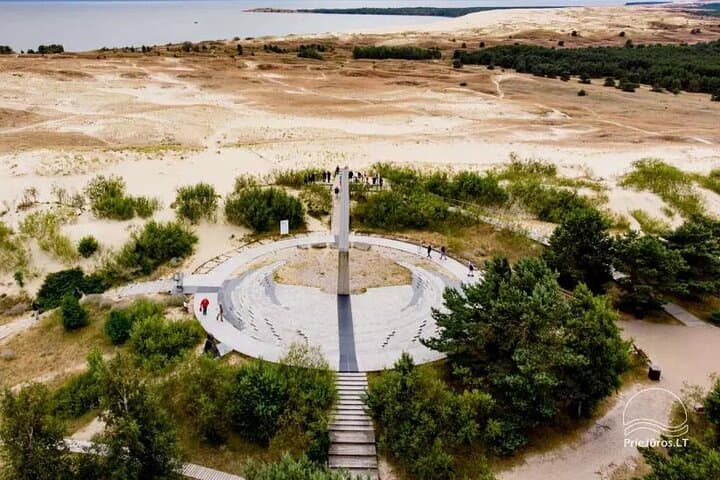

You step out of the air‑conditioned minivan and the wind rearranges the dune-crests like an impatient sculptor; the Baltic glints to your left and the shallow lagoon stretches to the right. Sand whispers under your boots as your guide points to broomlike reeds, carved weather vanes on fishermen’s houses and a distant line of pines where wood-carved figures keep watch.
You step out of the air‑conditioned minivan and the wind rearranges the dune-crests like an impatient sculptor; the Baltic glints to your left and the shallow lagoon stretches to the right. Sand whispers under your boots as your guide points to broomlike reeds, carved weather vanes on fishermen’s houses and a distant line of pines where wood-carved figures keep watch.
The Curonian Spit is a 98‑kilometre natural barrier—one of Europe’s largest moving dune systems—and a UNESCO World Heritage site for its unique blend of coastal geomorphology and fishing culture. For centuries the Curonians harvested fish and amber here; Thomas Mann summered in Nida and left traces of literary history in a modest house‑museum now open to visitors.
Geology is visible at a glance: wind-rifted sand, migrating grey dunes labeled “dead dunes,” and sheltered lagoon waters that nurture reedbeds and bird colonies. Local communities—Juodkrantė, Nida—still show wooden architecture and fish-smoking traditions; Amber Bay keeps seasonal reed sculptures tied to midsummer rituals.
Practically: the standard private tour runs about six hours (customizable 4–8), including ferry transfer onto the spit, short walks over dunes and a promenade in Nida. Expect uneven sand, short boardwalk sections, and stairs at viewpoints. Bring sun protection, a refillable water bottle, and sturdy footwear for sand walking. The tour includes ecology fees and Dead Dunes admission; optional extras include a lagoon boat trip and smoked fish tastings. Timing matters—late afternoon light makes the dunes dramatic, while morning is quieter for bird colonies. Stick to marked paths to protect fragile dune vegetation and help these landscapes keep shifting for generations to come.