THE ADVENTURE COLLECTIVE® · Independent discovery and booking for outdoor travel

Trace the Viet Cong’s underground routes on a half-day guided visit to the Cu Chi Tunnels. Expect a short documentary, a guided surface tour of traps and living areas, and the chance to crawl through a reconstructed tunnel section.
Trace the Viet Cong’s underground routes on a half-day guided visit to the Cu Chi Tunnels. Expect a short documentary, a guided surface tour of traps and living areas, and the chance to crawl through a reconstructed tunnel section.
Heat presses against the bus window as you leave Ho Chi Minh City and the flat rice paddies give way to scrub and rubber plantations. By the time the tour unloads at the tunnel entrance, the air smells of dust and pandan tea; your guide, often with family stories tied to the site, sets the tone — this is history you can move through.
Verified experiences and guided adventures in the surrounding area.
Operated by PAPA HOLIDAY VIETNAM · Cu Chi, Ho Chi Minh City
Heat presses against the bus window as you leave Ho Chi Minh City and the flat rice paddies give way to scrub and rubber plantations. By the time the tour unloads at the tunnel entrance, the air smells of dust and pandan tea; your guide, often with family stories tied to the site, sets the tone — this is history you can move through.
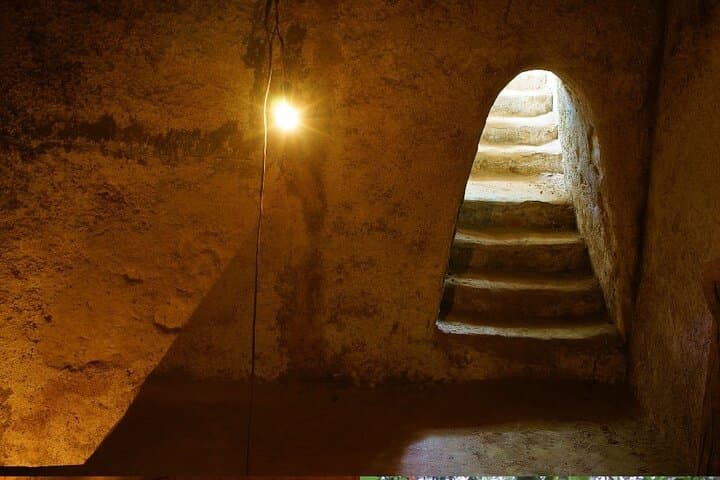
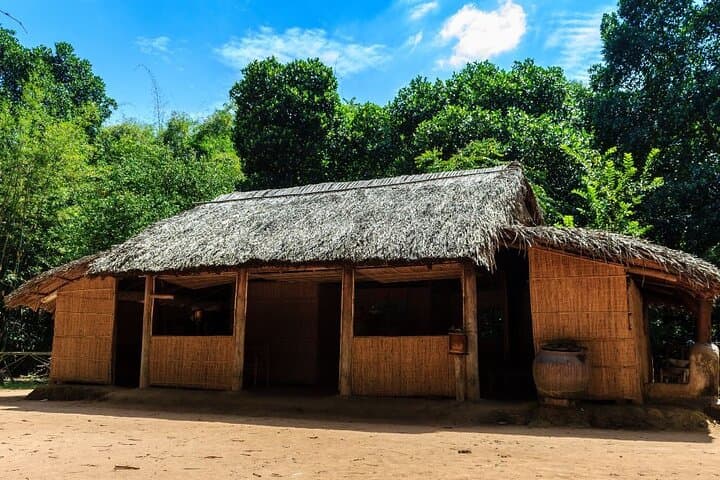
The Cu Chi complex is part of a roughly 220-kilometer network of tunnels used by Viet Cong forces during the American–Vietnam War for command, supply, and shelter. Much of what visitors see today—camouflaged trapdoors, narrow supply passages, and reconstructed living areas—was adapted from local geology: friable topsoil over packed clay that allowed tunnels to be dug and concealed. Cultural touches arrive in small things: the wartime rations like tapioca and the pandan tea offered to guests, and the local guides who frame events with family memory and pragmatic detail.
Expect a film or briefing, guided surface walkthroughs, and the option to crawl through a widened, visitor-safe section of tunnel. The terrain is mostly flat with short, uneven trails; some sections are low-ceilinged and humid. Photography is allowed at most outdoor exhibits but not in sensitive displays.
Practical tips: plan for heat and sudden rain, wear closed-toe shoes, and bring a reusable water bottle. The half-day schedule fits a morning or afternoon slot from Ho Chi Minh City and is suitable for most fitness levels, though those with spinal or severe claustrophobia should opt to view from the surface.
moderate.
5–6 hours.
Suitable for most people with basic mobility; requires some crouching and short walks.
The drive is roughly 60–90 minutes each way depending on traffic; tours typically run 5–6 hours total including transport.
Yes—many displays are visible from the surface and guides can show reconstructed tunnels without requiring guests to crawl inside.
No; the AK-47 shooting range is usually optional and operated separately at additional cost if available.
Yes, but parents should consider younger children’s ability to handle heat, narrow passages, and educational content about wartime history.
The Cu Chi tunnels were an extensive Viet Cong network used for living quarters, communication, and supply during the war; many sections are reconstructed to illustrate daily life underground.
The site balances preservation and tourism by routing visitors through reinforced, visitor-safe sections; avoid touching delicate earthworks and support local guides to ensure revenue stays in the community.
PAPA HOLIDAY VIETNAM operates guided outdoor trips and adventures with an emphasis on safety, stewardship, and memorable experiences.

Heat presses against the bus window as you leave Ho Chi Minh City and the flat rice paddies give way to scrub and rubber plantations. By the time the tour unloads at the tunnel entrance, the air smells of dust and pandan tea; your guide, often with family stories tied to the site, sets the tone — this is history you can move through.
Heat presses against the bus window as you leave Ho Chi Minh City and the flat rice paddies give way to scrub and rubber plantations. By the time the tour unloads at the tunnel entrance, the air smells of dust and pandan tea; your guide, often with family stories tied to the site, sets the tone — this is history you can move through.
The Cu Chi complex is part of a roughly 220-kilometer network of tunnels used by Viet Cong forces during the American–Vietnam War for command, supply, and shelter. Much of what visitors see today—camouflaged trapdoors, narrow supply passages, and reconstructed living areas—was adapted from local geology: friable topsoil over packed clay that allowed tunnels to be dug and concealed. Cultural touches arrive in small things: the wartime rations like tapioca and the pandan tea offered to guests, and the local guides who frame events with family memory and pragmatic detail.
Expect a film or briefing, guided surface walkthroughs, and the option to crawl through a widened, visitor-safe section of tunnel. The terrain is mostly flat with short, uneven trails; some sections are low-ceilinged and humid. Photography is allowed at most outdoor exhibits but not in sensitive displays.
Practical tips: plan for heat and sudden rain, wear closed-toe shoes, and bring a reusable water bottle. The half-day schedule fits a morning or afternoon slot from Ho Chi Minh City and is suitable for most fitness levels, though those with spinal or severe claustrophobia should opt to view from the surface.