THE ADVENTURE COLLECTIVE® · Independent discovery and booking for outdoor travel

Fly through the universe in a 25-minute fulldome show at the Burke Baker Planetarium, part of the Houston Museum of Natural Science. This ticket grants timed admission to immersive astronomy films that are family-friendly and wheelchair accessible.
Fly through the universe in a 25-minute fulldome show at the Burke Baker Planetarium, part of the Houston Museum of Natural Science. This ticket grants timed admission to immersive astronomy films that are family-friendly and wheelchair accessible.
You step into dimmed light and the ceiling becomes an open sky: stars tilt and drift, meteors cut across a dome that feels almost close enough to touch. The Burke Baker Planetarium in Houston’s Museum District makes space immediate and tactile, compressing distance into twenty-five immersive minutes that move from the Moon’s dusty plains to the bright arcs of distant galaxies.
Verified experiences and guided adventures in the surrounding area.
Operated by Houston Museum of Natural Science · Houston, Texas
You step into dimmed light and the ceiling becomes an open sky: stars tilt and drift, meteors cut across a dome that feels almost close enough to touch. The Burke Baker Planetarium in Houston’s Museum District makes space immediate and tactile, compressing distance into twenty-five immersive minutes that move from the Moon’s dusty plains to the bright arcs of distant galaxies.
Opened in 1964, the planetarium has been a regional hub for astronomy education, presenting fulldome shows that range from introductory “Passport to the Universe” pieces to focused programs on black holes and cosmic collisions. The building sits beside Hermann Park’s green space, where urban geology and bayou systems shaped Houston’s flat, floodplain landscape — a useful contrast when talks link Earth science to planetary processes.
Shows run roughly every 30 minutes from mid-morning to late afternoon, each billed at about 22–25 minutes. Films are fully immersive and accessible: wheelchair seating and stroller access are available, and box-office staff will assign timed seats when you arrive. The experience suits families, school groups, and curious adults equally; sound and visuals are designed to be clear without requiring prior astronomy knowledge.
Practical tips: arrive early to pick your preferred show time, bring photo ID to redeem your voucher, and expect a short, seated program rather than a museum-wide pass. If you want more time in the museum, plan a separate visit to see the Morian Hall of Paleontology or the Gems & Minerals displays. Hydrate beforehand — the dark can make you miss ordinary cues — and set aside an hour for ticketing and nearby exhibits to get the most from the visit.
easy.
20–30 minutes.
Suitable for all fitness levels; the experience is seated and low-impact
Shows run about 22–25 minutes, with new films starting roughly every 30 minutes between scheduled hours.
No; the ticket grants admission only to the Burke Baker Planetarium fulldome show and not to other museum exhibits.
Yes; many programs are family-friendly, but content varies—check the show descriptions at the box office for age recommendations.
Yes; the venue is wheelchair and stroller accessible and staff will assist with accessible seating when you redeem your voucher.
The planetarium opened in 1964 and has presented astronomical programs to millions, serving as a long-standing education resource in Houston’s Museum District.
Planetarium programming often highlights issues like light pollution and space resources; the museum supports STEM outreach and public education as part of its conservation and sustainability efforts.
Houston Museum of Natural Science operates guided outdoor trips and adventures with an emphasis on safety, stewardship, and memorable experiences.
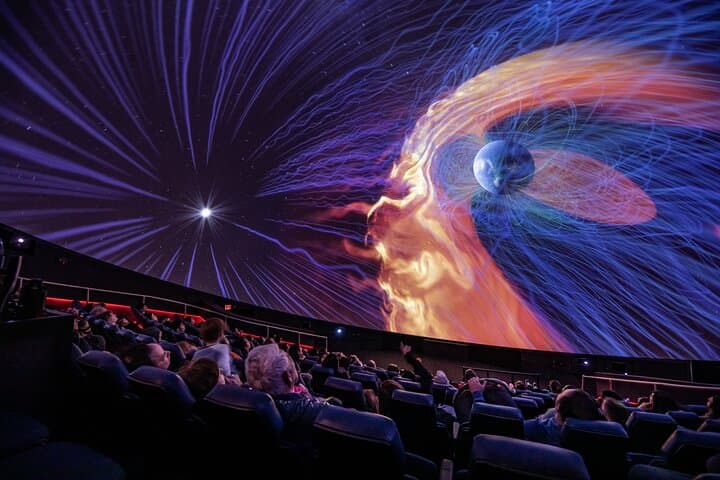
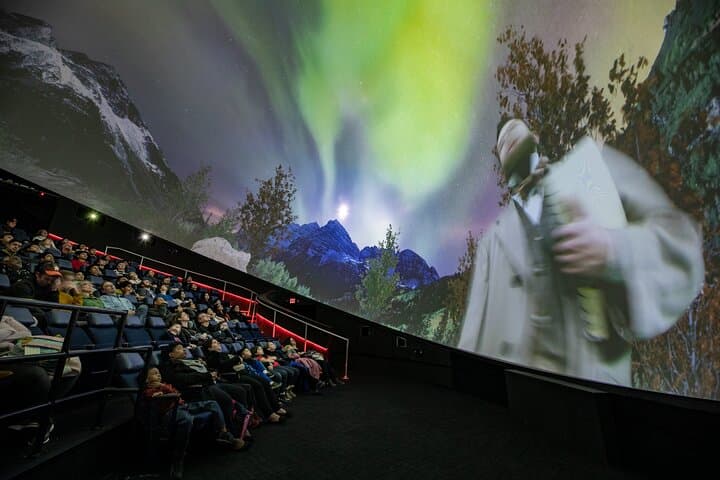
You step into dimmed light and the ceiling becomes an open sky: stars tilt and drift, meteors cut across a dome that feels almost close enough to touch. The Burke Baker Planetarium in Houston’s Museum District makes space immediate and tactile, compressing distance into twenty-five immersive minutes that move from the Moon’s dusty plains to the bright arcs of distant galaxies.
You step into dimmed light and the ceiling becomes an open sky: stars tilt and drift, meteors cut across a dome that feels almost close enough to touch. The Burke Baker Planetarium in Houston’s Museum District makes space immediate and tactile, compressing distance into twenty-five immersive minutes that move from the Moon’s dusty plains to the bright arcs of distant galaxies.
Opened in 1964, the planetarium has been a regional hub for astronomy education, presenting fulldome shows that range from introductory “Passport to the Universe” pieces to focused programs on black holes and cosmic collisions. The building sits beside Hermann Park’s green space, where urban geology and bayou systems shaped Houston’s flat, floodplain landscape — a useful contrast when talks link Earth science to planetary processes.
Shows run roughly every 30 minutes from mid-morning to late afternoon, each billed at about 22–25 minutes. Films are fully immersive and accessible: wheelchair seating and stroller access are available, and box-office staff will assign timed seats when you arrive. The experience suits families, school groups, and curious adults equally; sound and visuals are designed to be clear without requiring prior astronomy knowledge.
Practical tips: arrive early to pick your preferred show time, bring photo ID to redeem your voucher, and expect a short, seated program rather than a museum-wide pass. If you want more time in the museum, plan a separate visit to see the Morian Hall of Paleontology or the Gems & Minerals displays. Hydrate beforehand — the dark can make you miss ordinary cues — and set aside an hour for ticketing and nearby exhibits to get the most from the visit.