THE ADVENTURE COLLECTIVE® · Independent discovery and booking for outdoor travel

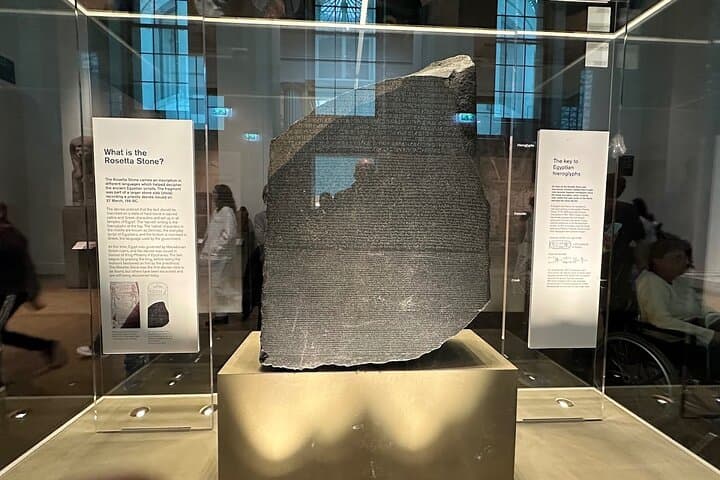
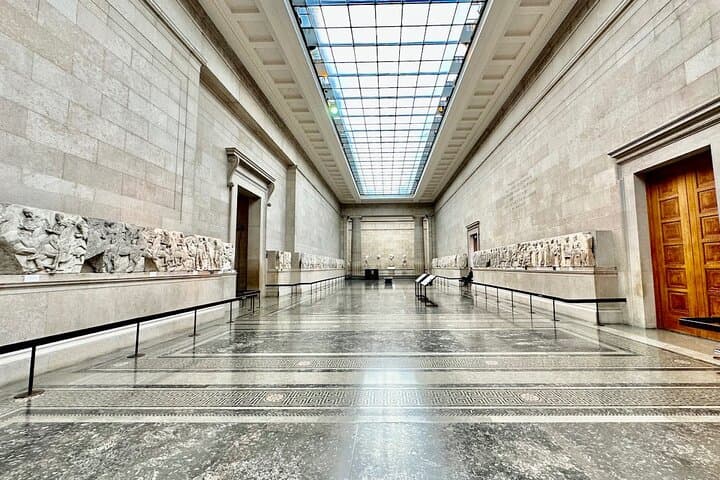
Reserve timed entry and download an English audio guide to navigate the British Museum’s sweeping collections at your own pace. This self-guided visit helps you focus on highlights like the Rosetta Stone and Parthenon sculptures while avoiding ticket lines.
Reserve timed entry and download an English audio guide to navigate the British Museum’s sweeping collections at your own pace. This self-guided visit helps you focus on highlights like the Rosetta Stone and Parthenon sculptures while avoiding ticket lines.
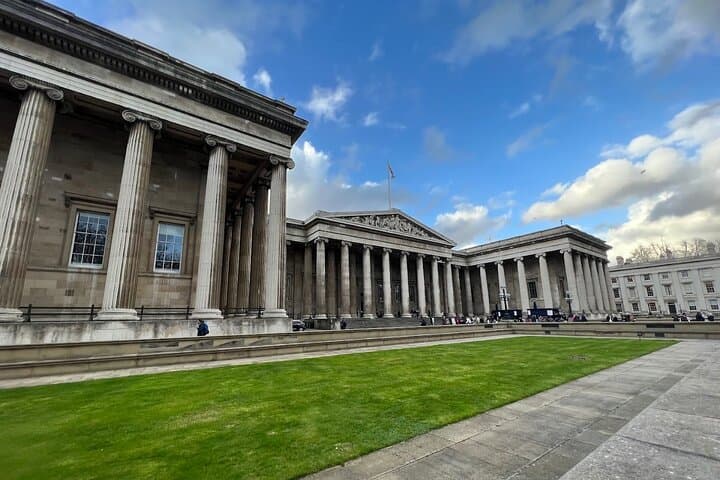
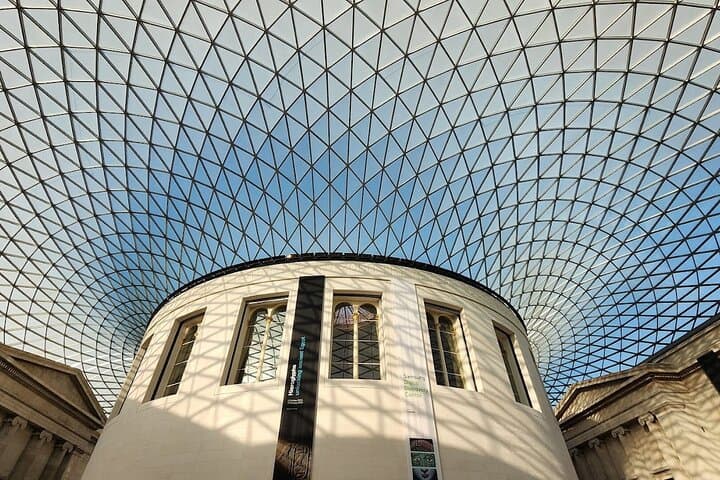
You step up from the pavement on Great Russell Street and the museum takes you in: a sweep of glass over the Great Court throws daylight across stone, cases, and corridors that have held human stories for centuries.
Verified experiences and guided adventures in the surrounding area.
Operated by Wanderung · London, England
You step up from the pavement on Great Russell Street and the museum takes you in: a sweep of glass over the Great Court throws daylight across stone, cases, and corridors that have held human stories for centuries.
Opened to the public in 1759 from a 1753 foundation, the British Museum gathers objects from across the globe — the Rosetta Stone, the Parthenon (Elgin) Marbles and Egyptian mummies among them — each piece a stubborn, articulate fragment of history. The building itself is a palimpsest of Georgian galleries and Victorian additions; the floor plan guides a mostly level walk across linked rooms where geology, metallurgy and ceramic technologies meet politics and belief.
Local rhythms matter: Bloomsbury’s bookshops, college quads and lunchtime queues shape your visit. The Museum’s collections are organized by region and period, so you can thread a focused route—Ancient Egypt to Classical Greece—without backtracking.
Plan practically: download the English audio guide ahead of time and save the PDF timed-reservation sent by email or WhatsApp — you must show that PDF at entry. Allow 2–3 hours and expect roughly 1–2 miles (1.6–3.2 km) of walking on flat floors; seating is available but limited in galleries. Photography is generally permitted without flash, but special exhibitions may restrict it. The site is wheelchair accessible and served by multiple Tube lines; cloakroom facilities and public transit nearby simplify logistics.
Bring a charged phone or MP3 player for the guide, comfortable shoes, and a compact map or app to prioritize must-see objects. The Museum invites curiosity and measured pace: listen, look, and move between rooms on your own terms.
easy.
2–3 hours.
Suitable for all fitness levels; expect several hours of standing and walking on flat surfaces.
Yes — entry to the Museum is free; this product provides an English audio guide download and a timed reservation PDF required for entry at your chosen time.
You’ll receive a secure link via email and WhatsApp to download the English audio guide and the PDF timed reservation; download the audio before arrival for the best experience.
Yes — the British Museum offers step-free access to many galleries, lifts in key locations and accessible facilities; check specific gallery access on arrival.
Photography without flash is generally permitted in permanent galleries, but special exhibitions and certain objects may prohibit photos — follow posted signs and staff instructions.
Founded from Sir Hans Sloane’s collection after an 18th-century Act of Parliament, the British Museum was one of the first public national museums in the modern world.
The Museum follows conservation best practices for artifact care; visitors can reduce impact by not touching objects, avoiding flash photography, and staying on designated routes.
Wanderung operates guided outdoor trips and adventures with an emphasis on safety, stewardship, and memorable experiences.
You step up from the pavement on Great Russell Street and the museum takes you in: a sweep of glass over the Great Court throws daylight across stone, cases, and corridors that have held human stories for centuries.
You step up from the pavement on Great Russell Street and the museum takes you in: a sweep of glass over the Great Court throws daylight across stone, cases, and corridors that have held human stories for centuries.
Opened to the public in 1759 from a 1753 foundation, the British Museum gathers objects from across the globe — the Rosetta Stone, the Parthenon (Elgin) Marbles and Egyptian mummies among them — each piece a stubborn, articulate fragment of history. The building itself is a palimpsest of Georgian galleries and Victorian additions; the floor plan guides a mostly level walk across linked rooms where geology, metallurgy and ceramic technologies meet politics and belief.
Local rhythms matter: Bloomsbury’s bookshops, college quads and lunchtime queues shape your visit. The Museum’s collections are organized by region and period, so you can thread a focused route—Ancient Egypt to Classical Greece—without backtracking.
Plan practically: download the English audio guide ahead of time and save the PDF timed-reservation sent by email or WhatsApp — you must show that PDF at entry. Allow 2–3 hours and expect roughly 1–2 miles (1.6–3.2 km) of walking on flat floors; seating is available but limited in galleries. Photography is generally permitted without flash, but special exhibitions may restrict it. The site is wheelchair accessible and served by multiple Tube lines; cloakroom facilities and public transit nearby simplify logistics.
Bring a charged phone or MP3 player for the guide, comfortable shoes, and a compact map or app to prioritize must-see objects. The Museum invites curiosity and measured pace: listen, look, and move between rooms on your own terms.