THE ADVENTURE COLLECTIVE® · Independent discovery and booking for outdoor travel

Descend into Tbilisi’s rarely seen underground mine laboratory — a working Soviet-era research facility opened for guided exploration. Expect narrow tunnels, rock exposures, and hands-on historical context in a tour designed for curious urban explorers.
Descend into Tbilisi’s rarely seen underground mine laboratory — a working Soviet-era research facility opened for guided exploration. Expect narrow tunnels, rock exposures, and hands-on historical context in a tour designed for curious urban explorers.
A low, cool draft meets you at the entrance and the city’s noise fades as you step into raw rock and concrete — the underground mine laboratory beneath Tbilisi is an engineered world that still hums with purpose. Lights pick out riveted beams and chalked blackboards; corridors lead to classrooms carved into the hillside where students once ran hands-on experiments on strata, pressure and drilling techniques.
Verified experiences and guided adventures in the surrounding area.
Operated by Wise Guys Urbex · Tbilisi, Tbilisi
A low, cool draft meets you at the entrance and the city’s noise fades as you step into raw rock and concrete — the underground mine laboratory beneath Tbilisi is an engineered world that still hums with purpose. Lights pick out riveted beams and chalked blackboards; corridors lead to classrooms carved into the hillside where students once ran hands-on experiments on strata, pressure and drilling techniques.
Built during the Soviet period as a working research site and instructional mine, the facility combines mid-20th-century industrial design with geological exposures that reveal local rock layers. Guides weave structural history with practical geology, explaining how samples were collected and how the lab supported mining education in Georgia.
Culturally the site reflects a pragmatic, scientific legacy rather than tourism polish: expect functional infrastructure, hand-painted signage, and areas still used by university researchers. The experience is more urban exploration than museum visit — tunnels, test chambers, and observation windows invite close inspection but remain active research space.
Practical info: tours run 60–120 minutes with mandatory safety briefing and protective gear provided. The route is physically easy but includes low ceilings and narrow passages; claustrophobic visitors should decline. Wear closed-toe shoes, bring a charged camera, and leave backpacks small to move through confined areas. Photography is usually permitted but follow guide directions to protect equipment and sensitive research zones. For a focused, unusual look at Soviet-era engineering and applied geology, this exclusive-access tour delivers context, texture, and a distinctive underground perspective of Tbilisi’s scientific past.
easy.
1–2 hours.
Suitable for most fitness levels; requires ability to stand, walk short uneven distances, and navigate low-clearance passages.
Children may join but must be closely supervised; guides enforce safety rules and provide protective gear — check age restrictions with the operator.
Basic lighting is provided, but a small personal headlamp can help with photography and seeing in dim corners if permitted.
No — the facility includes stairs, narrow corridors, and low ceilings that prevent wheelchair access.
Photography is generally allowed in non-sensitive areas, but respect restrictions around active research zones and follow your guide’s instructions.
Constructed during the Soviet era as a functional training and research mine, the laboratory supported hands-on mining education and geological experiments tied to regional industry.
Access is limited to guided visits to protect active research areas; visitors must follow rules, avoid touching installations unnecessarily, and not leave graffiti or litter.
Wise Guys Urbex operates guided outdoor trips and adventures with an emphasis on safety, stewardship, and memorable experiences.
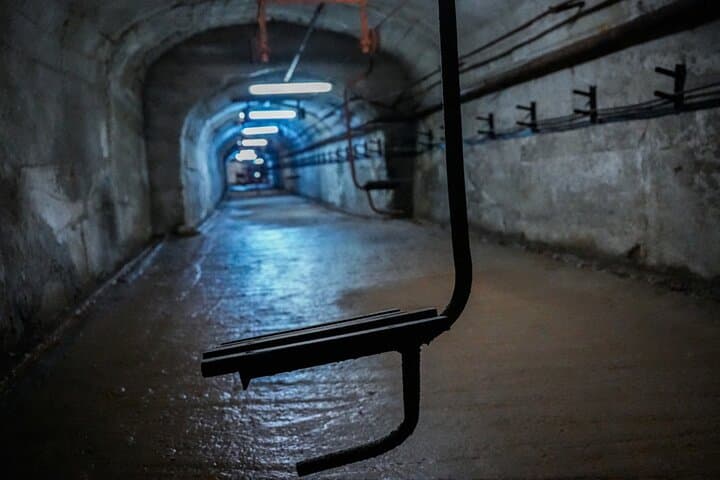
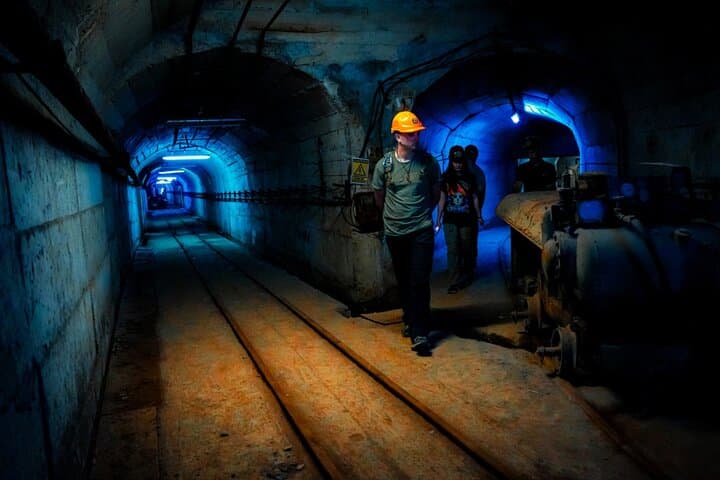

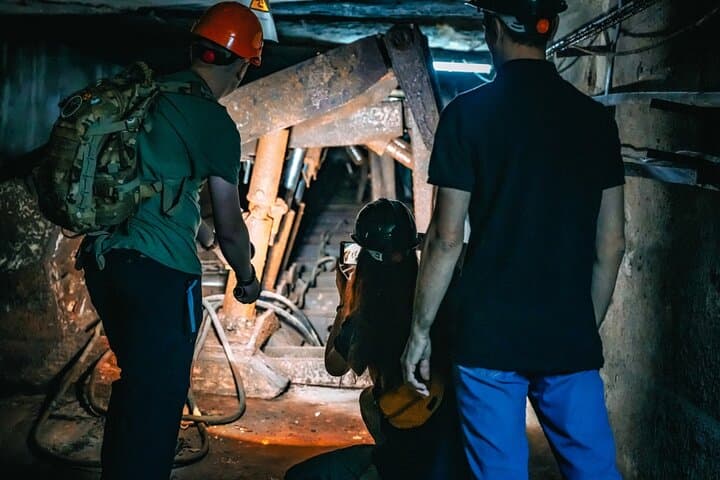
A low, cool draft meets you at the entrance and the city’s noise fades as you step into raw rock and concrete — the underground mine laboratory beneath Tbilisi is an engineered world that still hums with purpose. Lights pick out riveted beams and chalked blackboards; corridors lead to classrooms carved into the hillside where students once ran hands-on experiments on strata, pressure and drilling techniques.
A low, cool draft meets you at the entrance and the city’s noise fades as you step into raw rock and concrete — the underground mine laboratory beneath Tbilisi is an engineered world that still hums with purpose. Lights pick out riveted beams and chalked blackboards; corridors lead to classrooms carved into the hillside where students once ran hands-on experiments on strata, pressure and drilling techniques.
Built during the Soviet period as a working research site and instructional mine, the facility combines mid-20th-century industrial design with geological exposures that reveal local rock layers. Guides weave structural history with practical geology, explaining how samples were collected and how the lab supported mining education in Georgia.
Culturally the site reflects a pragmatic, scientific legacy rather than tourism polish: expect functional infrastructure, hand-painted signage, and areas still used by university researchers. The experience is more urban exploration than museum visit — tunnels, test chambers, and observation windows invite close inspection but remain active research space.
Practical info: tours run 60–120 minutes with mandatory safety briefing and protective gear provided. The route is physically easy but includes low ceilings and narrow passages; claustrophobic visitors should decline. Wear closed-toe shoes, bring a charged camera, and leave backpacks small to move through confined areas. Photography is usually permitted but follow guide directions to protect equipment and sensitive research zones. For a focused, unusual look at Soviet-era engineering and applied geology, this exclusive-access tour delivers context, texture, and a distinctive underground perspective of Tbilisi’s scientific past.