THE ADVENTURE COLLECTIVE® · Independent discovery and booking for outdoor travel

Drive from Djerba into Tataouine’s salt flats, cliff villages and layered ksour—sites used in Star Wars—led by a local guide. Expect short hikes on uneven stone, market stops and a regional lunch during this full-day cultural drive.
Drive from Djerba into Tataouine’s salt flats, cliff villages and layered ksour—sites used in Star Wars—led by a local guide. Expect short hikes on uneven stone, market stops and a regional lunch during this full-day cultural drive.
You roll off the island at first light into a bright, low desert where shadows sharpen against white salt flats and honey-colored ghorfas step up like stone balconies. The 4x4 hums along an old Roman roadway, and within an hour the coastline gives way to scrub, wind-sculpted ridges and the small white plane of Sobkhet El Melah—a salt pan that looks more lunar than terrestrial.
Verified experiences and guided adventures in the surrounding area.
Operated by GTH voyages · Houmt Souk (Djerba), Medenine Governorate
You roll off the island at first light into a bright, low desert where shadows sharpen against white salt flats and honey-colored ghorfas step up like stone balconies. The 4x4 hums along an old Roman roadway, and within an hour the coastline gives way to scrub, wind-sculpted ridges and the small white plane of Sobkhet El Melah—a salt pan that looks more lunar than terrestrial.
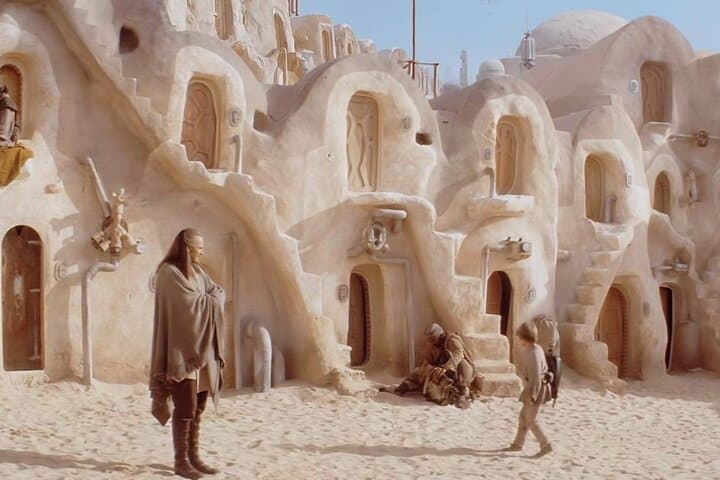
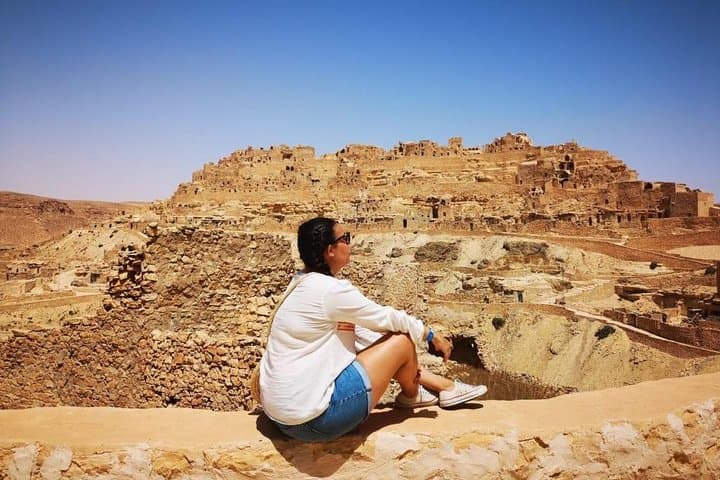
This eight-hour loop threads Tataouine, Chenini and several remarkable ksour (fortified granaries) such as Ksar Hadada and Ksar Ouled Soltane. These stacked ghorfas are Berber constructions dating back centuries, engineered for communal storage and defense; many sat idle long before the film crews noticed their cinematic geometry. Geology here is mostly sedimentary rock and compacted sandstones carved by wind—good footing on terraces, loose underfoot in wadis. Culture is visible in markets: babouches, burnous and the slow barter at Tataouine's souk; the Science Village nearby displays fossil finds that hint at a very different prehistoric landscape.
Practically, expect frequent short walks on uneven stone, several photo stops and a two-course lunch of regional dishes. Wear sturdy walking shoes and sun protection; mornings are cooler but the sun is intense by midday. Guides typically include hotel pickup on Djerba, and the route suits most fitness levels though it’s not wheelchair-friendly beyond vehicle access points. Carry at least 1.5 liters of water, a light layer for wind and a camera with extra battery—these sites are photogenic and remote. Time your visit outside peak summer heat for the most comfortable exploring.
easy.
8 hours.
Suitable for most people who can manage short walks on uneven ground; limited mobility travelers should confirm vehicle access to stops.
Most operators include hotel pickup on Djerba (Houmt Souk area); confirm your meeting point at booking.
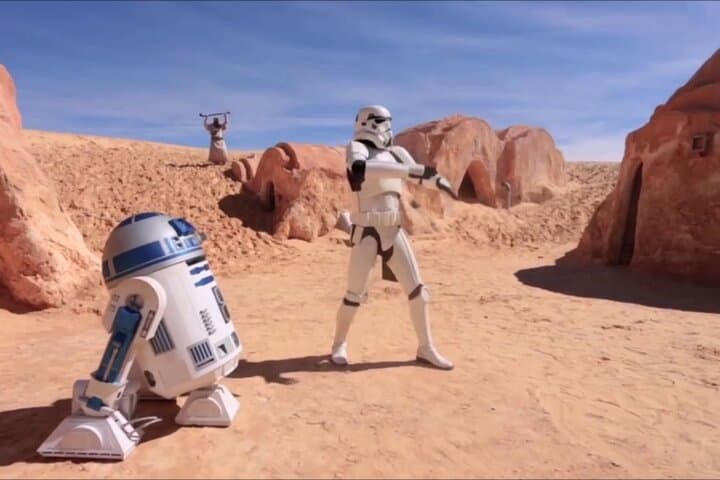
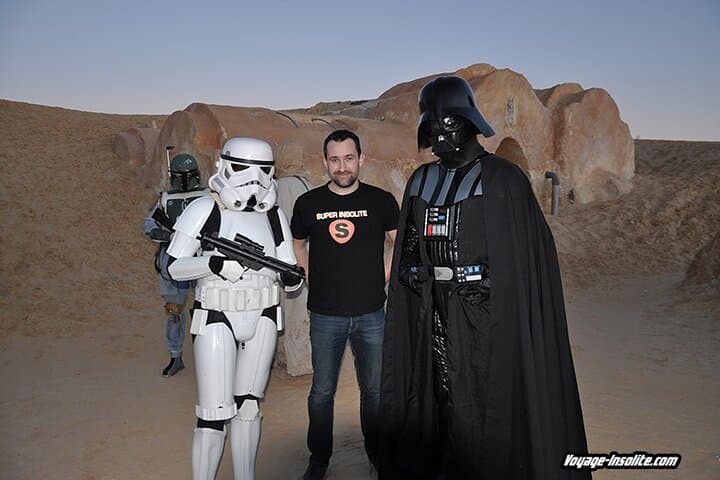
Many structures and landscapes in the Tataouine region inspired film designers and were used in early Star Wars shoots; exact scenes were filmed across multiple locations in southern Tunisia.
Vehicles are wheelchair accessible for transport, but many ksour and cliff villages have stepped or uneven access that limits mobility; check specific stops with the operator.
Casual, modest clothing is appropriate—light layers, long shorts or trousers and a scarf for sun or dust protection.
Ksour were communal granaries built by Berber tribes to protect grain from raiders and sun; many were later adapted or abandoned as settlement patterns changed. Tataouine also hosted French Foreign Legion outposts during the colonial period.
This is an arid landscape with fragile soils and scarce water—stay on marked tracks, avoid removing artifacts and support local guides to help preserve sites and community livelihoods.
GTH voyages operates guided outdoor trips and adventures with an emphasis on safety, stewardship, and memorable experiences.
You roll off the island at first light into a bright, low desert where shadows sharpen against white salt flats and honey-colored ghorfas step up like stone balconies. The 4x4 hums along an old Roman roadway, and within an hour the coastline gives way to scrub, wind-sculpted ridges and the small white plane of Sobkhet El Melah—a salt pan that looks more lunar than terrestrial.
You roll off the island at first light into a bright, low desert where shadows sharpen against white salt flats and honey-colored ghorfas step up like stone balconies. The 4x4 hums along an old Roman roadway, and within an hour the coastline gives way to scrub, wind-sculpted ridges and the small white plane of Sobkhet El Melah—a salt pan that looks more lunar than terrestrial.
This eight-hour loop threads Tataouine, Chenini and several remarkable ksour (fortified granaries) such as Ksar Hadada and Ksar Ouled Soltane. These stacked ghorfas are Berber constructions dating back centuries, engineered for communal storage and defense; many sat idle long before the film crews noticed their cinematic geometry. Geology here is mostly sedimentary rock and compacted sandstones carved by wind—good footing on terraces, loose underfoot in wadis. Culture is visible in markets: babouches, burnous and the slow barter at Tataouine's souk; the Science Village nearby displays fossil finds that hint at a very different prehistoric landscape.
Practically, expect frequent short walks on uneven stone, several photo stops and a two-course lunch of regional dishes. Wear sturdy walking shoes and sun protection; mornings are cooler but the sun is intense by midday. Guides typically include hotel pickup on Djerba, and the route suits most fitness levels though it’s not wheelchair-friendly beyond vehicle access points. Carry at least 1.5 liters of water, a light layer for wind and a camera with extra battery—these sites are photogenic and remote. Time your visit outside peak summer heat for the most comfortable exploring.