THE ADVENTURE COLLECTIVE® · Independent discovery and booking for outdoor travel

Walk the stone spine of Hwaseong Fortress, a late-Joseon defensive ring that frames Suwon city. This private day trip from Seoul combines fortress ramparts, a temporary royal palace, and a hanok neighborhood for a focused cultural walk.
Walk the stone spine of Hwaseong Fortress, a late-Joseon defensive ring that frames Suwon city. This private day trip from Seoul combines fortress ramparts, a temporary royal palace, and a hanok neighborhood for a focused cultural walk.
You step out of the van into a wide sweep of gray stone and brick; the fortress wall curves away like a low, deliberate ridge watching over the city. Morning light finds the citadel’s embrasures and bastions, and the air carries the faint scent of pine from nearby urban parks. Walking sections of the wall gives a muscular sense of scale—ramps, watchtowers, and gatehouses that once coordinated soldiers’ movements now channel the steps of modern visitors.
Verified experiences and guided adventures in the surrounding area.
Operated by OnedayKorea · Suwon, Gyeonggi-do
You step out of the van into a wide sweep of gray stone and brick; the fortress wall curves away like a low, deliberate ridge watching over the city. Morning light finds the citadel’s embrasures and bastions, and the air carries the faint scent of pine from nearby urban parks. Walking sections of the wall gives a muscular sense of scale—ramps, watchtowers, and gatehouses that once coordinated soldiers’ movements now channel the steps of modern visitors.
Built in the late Joseon period under King Jeongjo (r. 1776–1800), Hwaseong Fortress is an engineered response to politics and defense: brick and stone blended with innovative wooden structures, hydraulic features and commandable sightlines. Design choices reflect late-18th-century Korean military thought and the era’s aspirations for centralized authority. Nearby Haenggung Palace served as a temporary royal residence and remains a cultural focal point, where periodic guard ceremonies recreate historical routines from spring through autumn.
This private day trip pairs paced exploration of Hwaseong’s ramparts with a visit to living-history neighborhoods of traditional hanok houses that recall late-Joseon domestic life. Expect mostly paved and stepped routes, several short climbs to crenellated viewpoints, and accessible courtyard areas for photography and rest.
Practical guidance: wear grippy walking shoes and layer for changing urban microclimates; the route can be windy on the wall. Bring a small water bottle and a compact rain shell in shoulder seasons. If you want the guard ceremony, plan for a Sunday between April and October. The tour includes private round-trip transfer and a Korean lunch; confirm pickup details when you book.
easy.
4–5 hours.
Suitable for most fitness levels; requires comfortable walking and negotiating short flights of stone steps.
Yes—transport and most primary surfaces at Hwaseong and Haenggung Palace are wheelchair accessible, but some wall sections include steps; check with the operator for customized routing.
Yes—the experience includes a Korean lunch as well as round-trip private transfer with hotel pickup and drop-off.
Admission and lunch are included; you may want small cash for souvenirs or optional items at local vendors.
This is a private day trip; schedule and minor stops can usually be adjusted—advise any special requirements when booking.
Hwaseong was constructed late in the Joseon Dynasty under King Jeongjo as both a defensive work and a political statement; it became a UNESCO World Cultural Heritage Site in 1997.
Conservation focuses on stabilizing masonry and managing visitor flow; stick to marked routes, avoid touching restored surfaces and follow guide instructions to limit wear.
OnedayKorea operates guided outdoor trips and adventures with an emphasis on safety, stewardship, and memorable experiences.

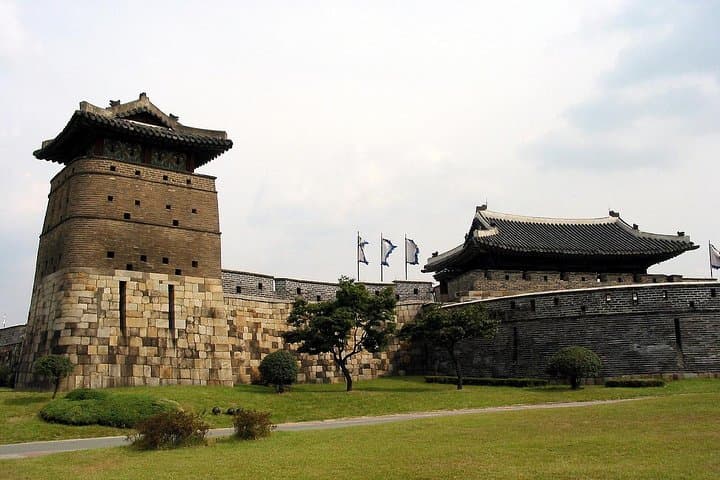
You step out of the van into a wide sweep of gray stone and brick; the fortress wall curves away like a low, deliberate ridge watching over the city. Morning light finds the citadel’s embrasures and bastions, and the air carries the faint scent of pine from nearby urban parks. Walking sections of the wall gives a muscular sense of scale—ramps, watchtowers, and gatehouses that once coordinated soldiers’ movements now channel the steps of modern visitors.
You step out of the van into a wide sweep of gray stone and brick; the fortress wall curves away like a low, deliberate ridge watching over the city. Morning light finds the citadel’s embrasures and bastions, and the air carries the faint scent of pine from nearby urban parks. Walking sections of the wall gives a muscular sense of scale—ramps, watchtowers, and gatehouses that once coordinated soldiers’ movements now channel the steps of modern visitors.
Built in the late Joseon period under King Jeongjo (r. 1776–1800), Hwaseong Fortress is an engineered response to politics and defense: brick and stone blended with innovative wooden structures, hydraulic features and commandable sightlines. Design choices reflect late-18th-century Korean military thought and the era’s aspirations for centralized authority. Nearby Haenggung Palace served as a temporary royal residence and remains a cultural focal point, where periodic guard ceremonies recreate historical routines from spring through autumn.
This private day trip pairs paced exploration of Hwaseong’s ramparts with a visit to living-history neighborhoods of traditional hanok houses that recall late-Joseon domestic life. Expect mostly paved and stepped routes, several short climbs to crenellated viewpoints, and accessible courtyard areas for photography and rest.
Practical guidance: wear grippy walking shoes and layer for changing urban microclimates; the route can be windy on the wall. Bring a small water bottle and a compact rain shell in shoulder seasons. If you want the guard ceremony, plan for a Sunday between April and October. The tour includes private round-trip transfer and a Korean lunch; confirm pickup details when you book.