THE ADVENTURE COLLECTIVE® · Independent discovery and booking for outdoor travel

Stand beneath Stonehenge’s prehistoric circle, then trace the human story through Woodhenge and historic Salisbury in a private full‑day tour. This guided trip pairs archaeology with Gothic architecture for a compact cultural day out.
Stand beneath Stonehenge’s prehistoric circle, then trace the human story through Woodhenge and historic Salisbury in a private full‑day tour. This guided trip pairs archaeology with Gothic architecture for a compact cultural day out.
A low wind pushes across chalk downland as the tour vehicle eases to a stop and the stones come into view—monoliths set like punctuation marks against the horizon. On arrival at Stonehenge the circle’s raw geometry reads plainly: weathered sarsens standing on an axis that tracks the summer sunrise, stones that have watched millennia of sky.
Verified experiences and guided adventures in the surrounding area.
Operated by Londoner · Salisbury, Wiltshire
A low wind pushes across chalk downland as the tour vehicle eases to a stop and the stones come into view—monoliths set like punctuation marks against the horizon. On arrival at Stonehenge the circle’s raw geometry reads plainly: weathered sarsens standing on an axis that tracks the summer sunrise, stones that have watched millennia of sky.
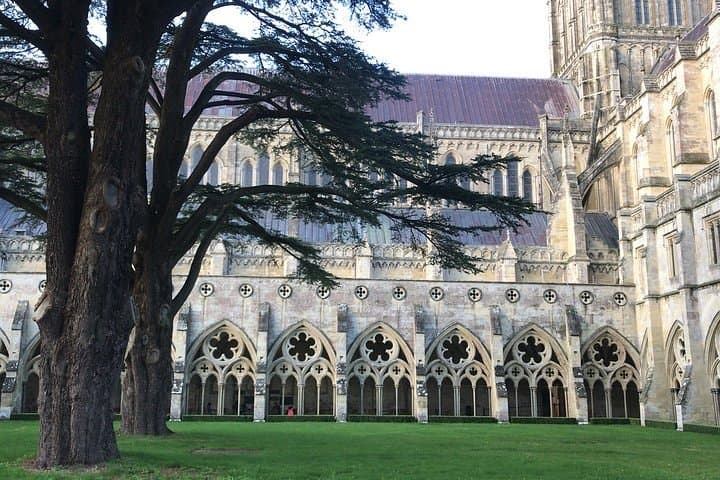
The landscape here is layered: Neolithic builders transported bluestones from the Preseli Hills and shaped an avenue linking river and ritual. Two miles away Durrington Walls and Woodhenge mark the domestic and ceremonial counterpart to Stonehenge, evidence of large seasonal gatherings and long processional routes toward the River Avon. Centuries later Salisbury grew around a medieval cathedral; its 13th‑century spire and the best‑preserved Magna Carta anchor the town’s civic and religious story.
Expect guided interpretation that connects archaeology, astronomy and local life—hands‑on explanation at monuments, a walk through the Cathedral Close, and displays at the Salisbury Museum tracing human activity from Mesolithic flint scatters to Roman occupation.
Practicalities: this private eight‑hour tour uses an air‑conditioned vehicle, includes entrance to key sites, and requires moderate mobility—some short walks on uneven ground and paved streets. Bring layered waterproofs for sudden showers, sturdy shoes for chalk paths, a refillable water bottle, and a sense of stewardship: stay on marked routes and follow site rules. Aim for morning arrival to avoid crowds and capture the light on the stones; the experience is as much about quiet observation as it is about explanation.
moderate.
8 hours.
Suitable for travelers with moderate fitness able to walk short distances on uneven ground and climb a few steps.
According to the itinerary, entrance to Stonehenge and selected museums is included in the tour price.
Expect several short walks: up to 90 minutes at Stonehenge and additional short walks at Woodhenge and through Salisbury Cathedral Close.
The tour lists wheelchair‑accessible options; however, some paths around the monuments are uneven—check accessibility specifics in advance.
Access to the inner circle is restricted most days for conservation; special access may be arranged occasionally but is not guaranteed on standard visits.
The Stonehenge landscape reflects Neolithic ritual and settlement patterns; Salisbury developed later in the 13th century around the new cathedral and became a repository for medieval documents like the Magna Carta.
English Heritage and local trusts manage visitor access to limit erosion and protect archaeology—stick to paths and avoid touching exposed features to reduce wear.
Londoner operates guided outdoor trips and adventures with an emphasis on safety, stewardship, and memorable experiences.
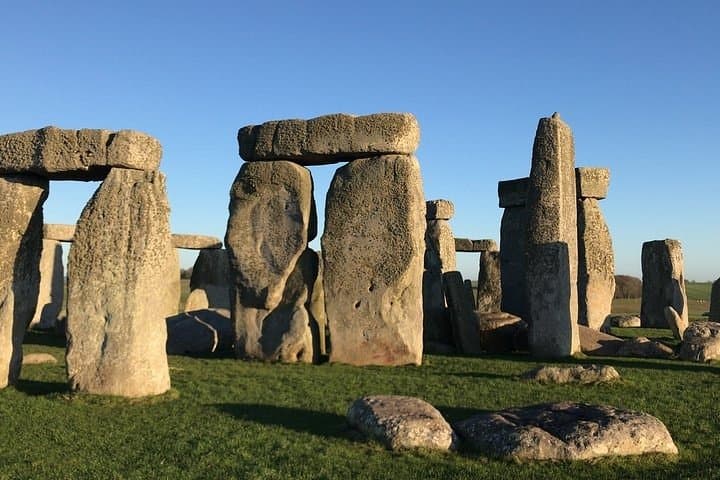
A low wind pushes across chalk downland as the tour vehicle eases to a stop and the stones come into view—monoliths set like punctuation marks against the horizon. On arrival at Stonehenge the circle’s raw geometry reads plainly: weathered sarsens standing on an axis that tracks the summer sunrise, stones that have watched millennia of sky.
A low wind pushes across chalk downland as the tour vehicle eases to a stop and the stones come into view—monoliths set like punctuation marks against the horizon. On arrival at Stonehenge the circle’s raw geometry reads plainly: weathered sarsens standing on an axis that tracks the summer sunrise, stones that have watched millennia of sky.
The landscape here is layered: Neolithic builders transported bluestones from the Preseli Hills and shaped an avenue linking river and ritual. Two miles away Durrington Walls and Woodhenge mark the domestic and ceremonial counterpart to Stonehenge, evidence of large seasonal gatherings and long processional routes toward the River Avon. Centuries later Salisbury grew around a medieval cathedral; its 13th‑century spire and the best‑preserved Magna Carta anchor the town’s civic and religious story.
Expect guided interpretation that connects archaeology, astronomy and local life—hands‑on explanation at monuments, a walk through the Cathedral Close, and displays at the Salisbury Museum tracing human activity from Mesolithic flint scatters to Roman occupation.
Practicalities: this private eight‑hour tour uses an air‑conditioned vehicle, includes entrance to key sites, and requires moderate mobility—some short walks on uneven ground and paved streets. Bring layered waterproofs for sudden showers, sturdy shoes for chalk paths, a refillable water bottle, and a sense of stewardship: stay on marked routes and follow site rules. Aim for morning arrival to avoid crowds and capture the light on the stones; the experience is as much about quiet observation as it is about explanation.