THE ADVENTURE COLLECTIVE® · Independent discovery and booking for outdoor travel

Walk Stockholm on your own terms with a private audio guide that brings 17 central sites to life—from a grand 1871 station to medieval alleys and historic markets. Flexible, detailed, and perfect for travelers who prefer to linger where the city invites them.
Walk Stockholm on your own terms with a private audio guide that brings 17 central sites to life—from a grand 1871 station to medieval alleys and historic markets. Flexible, detailed, and perfect for travelers who prefer to linger where the city invites them.
You step off a ferry or subway into a city of granite islands, where sea air threads through narrow alleys and cobbles click underfoot. The audio picks up like a local companion—measured, curious—guiding you from a grand 19th-century station into medieval courtyards, past baroque churches and a market that smells of smoked fish and cinnamon buns.
Verified experiences and guided adventures in the surrounding area.
Operated by Uvamai Niche Tourism · Stockholm, Stockholm County
You step off a ferry or subway into a city of granite islands, where sea air threads through narrow alleys and cobbles click underfoot. The audio picks up like a local companion—measured, curious—guiding you from a grand 19th-century station into medieval courtyards, past baroque churches and a market that smells of smoked fish and cinnamon buns.
Stockholm grew from a 13th-century fortress to a capital spread across fourteen islands, its buildings anchored to the archipelago's ancient granite. The route highlights layers of history: Hanseatic trade, royal pageantry, and the pragmatic civic reforms that shaped modern Swedish life. Architecture here is readable—brick facades, carved pulpit work, and narrow alleys that once routed merchants in siege times.
Culture is tactile: stop for a hot coffee and the ritual of fika, listen for sea birds arguing over waterfront scraps, and watch how Swedes use public space—gardens for gatherings, markets for argument and flavor. Geology matters too; the city's rocky foundation explains tight streets and dramatic viewpoints where the city opens like a map.
Practical guidance: this is a self-paced audio experience delivered via private links (SoundCloud playlist and a Google My Maps itinerary). Plan 3–9 hours depending on how deep you linger. Use headphones, keep your phone charged, and download or screenshot key map points if your data is limited. Many sites are reachable by public transit; some interiors observe quiet or photography rules. The guide works split across days and lets you choose priorities—perfect for independent explorers who value depth without schedules.
easy.
3–9 hours.
Suitable for anyone comfortable with multiple hours of urban walking and short stair sections; frequent breaks make it accessible to many fitness levels.
You receive two private links before your start date: one SoundCloud playlist with all audio tracks and one Google My Maps itinerary—open them in your browser to begin.
Yes—the access links remain valid until your tour is complete (up to six days), so you can pause and resume as needed.
Many central streets and listed attractions are wheelchair accessible, but some medieval alleys and historic interiors include stairs; check individual site notes if mobility is a concern.
You’ll need internet to stream the SoundCloud audio and view the interactive map; consider mobile data or preloading audio where possible and screenshotting key map points as a backup.
Founded in the 13th century as a fortified trading post, Stockholm grew into Sweden’s political and economic center—its streets reflect Hanseatic trade ties and royal power struggles, including events like the Stockholm Bloodbath of 1520.
Stockholm emphasizes sustainable mobility and green public spaces; stick to marked paths, use public transit, and support local businesses to minimize the footprint of urban tourism.
Uvamai Niche Tourism operates guided outdoor trips and adventures with an emphasis on safety, stewardship, and memorable experiences.



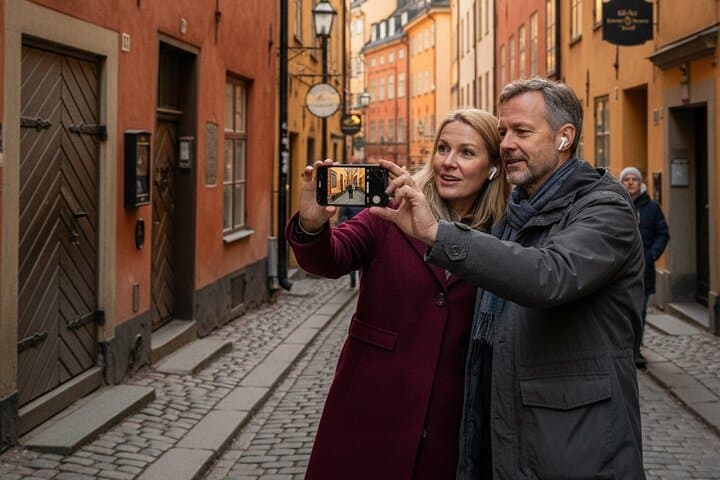
You step off a ferry or subway into a city of granite islands, where sea air threads through narrow alleys and cobbles click underfoot. The audio picks up like a local companion—measured, curious—guiding you from a grand 19th-century station into medieval courtyards, past baroque churches and a market that smells of smoked fish and cinnamon buns.
You step off a ferry or subway into a city of granite islands, where sea air threads through narrow alleys and cobbles click underfoot. The audio picks up like a local companion—measured, curious—guiding you from a grand 19th-century station into medieval courtyards, past baroque churches and a market that smells of smoked fish and cinnamon buns.
Stockholm grew from a 13th-century fortress to a capital spread across fourteen islands, its buildings anchored to the archipelago's ancient granite. The route highlights layers of history: Hanseatic trade, royal pageantry, and the pragmatic civic reforms that shaped modern Swedish life. Architecture here is readable—brick facades, carved pulpit work, and narrow alleys that once routed merchants in siege times.
Culture is tactile: stop for a hot coffee and the ritual of fika, listen for sea birds arguing over waterfront scraps, and watch how Swedes use public space—gardens for gatherings, markets for argument and flavor. Geology matters too; the city's rocky foundation explains tight streets and dramatic viewpoints where the city opens like a map.
Practical guidance: this is a self-paced audio experience delivered via private links (SoundCloud playlist and a Google My Maps itinerary). Plan 3–9 hours depending on how deep you linger. Use headphones, keep your phone charged, and download or screenshot key map points if your data is limited. Many sites are reachable by public transit; some interiors observe quiet or photography rules. The guide works split across days and lets you choose priorities—perfect for independent explorers who value depth without schedules.