THE ADVENTURE COLLECTIVE® · Independent discovery and booking for outdoor travel

Spend a long day tracing Sri Lanka’s Cultural Triangle—Dambulla’s cave temples, Sigiriya’s rock fortress and the ruins of Polonnaruwa—on a guided tour from Kandy. Expect steep climbs, vivid frescoes, and a full day of archaeology and wide plains.
Spend a long day tracing Sri Lanka’s Cultural Triangle—Dambulla’s cave temples, Sigiriya’s rock fortress and the ruins of Polonnaruwa—on a guided tour from Kandy. Expect steep climbs, vivid frescoes, and a full day of archaeology and wide plains.
You step out of the air‑conditioned van into heat that seems to rearrange your senses—dry earth, a breeze that smells faintly of dust and curry, and a silhouette rising from the plain: Sigiriya, a near-vertical column of rock that has watched over the Cultural Triangle for 1,500 years.
Verified experiences and guided adventures in the surrounding area.
Operated by SkyHaven Tours · Kandy, Central Province
You step out of the air‑conditioned van into heat that seems to rearrange your senses—dry earth, a breeze that smells faintly of dust and curry, and a silhouette rising from the plain: Sigiriya, a near-vertical column of rock that has watched over the Cultural Triangle for 1,500 years.
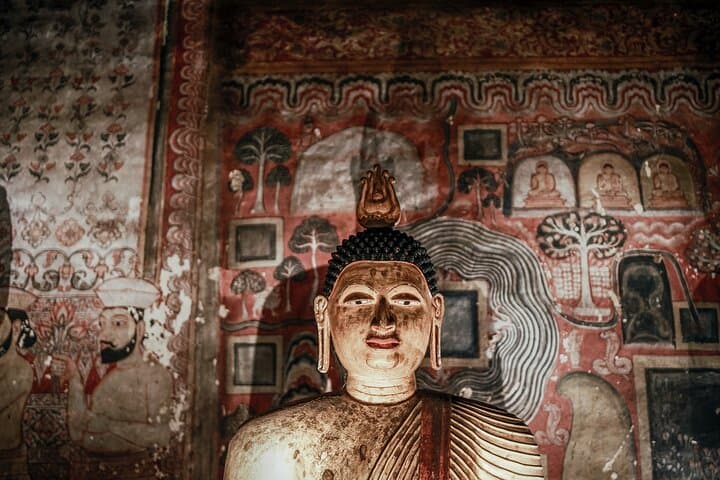
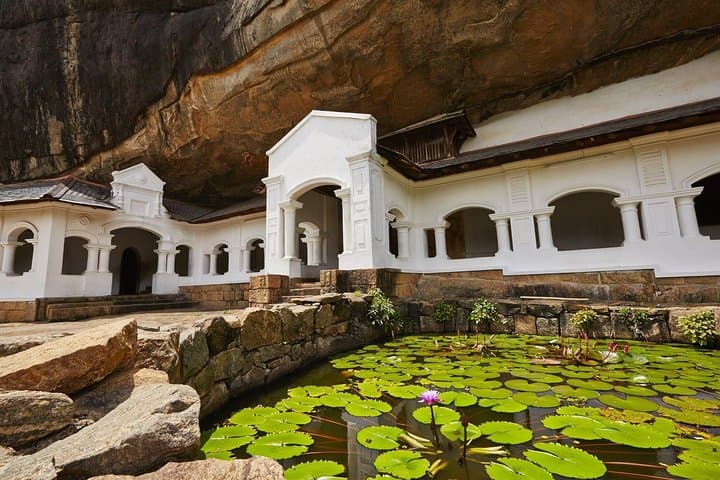
The day begins with Dambulla, where the rock caves incline like a guardian over the valley. Inside, the cool air holds the whispers of painted narratives—Buddha in reclining repose, guardians caught mid-gesture, murals that span 2,100 square meters. The stone and color resist the sun outside, asking patience and quiet from visitors.
From there the road opens to Sigiriya. King Kashyapa’s 5th-century gamble—building a palace on a 200-meter granite headland—reads like imperial ambition in stone. You climb metal stairways that stitch around the face, pausing at the painted women on the midway terrace and then at the Lion’s Paw gateway, which hints at the throne once set above the clouds. When you reach the summit, the plains unfurl in a patchwork of tanks, paddy fields and scattered ruins—an aerial view into the engineered landscapes of ancient Sri Lanka.
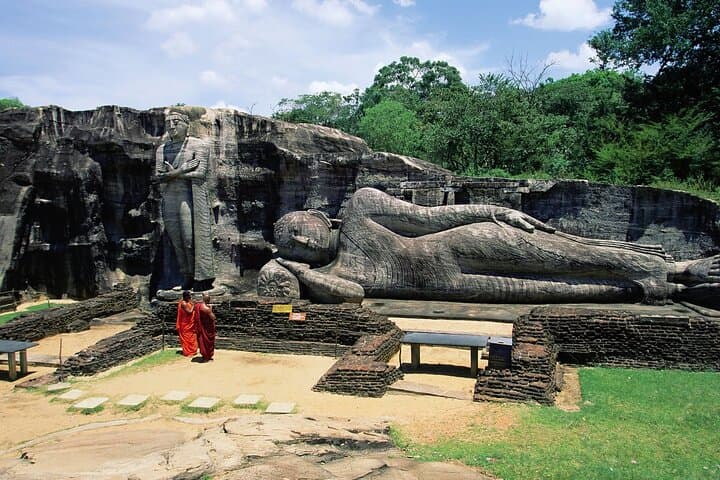
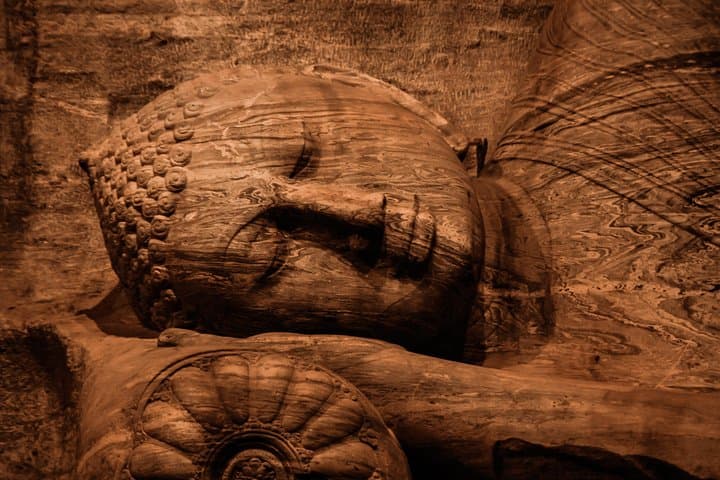
The route finishes with Polonnaruwa, where the medieval capital’s brick monuments and carved stone Buddhas sit in deliberate ruin—straightforward geometry of walls, stupas and meditation platforms that reveal a different chapter of the island’s urban history.
Geology here is simple and honest: granite outcrops and monolithic rock sculpted by time and monsoon, surrounded by plains fed by ancient tanks and irrigation works. Culturally, the Golden Triangle is the stage for successive centers of power—Anuradhapura, Polonnaruwa and the fortress at Sigiriya—each leaving architecture calibrated to both defence and devotion.
Practicalities: this is an 8–10 hour shared day tour from Kandy with private transport, guide, lunch and admissions included. Expect significant walking and a steep climb at Sigiriya—roughly 200 meters of vertical exposure via stairs and carved ramps. Dress respectfully for temple sites (shoulders and knees covered) and wear sturdy shoes with good grip; many stair sections are metal and can get slippery in humidity.
Start early to beat the heat and crowds, carry at least 1–2 liters of water, sun protection and a light rain layer during monsoon months. Photography rewards patience: fresco niches, cave interiors and summit panoramas are best in softer morning light. Finally, be mindful of conservation rules—stay on marked paths and avoid flash photography in the cave temples to preserve fragile pigments.
By day’s end you’ll have moved through time as much as space: cave sanctuaries, royal ambition carved in rock, and the orderly ruins of a capital—each place pushing you to look up, down and well beyond the obvious.
moderate.
8–10 hours.
You should be comfortable with several hours of walking and a sustained climb of ~200 m via stairs; moderate stamina required for heat and repeated steps.
The tour runs about 8–10 hours from pickup in Kandy, including transport, lunch and guided visits to Dambulla, Sigiriya and Polonnaruwa.
Yes—admissions for the three World Heritage sites are included in the tour price per the itinerary.
The climb involves staircases and metal walkways ascending roughly 200 meters; it’s physically demanding but does not require technical climbing skills.
Children can join, but infants must sit on an adult’s lap for transport; consider the climb and sun exposure for young kids.
Modest clothing covering shoulders and knees is required; bring a sarong or long scarf to cover up when needed.
Yes—the operator offers hotel pickup from locations throughout Kandy, typically 30 minutes before departure time.
The Cultural Triangle preserves successive capitals of ancient Sri Lanka; Sigiriya is a 5th-century royal citadel while Polonnaruwa later served as the medieval administrative center.
These sites are actively managed by Sri Lanka’s Department of Archaeology; visitors are asked to stick to paths, avoid touching frescoes and minimize single-use plastics to reduce wear and litter.
SkyHaven Tours operates guided outdoor trips and adventures with an emphasis on safety, stewardship, and memorable experiences.
You step out of the air‑conditioned van into heat that seems to rearrange your senses—dry earth, a breeze that smells faintly of dust and curry, and a silhouette rising from the plain: Sigiriya, a near-vertical column of rock that has watched over the Cultural Triangle for 1,500 years.
You step out of the air‑conditioned van into heat that seems to rearrange your senses—dry earth, a breeze that smells faintly of dust and curry, and a silhouette rising from the plain: Sigiriya, a near-vertical column of rock that has watched over the Cultural Triangle for 1,500 years.
The day begins with Dambulla, where the rock caves incline like a guardian over the valley. Inside, the cool air holds the whispers of painted narratives—Buddha in reclining repose, guardians caught mid-gesture, murals that span 2,100 square meters. The stone and color resist the sun outside, asking patience and quiet from visitors.
From there the road opens to Sigiriya. King Kashyapa’s 5th-century gamble—building a palace on a 200-meter granite headland—reads like imperial ambition in stone. You climb metal stairways that stitch around the face, pausing at the painted women on the midway terrace and then at the Lion’s Paw gateway, which hints at the throne once set above the clouds. When you reach the summit, the plains unfurl in a patchwork of tanks, paddy fields and scattered ruins—an aerial view into the engineered landscapes of ancient Sri Lanka.
The route finishes with Polonnaruwa, where the medieval capital’s brick monuments and carved stone Buddhas sit in deliberate ruin—straightforward geometry of walls, stupas and meditation platforms that reveal a different chapter of the island’s urban history.
Geology here is simple and honest: granite outcrops and monolithic rock sculpted by time and monsoon, surrounded by plains fed by ancient tanks and irrigation works. Culturally, the Golden Triangle is the stage for successive centers of power—Anuradhapura, Polonnaruwa and the fortress at Sigiriya—each leaving architecture calibrated to both defence and devotion.
Practicalities: this is an 8–10 hour shared day tour from Kandy with private transport, guide, lunch and admissions included. Expect significant walking and a steep climb at Sigiriya—roughly 200 meters of vertical exposure via stairs and carved ramps. Dress respectfully for temple sites (shoulders and knees covered) and wear sturdy shoes with good grip; many stair sections are metal and can get slippery in humidity.
Start early to beat the heat and crowds, carry at least 1–2 liters of water, sun protection and a light rain layer during monsoon months. Photography rewards patience: fresco niches, cave interiors and summit panoramas are best in softer morning light. Finally, be mindful of conservation rules—stay on marked paths and avoid flash photography in the cave temples to preserve fragile pigments.
By day’s end you’ll have moved through time as much as space: cave sanctuaries, royal ambition carved in rock, and the orderly ruins of a capital—each place pushing you to look up, down and well beyond the obvious.