THE ADVENTURE COLLECTIVE® · Independent discovery and booking for outdoor travel

Walk Sofia on your own terms with a 16-stop self-guided audio experience that pairs local storytelling with an interactive itinerary. Perfect for curious travelers who want historical depth without a rigid schedule.
Walk Sofia on your own terms with a 16-stop self-guided audio experience that pairs local storytelling with an interactive itinerary. Perfect for curious travelers who want historical depth without a rigid schedule.
You step off a tram into a square where stone remembers empires and the air smells faintly of coffee and hot bread. A voice in your ear — local, precise, unsentimental — begins to map the city: Roman stones underfoot, a golden-domed cathedral catching early light, Vitosha’s silhouette breathing behind the blocks. The guide lets you move at your pace; the city answers as you choose.
Verified experiences and guided adventures in the surrounding area.
Operated by Uvamai Niche Tourism · Sofia, Sofia City Province
You step off a tram into a square where stone remembers empires and the air smells faintly of coffee and hot bread. A voice in your ear — local, precise, unsentimental — begins to map the city: Roman stones underfoot, a golden-domed cathedral catching early light, Vitosha’s silhouette breathing behind the blocks. The guide lets you move at your pace; the city answers as you choose.
Sofia is an urban palimpsest. Ancient Serdica’s bathhouses and amphitheaters peek out through Ottoman-era mosques and austere socialist structures. Geologically, the broad plain drains south toward Vitosha, a granite massif whose foothills shaped the city’s expansion and provide a green backdrop to urban life. Culturally, Sofia mixes Orthodox liturgy, Catholic and Muslim traditions, and Jewish and Roma influences; the audio highlights each strand with archival anecdotes and political context from Ottoman rule through Soviet modernization.
Practical guidance: plan 3–9 hours for the full 16-stop itinerary but split it across days if you prefer close study. Start early to avoid midday crowds at the main monuments and to catch good light for photos. Use comfortable walking shoes—the route covers cobbles and occasional short stairways—and keep headphones and a charged phone handy; the guide is delivered via SoundCloud and Google My Maps. Many sites are wheelchair accessible, but some ancient ruins require uneven-ground navigation. Bring a small umbrella in shoulder seasons and check opening hours for paid sites. With a clear map and narrative commentary, this audio experience puts historical context in your pocket while letting the city decide your pace.
easy.
3–9 hours.
Suitable for most fitness levels; requires standing and walking on uneven city surfaces for several hours if done in one day.
Private access links are valid until your tour is complete, up to a maximum of six days after your selected start date.
You can stream the audio via SoundCloud and use Google My Maps online; previewing or downloading tracks and studying the map beforehand reduces data needs.
Many central stops and several key monuments are wheelchair accessible, but some archaeological sites and subterranean spaces have uneven surfaces—check individual site details in the map before arrival.
Yes — this is self-guided. Listen to segments in any order, pause between sites, and spread the itinerary across multiple days within the access window.
Sofia grew from the Roman city of Serdica; its surviving rotunda and excavated amphitheater reveal continuous occupation through Byzantine, Ottoman and modern Bulgarian eras.
Ongoing excavations in the city center are protected; visitors should stay on marked paths to avoid damaging archaeological remains and support responsible tourism by following signage and local guidelines.
Uvamai Niche Tourism operates guided outdoor trips and adventures with an emphasis on safety, stewardship, and memorable experiences.
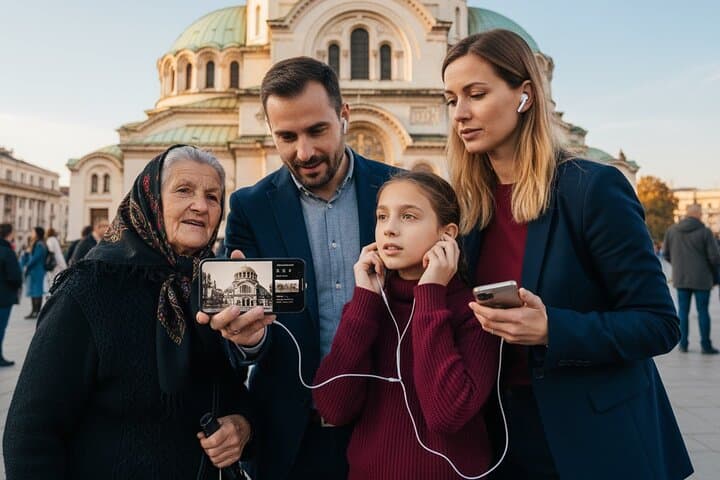
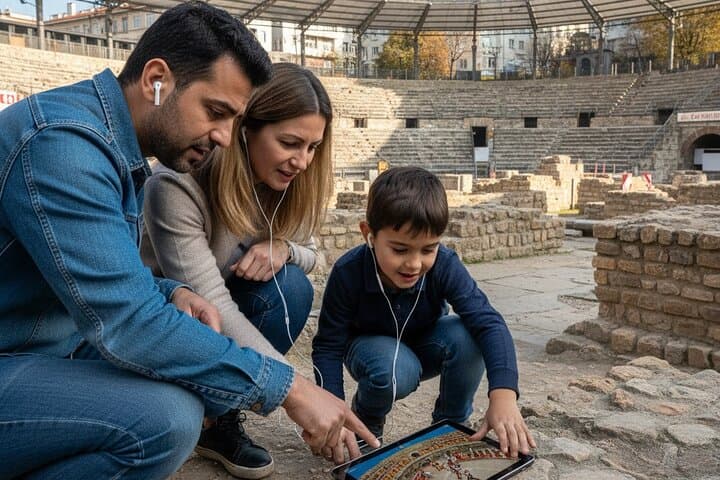
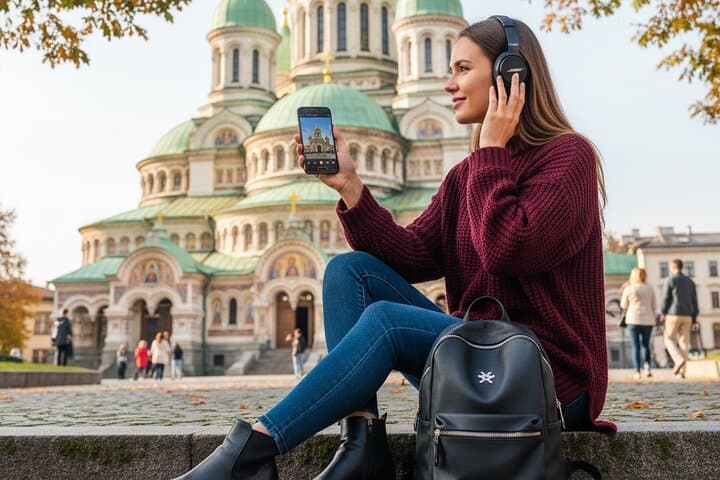
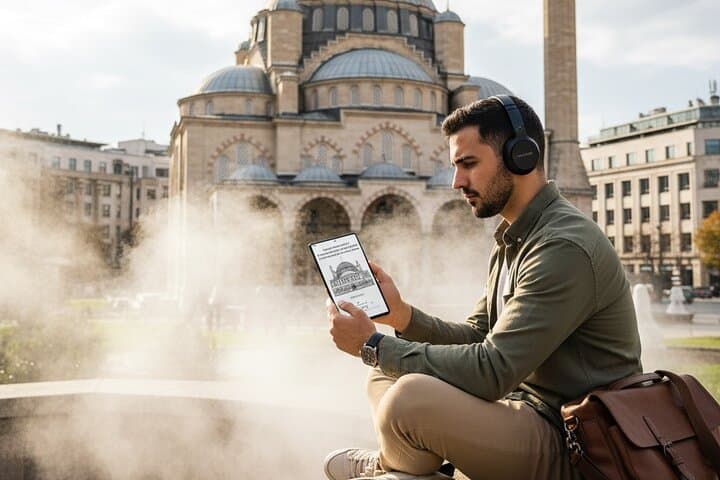
You step off a tram into a square where stone remembers empires and the air smells faintly of coffee and hot bread. A voice in your ear — local, precise, unsentimental — begins to map the city: Roman stones underfoot, a golden-domed cathedral catching early light, Vitosha’s silhouette breathing behind the blocks. The guide lets you move at your pace; the city answers as you choose.
You step off a tram into a square where stone remembers empires and the air smells faintly of coffee and hot bread. A voice in your ear — local, precise, unsentimental — begins to map the city: Roman stones underfoot, a golden-domed cathedral catching early light, Vitosha’s silhouette breathing behind the blocks. The guide lets you move at your pace; the city answers as you choose.
Sofia is an urban palimpsest. Ancient Serdica’s bathhouses and amphitheaters peek out through Ottoman-era mosques and austere socialist structures. Geologically, the broad plain drains south toward Vitosha, a granite massif whose foothills shaped the city’s expansion and provide a green backdrop to urban life. Culturally, Sofia mixes Orthodox liturgy, Catholic and Muslim traditions, and Jewish and Roma influences; the audio highlights each strand with archival anecdotes and political context from Ottoman rule through Soviet modernization.
Practical guidance: plan 3–9 hours for the full 16-stop itinerary but split it across days if you prefer close study. Start early to avoid midday crowds at the main monuments and to catch good light for photos. Use comfortable walking shoes—the route covers cobbles and occasional short stairways—and keep headphones and a charged phone handy; the guide is delivered via SoundCloud and Google My Maps. Many sites are wheelchair accessible, but some ancient ruins require uneven-ground navigation. Bring a small umbrella in shoulder seasons and check opening hours for paid sites. With a clear map and narrative commentary, this audio experience puts historical context in your pocket while letting the city decide your pace.