THE ADVENTURE COLLECTIVE® · Independent discovery and booking for outdoor travel

Skip the line at Sintra’s Moorish Castle and trade crowds for the quiet of the ramparts. This self-guided audio experience lets you move through centuries of history at your own pace while soaking up dramatic hilltop views.
Skip the line at Sintra’s Moorish Castle and trade crowds for the quiet of the ramparts. This self-guided audio experience lets you move through centuries of history at your own pace while soaking up dramatic hilltop views.
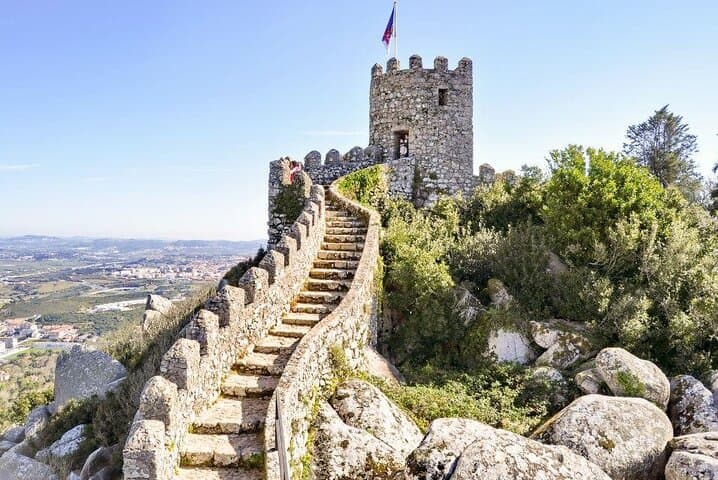
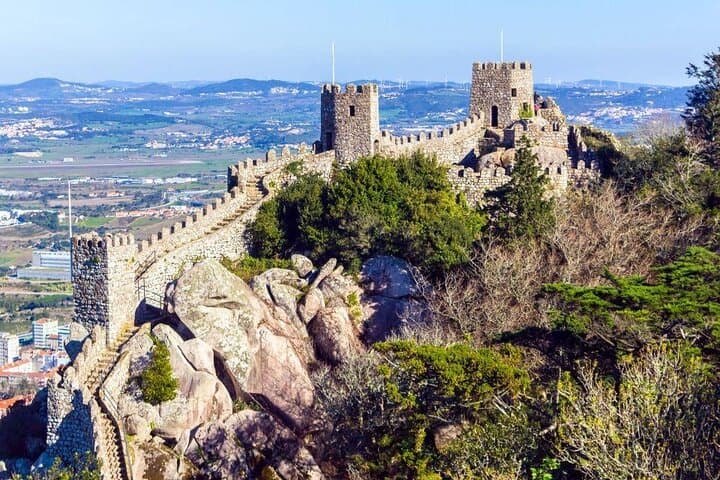
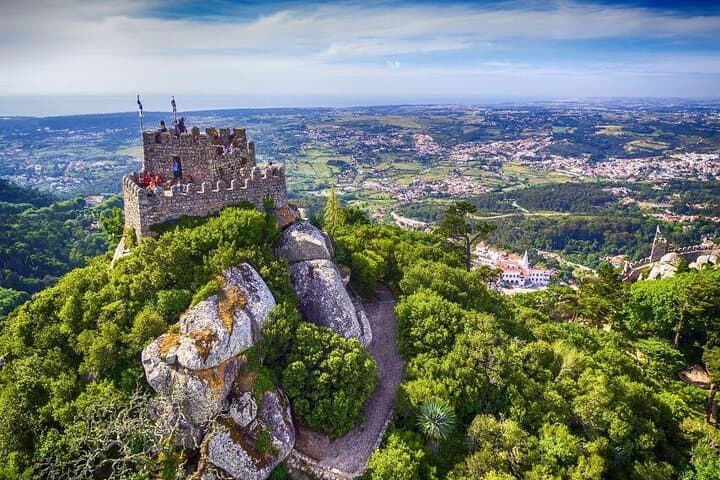
A morning fog lifts over the Serra de Sintra and the stone battlements of the Moorish Castle emerge like a weathered map of the past. You climb from the town through pines and heather, the path pitching steeper as the ramparts draw nearer; at the walls the wind seems to test each crenel while the views open toward the Palácio da Pena and the distant Atlantic.
Verified experiences and guided adventures in the surrounding area.
Operated by Book & Tour · Sintra, Lisbon District
A morning fog lifts over the Serra de Sintra and the stone battlements of the Moorish Castle emerge like a weathered map of the past. You climb from the town through pines and heather, the path pitching steeper as the ramparts draw nearer; at the walls the wind seems to test each crenel while the views open toward the Palácio da Pena and the distant Atlantic.
Built by Muslim occupants between the 8th and 10th centuries, the castle was a strategic lookout for centuries until it fell to Christian forces in the 12th century. In the 19th century, King Ferdinand II stabilized sections and the hill became part of the Romantic-era reimagining of Sintra’s landscape. Geology here is granite and schist, worn into paths and outcrops that demand careful footing. Local culture still orients around the hills: small bakeries in Sintra proper, artisan shops, and the steady stream of visitors learning the castle’s stories.
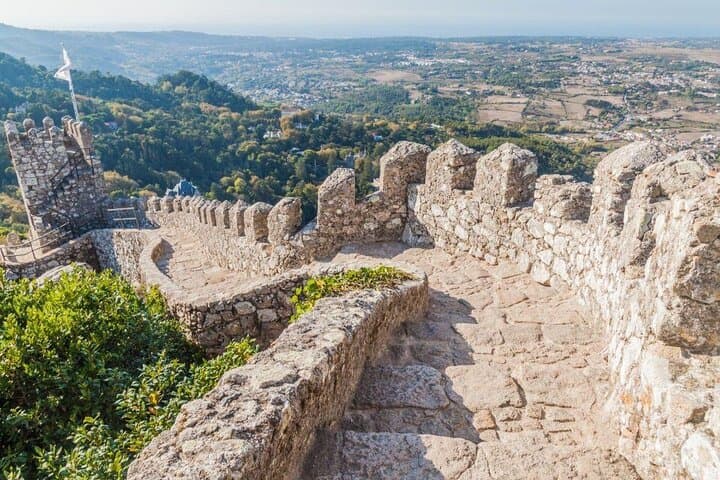
With a skip-the-line e-ticket and downloadable audio guide, you explore at your own pace: walk the Second Circle of Walls, stand on the Royal Tower, and listen to anecdotes that bring arrow slits and gatehouses to life. Practicalities matter—expect uneven stone, steep stairs and exposed ridgelines. Bring sturdy shoes, water, and a charged phone for the audio tour. Aim for morning or late afternoon to avoid peak heat and buses.
This is part history lesson, part hillwalk—rewarding for anyone who wants context with their views and the flexibility to linger where the landscape and the stones insist you stop.
moderate.
1–3 hours.
Moderate fitness for uphill walking and stairs; comfortable on uneven terrain for up to a few hours.
The skip-the-line e-ticket shortens wait times but entry still depends on capacity and opening hours—arriving early is the best way to avoid delays.
Much of the castle involves steep, uneven steps and narrow sections; those with limited mobility may find access restricted—check specific access points before booking.
Audio segments vary; most visitors spend 1–3 hours exploring the walls and viewpoints while listening to the tour at their own pace.
Take the train from Rossio Station to Sintra (about 40 minutes), then a local bus, tuk‑tuk, or a 30–60 minute uphill walk to the castle site.
Constructed by Moorish occupants between the 8th–10th centuries, the castle served as a strategic hilltop fortification and later received 19th-century conservation work during Sintra’s Romantic revival.
Managed as part of the Parques de Sintra, the site limits roaming and encourages staying on paths to prevent erosion and protect fragile vegetation and historic masonry.
Book & Tour operates guided outdoor trips and adventures with an emphasis on safety, stewardship, and memorable experiences.
A morning fog lifts over the Serra de Sintra and the stone battlements of the Moorish Castle emerge like a weathered map of the past. You climb from the town through pines and heather, the path pitching steeper as the ramparts draw nearer; at the walls the wind seems to test each crenel while the views open toward the Palácio da Pena and the distant Atlantic.
A morning fog lifts over the Serra de Sintra and the stone battlements of the Moorish Castle emerge like a weathered map of the past. You climb from the town through pines and heather, the path pitching steeper as the ramparts draw nearer; at the walls the wind seems to test each crenel while the views open toward the Palácio da Pena and the distant Atlantic.
Built by Muslim occupants between the 8th and 10th centuries, the castle was a strategic lookout for centuries until it fell to Christian forces in the 12th century. In the 19th century, King Ferdinand II stabilized sections and the hill became part of the Romantic-era reimagining of Sintra’s landscape. Geology here is granite and schist, worn into paths and outcrops that demand careful footing. Local culture still orients around the hills: small bakeries in Sintra proper, artisan shops, and the steady stream of visitors learning the castle’s stories.
With a skip-the-line e-ticket and downloadable audio guide, you explore at your own pace: walk the Second Circle of Walls, stand on the Royal Tower, and listen to anecdotes that bring arrow slits and gatehouses to life. Practicalities matter—expect uneven stone, steep stairs and exposed ridgelines. Bring sturdy shoes, water, and a charged phone for the audio tour. Aim for morning or late afternoon to avoid peak heat and buses.
This is part history lesson, part hillwalk—rewarding for anyone who wants context with their views and the flexibility to linger where the landscape and the stones insist you stop.