THE ADVENTURE COLLECTIVE® · Independent discovery and booking for outdoor travel

Drive the rim and descend into Sete Cidades’ caldera on a full-day 4x4 tour that pairs dramatic crater views with coastal lava fajãs. Expect geology-rich stops, basalt pools at Mosteiros and Ferraria, and short walks to prime viewpoints.
Drive the rim and descend into Sete Cidades’ caldera on a full-day 4x4 tour that pairs dramatic crater views with coastal lava fajãs. Expect geology-rich stops, basalt pools at Mosteiros and Ferraria, and short walks to prime viewpoints.
Dawn spills across the caldera rim and the 4x4 hums along a dirt ridge, tires sending up the scent of wet volcanic soil. From the ridge you watch the crater open out: two lakes—one deep blue, one emerald green—sit like slow-moving tides inside a bowl of steep walls. Wind tugs at the scrub and the vehicle leans into the turns as the guide points out fumaroles, lava fields and the pattern of old flows.
Verified experiences and guided adventures in the surrounding area.
Operated by Carpe Diem dream tours · Sete Cidades, Azores
Dawn spills across the caldera rim and the 4x4 hums along a dirt ridge, tires sending up the scent of wet volcanic soil. From the ridge you watch the crater open out: two lakes—one deep blue, one emerald green—sit like slow-moving tides inside a bowl of steep walls. Wind tugs at the scrub and the vehicle leans into the turns as the guide points out fumaroles, lava fields and the pattern of old flows.
The Sete Cidades caldera formed in a violent collapse tens of thousands of years ago; subsequent eruptions built cones like Pico da Mafra and Pico das Camarinhas. The landscape is raw geology—basalt cliffs, pooled lakes controlled by man-made tunnels, and coastal fajãs where lava met the sea and froze into platforms now used by fishermen.
Local culture still orients around the sea and the land: fishing hamlets like Mosteiros preserve natural basalt pools and simple seafood traditions, while folklore ties the twin lakes to lovers and omens. Birdlife—especially seabirds—claims the cliffs and offshore rocks.
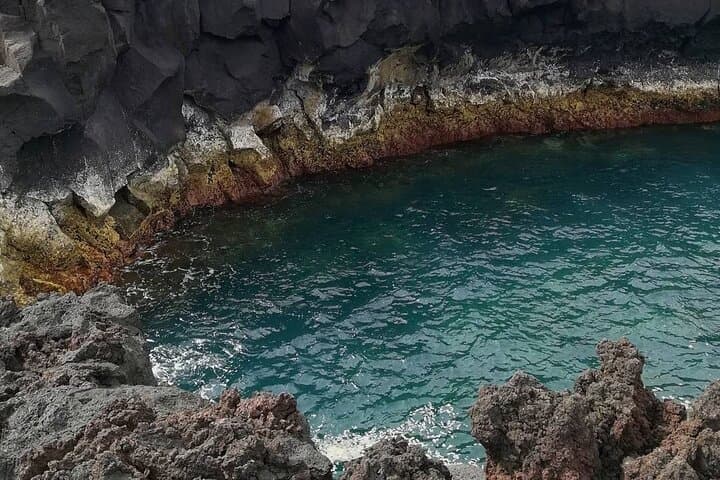
Practical side: the tour is vehicle-led with short stops for viewpoints, a visit to the tunnel that regulates lake levels, and time at Ferraria’s rocky natural pool. Dress in layers and waterproof gear, because ocean winds and sudden showers are common. Bring sturdy shoes for uneven basalt and a camera with a wide lens for crater panoramas. Expect a full day on rough roads—this is an exploration of volcanic architecture more than a strenuous hike, ideal for travelers who want a compact, geology-forward view of São Miguel’s west coast.
easy.
6–7 hours.
Minimal fitness required; able to handle short walks up to 20 minutes on uneven ground and steps.
The experience is a full-day tour of roughly 6–7 hours with hotel or port pick-up and drop-off from Ponta Delgada.
The tour accommodates most fitness levels with short walks; however, it’s not recommended for those with serious back or heart problems and requires adult supervision for children.
Yes—there are multiple viewpoints along the rim and a controlled access tunnel area to observe the lakes’ levels; some stops include short walks to viewpoints.
The operator runs in most conditions but may reschedule or refund if extreme weather affects safety; dress for rain and wind just in case.
The Sete Cidades caldera collapsed during a major event roughly 36,000 years ago; repeated eruptions around the rim created the smaller cones and lava fajãs seen today.
The caldera and coastal fajãs are ecologically sensitive—stay on designated paths, avoid disturbing nesting birds, and follow local guidance to reduce erosion and pollution.
Carpe Diem dream tours operates guided outdoor trips and adventures with an emphasis on safety, stewardship, and memorable experiences.
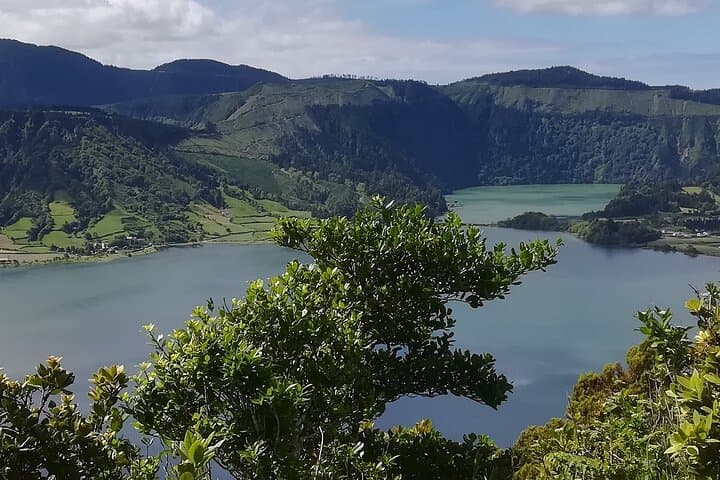
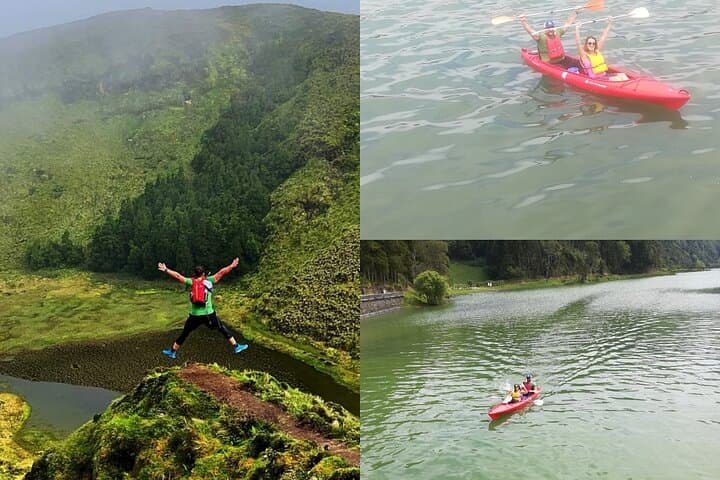
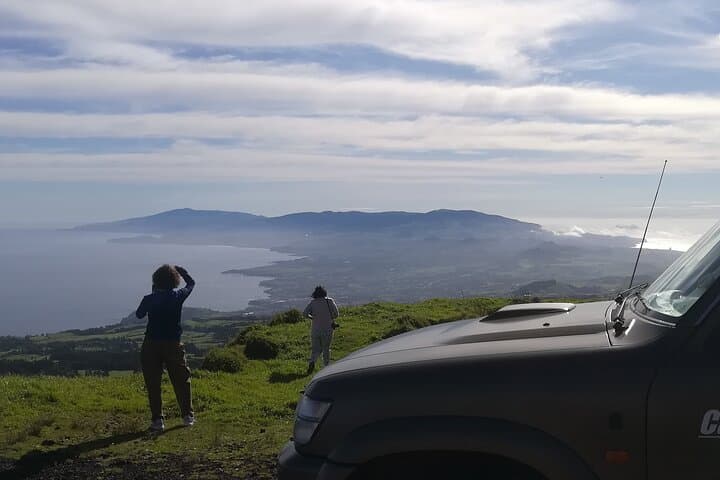
Dawn spills across the caldera rim and the 4x4 hums along a dirt ridge, tires sending up the scent of wet volcanic soil. From the ridge you watch the crater open out: two lakes—one deep blue, one emerald green—sit like slow-moving tides inside a bowl of steep walls. Wind tugs at the scrub and the vehicle leans into the turns as the guide points out fumaroles, lava fields and the pattern of old flows.
Dawn spills across the caldera rim and the 4x4 hums along a dirt ridge, tires sending up the scent of wet volcanic soil. From the ridge you watch the crater open out: two lakes—one deep blue, one emerald green—sit like slow-moving tides inside a bowl of steep walls. Wind tugs at the scrub and the vehicle leans into the turns as the guide points out fumaroles, lava fields and the pattern of old flows.
The Sete Cidades caldera formed in a violent collapse tens of thousands of years ago; subsequent eruptions built cones like Pico da Mafra and Pico das Camarinhas. The landscape is raw geology—basalt cliffs, pooled lakes controlled by man-made tunnels, and coastal fajãs where lava met the sea and froze into platforms now used by fishermen.
Local culture still orients around the sea and the land: fishing hamlets like Mosteiros preserve natural basalt pools and simple seafood traditions, while folklore ties the twin lakes to lovers and omens. Birdlife—especially seabirds—claims the cliffs and offshore rocks.
Practical side: the tour is vehicle-led with short stops for viewpoints, a visit to the tunnel that regulates lake levels, and time at Ferraria’s rocky natural pool. Dress in layers and waterproof gear, because ocean winds and sudden showers are common. Bring sturdy shoes for uneven basalt and a camera with a wide lens for crater panoramas. Expect a full day on rough roads—this is an exploration of volcanic architecture more than a strenuous hike, ideal for travelers who want a compact, geology-forward view of São Miguel’s west coast.