THE ADVENTURE COLLECTIVE® · Independent discovery and booking for outdoor travel

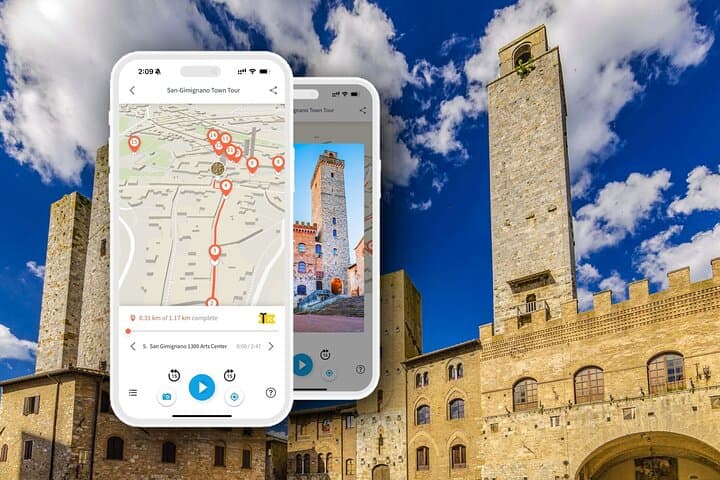
One hour is enough to trace San Gimignano’s medieval spine if you have a clear route and concise commentary. This self-guided audio tour pairs historic insight with an offline map so you can move through towers, piazzas, and frescoed churches at your own pace.
One hour is enough to trace San Gimignano’s medieval spine if you have a clear route and concise commentary. This self-guided audio tour pairs historic insight with an offline map so you can move through towers, piazzas, and frescoed churches at your own pace.
You pass beneath the stone arch of Porta San Giovanni and the town’s towers reappear—squat, hungry for the sky—stacked like brick chapters of a medieval ledger. The audio guide wakes in your pocket; a historian’s voice recommends the best angles and points your eye to frescoes and crenellations while you walk at your own pace.
Verified experiences and guided adventures in the surrounding area.
Operated by TouringBee · San Gimignano, Tuscany
You pass beneath the stone arch of Porta San Giovanni and the town’s towers reappear—squat, hungry for the sky—stacked like brick chapters of a medieval ledger. The audio guide wakes in your pocket; a historian’s voice recommends the best angles and points your eye to frescoes and crenellations while you walk at your own pace.
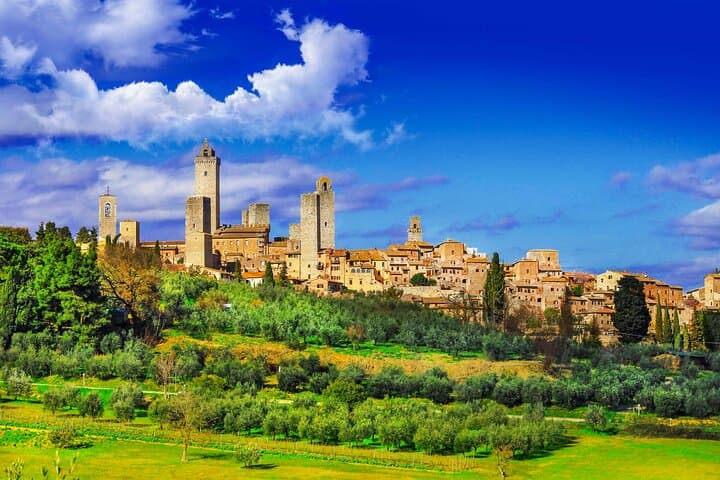
San Gimignano rose in the Middle Ages as a stop on the Via Francigena, its skyline shaped by rival families who built stone towers as both status and defense. The surrounding terrain is composed of rolling Pliocene hills—fertile loam that made this a strategic agricultural crossroads—and the town’s compact streets preserve the grid and rhythms of medieval civic life.
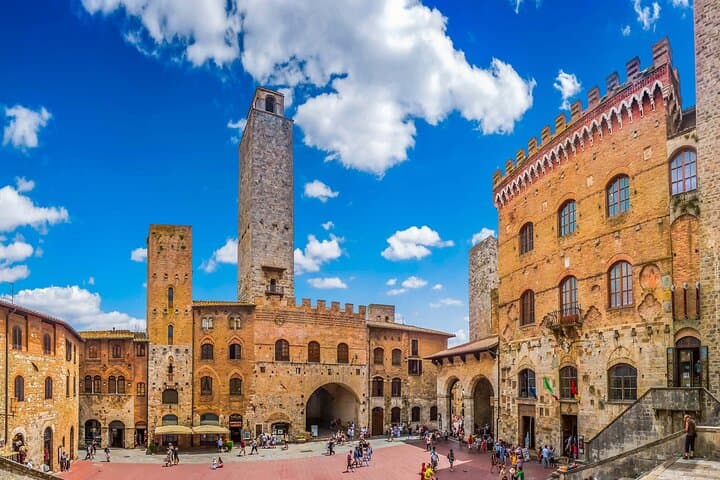
Culture here is direct: patron saints kept civic order, guilds funded fresco cycles, and gelato parades through the piazza. Local life still orbits Piazza della Cisterna and Torre Grossa; the smell of espresso and baking bread tugs you into narrow alleys where artisans sell ceramics and leather goods.
Practical guidance: download the app and the tour for offline use before arrival, because historic streets can be tight for data. The one-hour route covers 14 commentary points from Porta San Giovanni to Rocca di Montestaffoli—expect cobbles, short stair climbs, and intermittent hill slopes. Museum entry and Torre Grossa access require separate tickets and queues can form midday; plan an early start or late afternoon slot. Carry water, comfortable shoes, and headphones. The guide is ideal for travelers who want historical context without a fixed schedule and who appreciate self-directed exploration with reliable narration.
easy.
1 hour.
Suitable for most fitness levels; requires steady walking and negotiating short flights of stairs.
The audio guide is designed for solo exploration and provides 14 narrated points; it’s sufficient for an independent visit but won’t provide real-time answers a live guide could.
No—entries to museums and Torre Grossa are not included and must be purchased separately, often on-site or via museum websites.
Yes—once downloaded the app and route work offline, which is useful in areas with limited mobile signal.
San Gimignano’s historic streets and some attractions include steep cobbles and steps; full accessibility is limited—contact venues directly about specific access needs.
San Gimignano expanded during the 11th–14th centuries as a mercantile stop on the Via Francigena; its towers signaled family power and civic rivalry.
Visitor pressure on narrow streets and historic buildings is managed through regulated traffic and preservation rules; avoid touching frescoes and stick to marked paths to limit wear.
TouringBee operates guided outdoor trips and adventures with an emphasis on safety, stewardship, and memorable experiences.
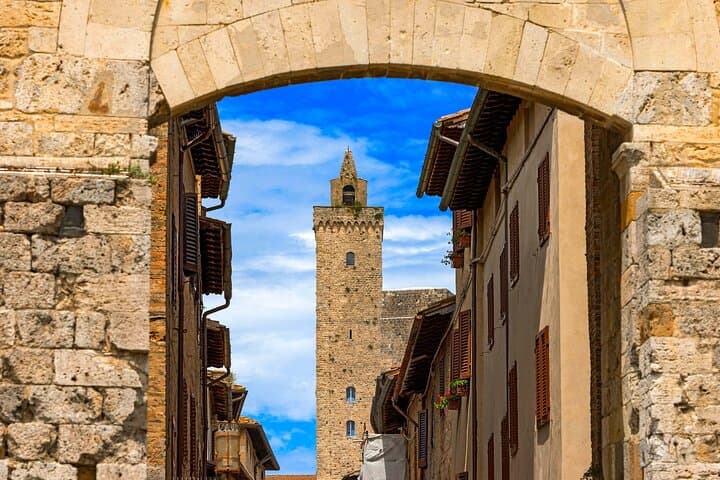
You pass beneath the stone arch of Porta San Giovanni and the town’s towers reappear—squat, hungry for the sky—stacked like brick chapters of a medieval ledger. The audio guide wakes in your pocket; a historian’s voice recommends the best angles and points your eye to frescoes and crenellations while you walk at your own pace.
You pass beneath the stone arch of Porta San Giovanni and the town’s towers reappear—squat, hungry for the sky—stacked like brick chapters of a medieval ledger. The audio guide wakes in your pocket; a historian’s voice recommends the best angles and points your eye to frescoes and crenellations while you walk at your own pace.
San Gimignano rose in the Middle Ages as a stop on the Via Francigena, its skyline shaped by rival families who built stone towers as both status and defense. The surrounding terrain is composed of rolling Pliocene hills—fertile loam that made this a strategic agricultural crossroads—and the town’s compact streets preserve the grid and rhythms of medieval civic life.
Culture here is direct: patron saints kept civic order, guilds funded fresco cycles, and gelato parades through the piazza. Local life still orbits Piazza della Cisterna and Torre Grossa; the smell of espresso and baking bread tugs you into narrow alleys where artisans sell ceramics and leather goods.
Practical guidance: download the app and the tour for offline use before arrival, because historic streets can be tight for data. The one-hour route covers 14 commentary points from Porta San Giovanni to Rocca di Montestaffoli—expect cobbles, short stair climbs, and intermittent hill slopes. Museum entry and Torre Grossa access require separate tickets and queues can form midday; plan an early start or late afternoon slot. Carry water, comfortable shoes, and headphones. The guide is ideal for travelers who want historical context without a fixed schedule and who appreciate self-directed exploration with reliable narration.