THE ADVENTURE COLLECTIVE® · Independent discovery and booking for outdoor travel

Step into one of Imperial Rome’s largest public spaces with a skip-the-line ticket and round-trip transfer. Use a multilingual audio guide app to explore the Baths of Caracalla at your own pace—allow 2–4 hours to see the main halls, mosaics, and ancient heating systems.
Step into one of Imperial Rome’s largest public spaces with a skip-the-line ticket and round-trip transfer. Use a multilingual audio guide app to explore the Baths of Caracalla at your own pace—allow 2–4 hours to see the main halls, mosaics, and ancient heating systems.
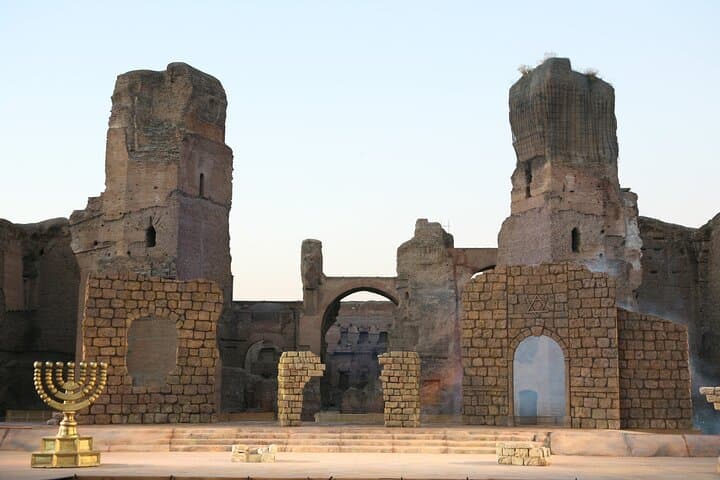
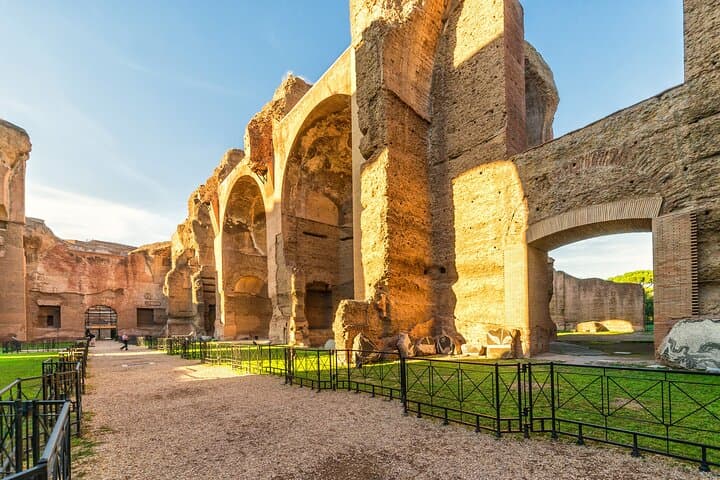
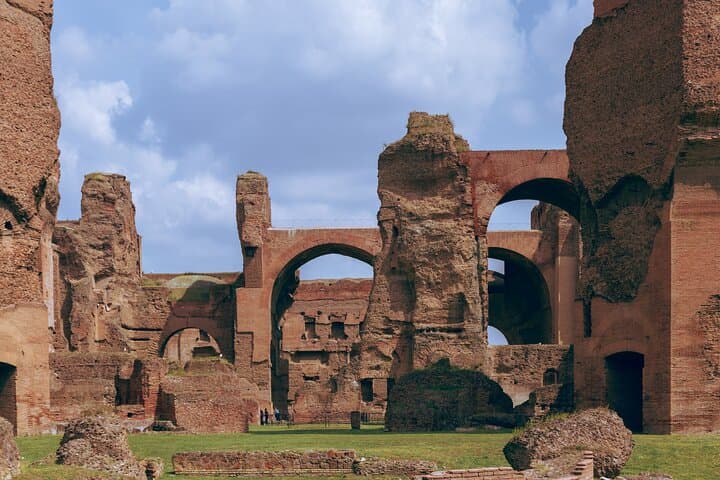
The morning light cuts across the broken vaults of the Baths of Caracalla, revealing long rows of stone where steam once hung and people moved between caldaria and frigidaria. With a short transfer from the Touristation Office in Piazza d’Aracoeli, you arrive ready to step into one of Imperial Rome’s grandest public spaces.
Verified experiences and guided adventures in the surrounding area.
Operated by TOURISTATION · Rome, Lazio
The morning light cuts across the broken vaults of the Baths of Caracalla, revealing long rows of stone where steam once hung and people moved between caldaria and frigidaria. With a short transfer from the Touristation Office in Piazza d’Aracoeli, you arrive ready to step into one of Imperial Rome’s grandest public spaces.
Built in the early 3rd century AD and opened under Emperor Caracalla (around AD 216), the complex was a social and engineering hub—heated floors (the hypocaust), vast vaulted halls, and decorative mosaics that once lined swimming pools and exercise rooms. The scale is immediately clear: these were civic baths meant to hold thousands, a practical expression of Roman engineering fed by aqueducts.
Today the ruins expose the bones of that system: thick brick walls, remnants of marble plates and tessellated floors, and fresco fragments that hint at the baths’ former color. Nearby, the Aurelian Walls and Villa Celimontana give context to the site’s role within the ancient city.
Practicalities are straightforward. Meet at Piazza d’Aracoeli 16, board the included round-trip transfer, then use the multilingual audio guide app to explore at your own pace; the flexible ticket and skip-the-line entry let you linger without rushing. Allow two to four hours to move through the main halls, mosaic fragments, and open courtyards.
Wear comfortable shoes, carry water (water bottles allowed), and expect light walking on uneven stone. There are limited shade spots, so plan visits for morning or late afternoon in summer. The site is protected—observe barriers and avoid touching fragile surfaces to help preserve this slice of Rome’s engineered past.
easy.
2–4 hours.
Light walking on uneven ground; suitable for most fitness levels
Meet at the Touristation Office in Piazza d’Aracoeli 16 for the included round-trip transfer to the Baths.
Plan 2–4 hours to explore the main halls, mosaics, and courtyards at a relaxed pace using the audioguide app.
Yes—the digital audio guide app offers multiple languages to accommodate international visitors.
The site has uneven surfaces and steps; while generally suitable for most visitors, some areas may be difficult for those with limited mobility.
The Baths of Caracalla were completed in the early 3rd century AD and served as a major public bathing complex and social center for Imperial Rome.
The site is a protected archaeological monument—visitors should stay behind barriers, avoid touching delicate surfaces, and follow on-site rules to help preserve the ruins.
TOURISTATION operates guided outdoor trips and adventures with an emphasis on safety, stewardship, and memorable experiences.

The morning light cuts across the broken vaults of the Baths of Caracalla, revealing long rows of stone where steam once hung and people moved between caldaria and frigidaria. With a short transfer from the Touristation Office in Piazza d’Aracoeli, you arrive ready to step into one of Imperial Rome’s grandest public spaces.
The morning light cuts across the broken vaults of the Baths of Caracalla, revealing long rows of stone where steam once hung and people moved between caldaria and frigidaria. With a short transfer from the Touristation Office in Piazza d’Aracoeli, you arrive ready to step into one of Imperial Rome’s grandest public spaces.
Built in the early 3rd century AD and opened under Emperor Caracalla (around AD 216), the complex was a social and engineering hub—heated floors (the hypocaust), vast vaulted halls, and decorative mosaics that once lined swimming pools and exercise rooms. The scale is immediately clear: these were civic baths meant to hold thousands, a practical expression of Roman engineering fed by aqueducts.
Today the ruins expose the bones of that system: thick brick walls, remnants of marble plates and tessellated floors, and fresco fragments that hint at the baths’ former color. Nearby, the Aurelian Walls and Villa Celimontana give context to the site’s role within the ancient city.
Practicalities are straightforward. Meet at Piazza d’Aracoeli 16, board the included round-trip transfer, then use the multilingual audio guide app to explore at your own pace; the flexible ticket and skip-the-line entry let you linger without rushing. Allow two to four hours to move through the main halls, mosaic fragments, and open courtyards.
Wear comfortable shoes, carry water (water bottles allowed), and expect light walking on uneven stone. There are limited shade spots, so plan visits for morning or late afternoon in summer. The site is protected—observe barriers and avoid touching fragile surfaces to help preserve this slice of Rome’s engineered past.