THE ADVENTURE COLLECTIVE® · Independent discovery and booking for outdoor travel

Trace over 2,000 years of Jewish history on a focused 2–3 hour small-group walk through Rome’s Jewish Ghetto. Expect intimate stops, local food tips, and layered stories from Roman rule to the modern synagogue.
Trace over 2,000 years of Jewish history on a focused 2–3 hour small-group walk through Rome’s Jewish Ghetto. Expect intimate stops, local food tips, and layered stories from Roman rule to the modern synagogue.
You step off a cobbled street and the city changes tone: narrow lanes open to a small square, the scent of frying artichokes and warm bread rolling off a corner bakery. The Jewish Ghetto in Rome is compact but dense with stories—stone facades bearing plaques, medieval alleys that funnel you toward the Tiber and an island that has watched Rome change for millennia.
Verified experiences and guided adventures in the surrounding area.
Operated by Airotour Ltd - Freetourrome · Rome, Lazio
You step off a cobbled street and the city changes tone: narrow lanes open to a small square, the scent of frying artichokes and warm bread rolling off a corner bakery. The Jewish Ghetto in Rome is compact but dense with stories—stone facades bearing plaques, medieval alleys that funnel you toward the Tiber and an island that has watched Rome change for millennia.
The Ghetto was formally created in 1555 under papal decree and remained a constrained, vibrant community until emancipation in the 19th century; later layers include the imposing Great Synagogue built in 1904 and Roman ruins tucked beneath porticoes. The district sits on river alluvium at a low bend of the Tiber, which influenced its architecture and daily rhythms—streets prone to historic flooding and a market culture adapted to tight spaces.
This small-group walk (4–10 guests) emphasizes stories: survival, culinary tradition, and the living culture of Roman Judaism, with stops at memorials, the Turtle Fountain, and viewpoints toward Tiber Island.
Practical edge: expect 2–3 hours on paved, often uneven stone; bring comfortable shoes and a light jacket for breezy river crossings. Mornings are cooler and quieter; late afternoons offer active local life and markets. Ask your guide about kosher dining options and where to sample carciofi alla giudia (Jewish-style artichokes).
Be prepared to move at a walking-tour pace, to listen for detailed historical context, and to respect active religious sites. This is a city stroll that rewards attention—read the stones and you’ll find centuries of stories underfoot.
easy.
2–3 hours.
Suitable for most fitness levels; requires standing and walking on uneven pavement for up to three hours.
The tour runs approximately 2–3 hours depending on group size and pace.
Yes—mobile or paper tickets are accepted; confirmation is instant at booking.
Streets are generally narrow and cobbled; while short strollers may work, accessibility is limited—contact the operator for specifics.
The guide gives local recommendations and points out kosher restaurants and bakeries, but food tastings are not usually included in the standard tour price.
The Ghetto was established by papal decree in 1555 and evolved into one of Europe’s longest-standing Jewish quarters; the Great Synagogue (early 20th century) marks a later, civic chapter.
Support local businesses to help sustain the living community; avoid touching fragile stonework and carry out all trash to protect historic streets.
Airotour Ltd - Freetourrome operates guided outdoor trips and adventures with an emphasis on safety, stewardship, and memorable experiences.
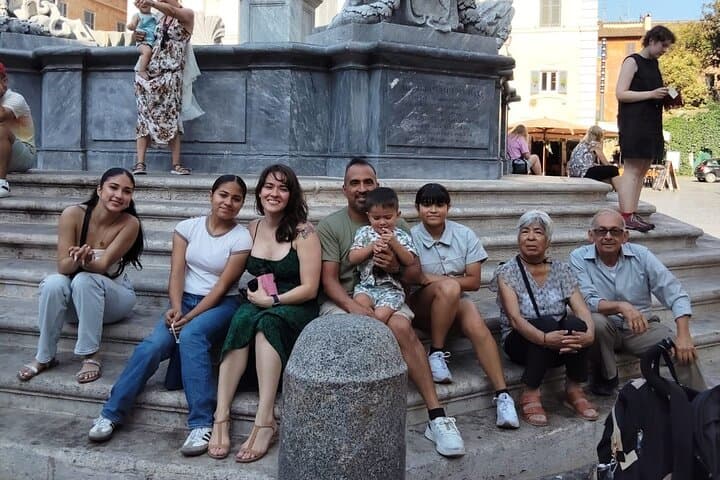
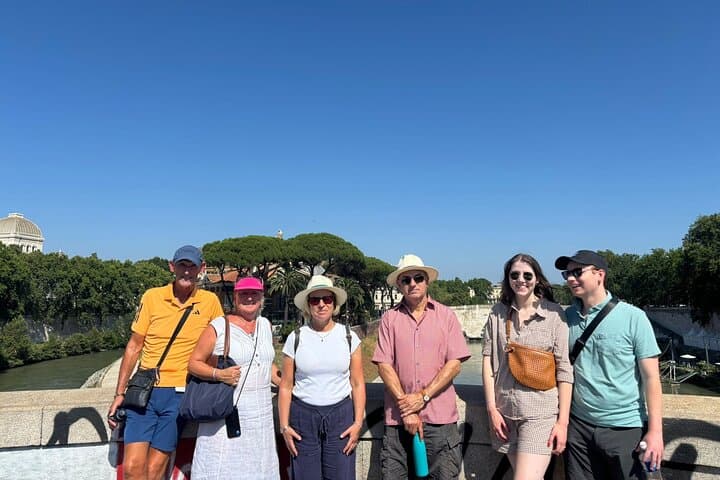
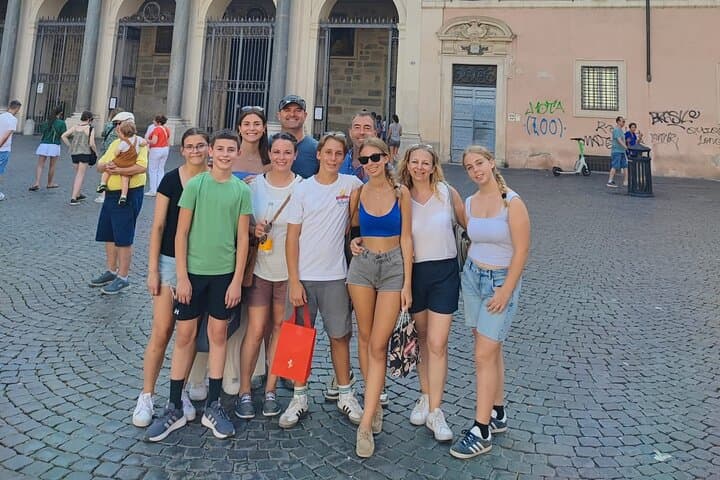
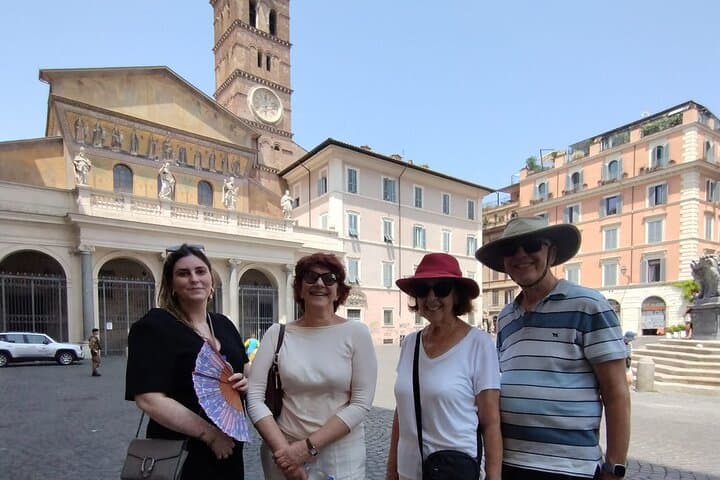
You step off a cobbled street and the city changes tone: narrow lanes open to a small square, the scent of frying artichokes and warm bread rolling off a corner bakery. The Jewish Ghetto in Rome is compact but dense with stories—stone facades bearing plaques, medieval alleys that funnel you toward the Tiber and an island that has watched Rome change for millennia.
You step off a cobbled street and the city changes tone: narrow lanes open to a small square, the scent of frying artichokes and warm bread rolling off a corner bakery. The Jewish Ghetto in Rome is compact but dense with stories—stone facades bearing plaques, medieval alleys that funnel you toward the Tiber and an island that has watched Rome change for millennia.
The Ghetto was formally created in 1555 under papal decree and remained a constrained, vibrant community until emancipation in the 19th century; later layers include the imposing Great Synagogue built in 1904 and Roman ruins tucked beneath porticoes. The district sits on river alluvium at a low bend of the Tiber, which influenced its architecture and daily rhythms—streets prone to historic flooding and a market culture adapted to tight spaces.
This small-group walk (4–10 guests) emphasizes stories: survival, culinary tradition, and the living culture of Roman Judaism, with stops at memorials, the Turtle Fountain, and viewpoints toward Tiber Island.
Practical edge: expect 2–3 hours on paved, often uneven stone; bring comfortable shoes and a light jacket for breezy river crossings. Mornings are cooler and quieter; late afternoons offer active local life and markets. Ask your guide about kosher dining options and where to sample carciofi alla giudia (Jewish-style artichokes).
Be prepared to move at a walking-tour pace, to listen for detailed historical context, and to respect active religious sites. This is a city stroll that rewards attention—read the stones and you’ll find centuries of stories underfoot.