THE ADVENTURE COLLECTIVE® · Independent discovery and booking for outdoor travel

Descend into Rome’s ancient catacombs and walk the historic stones of the Appian Way on a focused two-hour private tour. Learn the layers of Roman history while navigating subterranean corridors and open, pine-lined avenues.
Descend into Rome’s ancient catacombs and walk the historic stones of the Appian Way on a focused two-hour private tour. Learn the layers of Roman history while navigating subterranean corridors and open, pine-lined avenues.
You step down into a cool corridor where stone presses close and the light thins, the air carrying the hush of centuries. The guide’s voice echoes as niches and inscriptions climb the ribbed walls; outside, the Appian Way stretches like an unhurried ribbon of basalt, pines leaning over the old road as if listening.
Verified experiences and guided adventures in the surrounding area.
Operated by RomAbout Tours · Rome, Lazio
You step down into a cool corridor where stone presses close and the light thins, the air carrying the hush of centuries. The guide’s voice echoes as niches and inscriptions climb the ribbed walls; outside, the Appian Way stretches like an unhurried ribbon of basalt, pines leaning over the old road as if listening.
Beneath and beside the modern city lie layers of Roman life: the catacombs began as subterranean burial networks used by early Christians and pagans, while the Appian Way (Via Appia) was laid in 312 BCE by Appius Claudius to link Rome with its southern territories. You’ll pass carved tombs and the stone bulk of the Tomb of Cecilia Metella, and glimpse the Circus of Maxentius where chariot dust still seems to hang in the air.
Geology here is plain and telling — volcanic tuff and travertine quarried for buildings, basalt paving surviving millennia underfoot. Culture and ritual are visible in epitaphs and mausolea; the landscape has hosted soldiers, pilgrims and shepherds.
Practical guidance: wear sturdy, closed-toe shoes for narrow steps and uneven surfaces; bring a light jacket for the cool, damp catacombs and sun protection for the open Appian stretches. The tour is compact — roughly two hours of mostly gentle walking with periods of standing and occasional stairs. Photography rules vary by chamber and site; follow your guide. If you are claustrophobic or pregnant, consider the cave-like sections carefully. Book a morning slot for softer light along the road and quieter corridors in the catacombs.
easy.
2 hours.
Light fitness—able to walk on uneven ground and descend/ascend staircases; suitable for most walkers
Many sections have steps and narrow corridors; accessibility is limited—contact the tour operator to discuss alternatives or site-specific accommodations.
Rules vary by chamber and site; flashes are often prohibited to protect pigments, so follow the guide’s instructions.
Yes—this tour includes highlights along the Appian Way such as the Tomb of Cecilia Metella and the Circus of Maxentius, weather and route permitting.
Older children who can manage stairs and remain quiet in confined spaces do well, but infants must sit on laps and claustrophobic children may struggle.
The Appian Way was begun in 312 BCE as Rome’s strategic arterial road; the catacombs are early Christian and proto-Christian burial networks carved from soft tuff.
The Appia Antica Regional Park protects the road and archaeological sites—stay on marked paths and avoid touching fragile masonry or human remains to minimize impact.
RomAbout Tours operates guided outdoor trips and adventures with an emphasis on safety, stewardship, and memorable experiences.
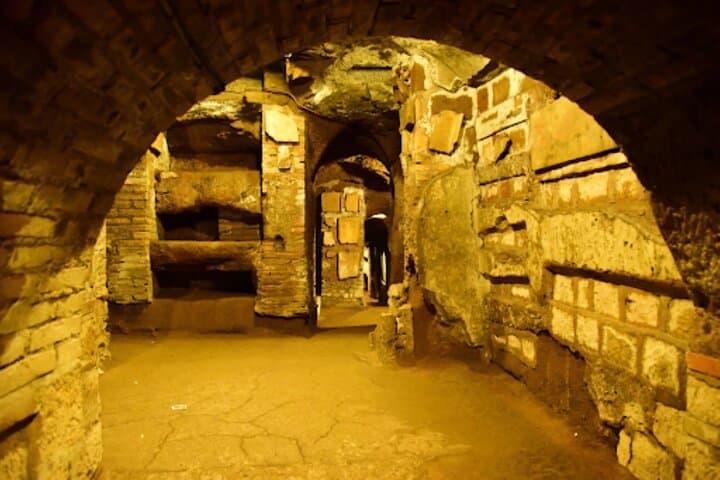
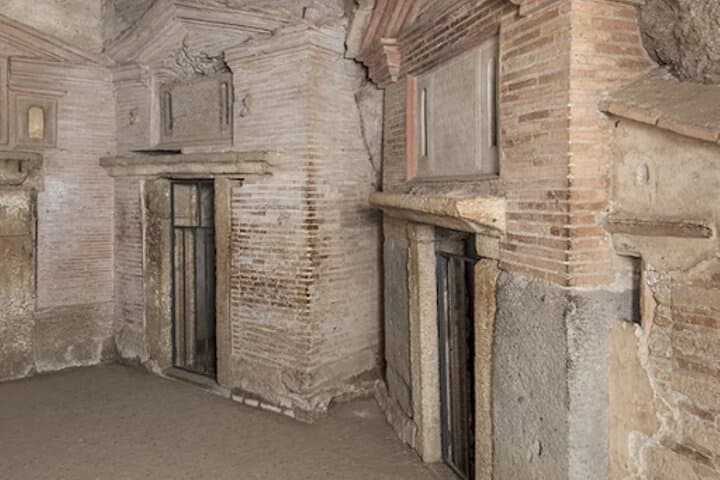
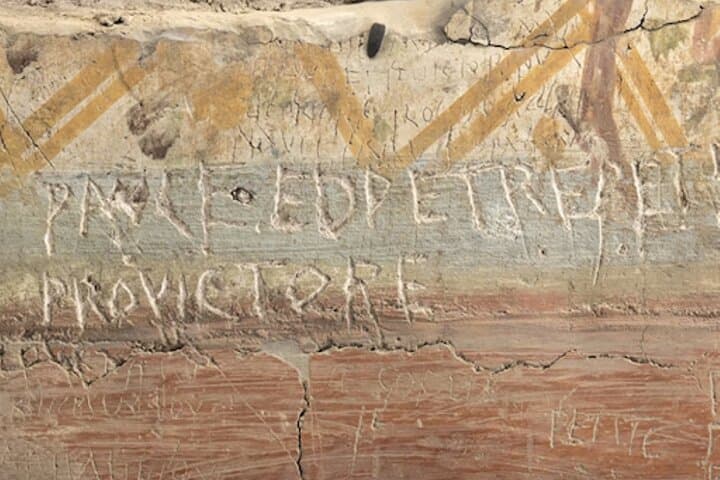

You step down into a cool corridor where stone presses close and the light thins, the air carrying the hush of centuries. The guide’s voice echoes as niches and inscriptions climb the ribbed walls; outside, the Appian Way stretches like an unhurried ribbon of basalt, pines leaning over the old road as if listening.
You step down into a cool corridor where stone presses close and the light thins, the air carrying the hush of centuries. The guide’s voice echoes as niches and inscriptions climb the ribbed walls; outside, the Appian Way stretches like an unhurried ribbon of basalt, pines leaning over the old road as if listening.
Beneath and beside the modern city lie layers of Roman life: the catacombs began as subterranean burial networks used by early Christians and pagans, while the Appian Way (Via Appia) was laid in 312 BCE by Appius Claudius to link Rome with its southern territories. You’ll pass carved tombs and the stone bulk of the Tomb of Cecilia Metella, and glimpse the Circus of Maxentius where chariot dust still seems to hang in the air.
Geology here is plain and telling — volcanic tuff and travertine quarried for buildings, basalt paving surviving millennia underfoot. Culture and ritual are visible in epitaphs and mausolea; the landscape has hosted soldiers, pilgrims and shepherds.
Practical guidance: wear sturdy, closed-toe shoes for narrow steps and uneven surfaces; bring a light jacket for the cool, damp catacombs and sun protection for the open Appian stretches. The tour is compact — roughly two hours of mostly gentle walking with periods of standing and occasional stairs. Photography rules vary by chamber and site; follow your guide. If you are claustrophobic or pregnant, consider the cave-like sections carefully. Book a morning slot for softer light along the road and quieter corridors in the catacombs.