THE ADVENTURE COLLECTIVE® · Independent discovery and booking for outdoor travel

Glide through central Rome in an electric golf cart with a local art-loving guide. In three hours you’ll see Vatican views, the Pantheon, Trevi Fountain and the Colosseum with quick photo stops and local insights—ideal for travelers who want wide coverage without long walks.
Glide through central Rome in an electric golf cart with a local art-loving guide. In three hours you’ll see Vatican views, the Pantheon, Trevi Fountain and the Colosseum with quick photo stops and local insights—ideal for travelers who want wide coverage without long walks.
The cart hums to life in Piazza del Popolo as morning light slices across obelisks and plane trees; you slide into a low-profile electric vehicle and the city unwraps itself, lane by lane, with a local guide at the wheel. Adriano, an art-major and photographer with a hunger for Roman history, points out façades and alleys that most first-time visitors miss while you glide past Vatican walls and the rounded bulk of Castel Sant'Angelo.
Verified experiences and guided adventures in the surrounding area.
Operated by Xploringromegolfcart · Rome, Lazio
The cart hums to life in Piazza del Popolo as morning light slices across obelisks and plane trees; you slide into a low-profile electric vehicle and the city unwraps itself, lane by lane, with a local guide at the wheel. Adriano, an art-major and photographer with a hunger for Roman history, points out façades and alleys that most first-time visitors miss while you glide past Vatican walls and the rounded bulk of Castel Sant'Angelo.
This route stitches Renaissance squares to Imperial relics: Navona’s Baroque fountains, the Pantheon’s concrete dome, Trevi’s marble cascade and the elevated hush of the Pincian Terrace overlooking Villa Borghese. Geology and engineering show up in travertine steps, ancient tufa foundations and the low, winding spine of the Tiber that shaped Rome’s urban growth. Culture arrives in small things — the coin tossed over the shoulder, a barista calling out espresso orders, the clusters of local vendors in narrow piazzas.
Practicalities matter: the tour covers central Rome in about three hours with short photo stops; historical introductions are included but museum or monument admissions are not. Expect some walking at stops, cobbled surfaces, and limited deviation time if you request longer visits. Bring a light jacket for evening breezes, good walking shoes for cobbles, sun protection during summer, and a charged phone for photos — the cart reduces walking but doesn’t skip the stairs or pedestrian-only passages.
This experience blends efficient urban transport with on-the-ground context, great for travelers who want to see a lot of Rome without exhausting their legs.
easy.
3 hours.
Suitable for most fitness levels; requires short walks on cobbles and occasional stairs at stops.
Yes — the experience is offered as a private cart tour with your group and a dedicated local guide.
No — stops are for photos and short overviews; ticketed entries (Vatican Museums, Colosseum interior) are not included and would require separate reservations.
The meeting point is in central Rome (Piazza del Popolo area); hotel pickup in nearby ZIP zones (00184, 00186, 00187) may be available when arranged in advance.
The tour description notes stroller accessibility for infants and small children; wheelchair access depends on the specific cart model and city routes—confirm with the operator when booking.
The route crosses layers of Rome: the Aurelian-era gates feeding into Renaissance squares and ancient imperial sites like the Forum and Circus Maximus, reflecting centuries of continuous urban occupation.
Electric carts cut emissions compared with larger vehicles, but staying on designated routes and avoiding crowding at fragile sites helps protect cobbles and archaeological areas; support local guides and small cafés to bolster sustainable tourism.
Xploringromegolfcart operates guided outdoor trips and adventures with an emphasis on safety, stewardship, and memorable experiences.
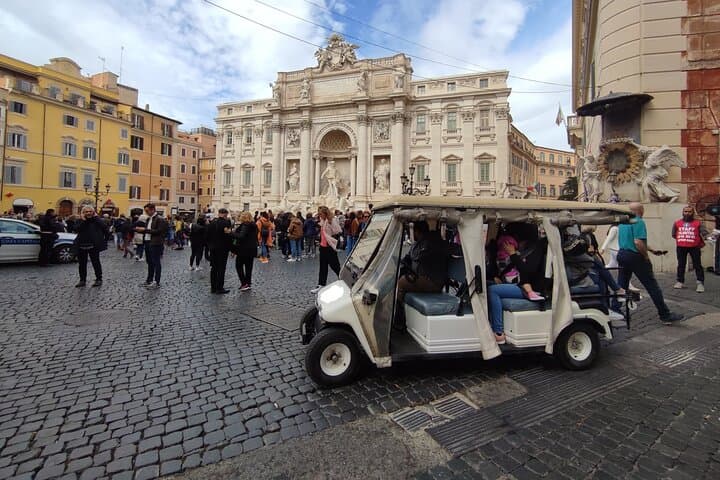
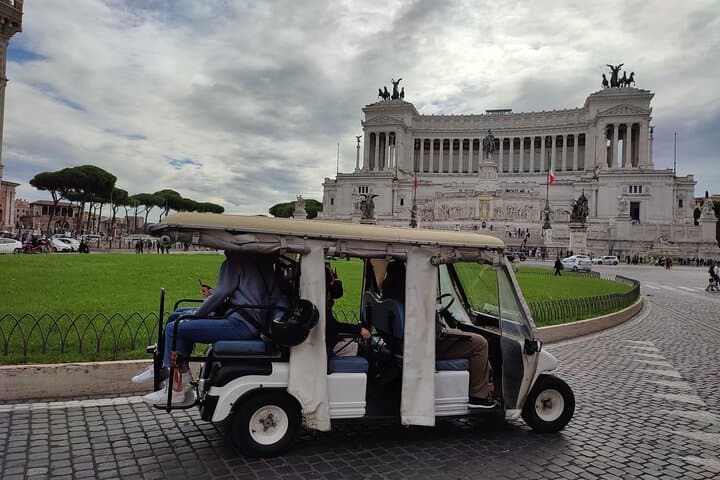

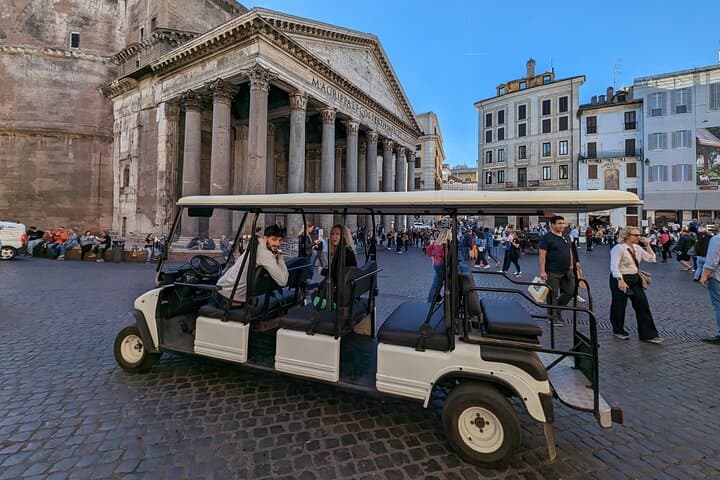
The cart hums to life in Piazza del Popolo as morning light slices across obelisks and plane trees; you slide into a low-profile electric vehicle and the city unwraps itself, lane by lane, with a local guide at the wheel. Adriano, an art-major and photographer with a hunger for Roman history, points out façades and alleys that most first-time visitors miss while you glide past Vatican walls and the rounded bulk of Castel Sant'Angelo.
The cart hums to life in Piazza del Popolo as morning light slices across obelisks and plane trees; you slide into a low-profile electric vehicle and the city unwraps itself, lane by lane, with a local guide at the wheel. Adriano, an art-major and photographer with a hunger for Roman history, points out façades and alleys that most first-time visitors miss while you glide past Vatican walls and the rounded bulk of Castel Sant'Angelo.
This route stitches Renaissance squares to Imperial relics: Navona’s Baroque fountains, the Pantheon’s concrete dome, Trevi’s marble cascade and the elevated hush of the Pincian Terrace overlooking Villa Borghese. Geology and engineering show up in travertine steps, ancient tufa foundations and the low, winding spine of the Tiber that shaped Rome’s urban growth. Culture arrives in small things — the coin tossed over the shoulder, a barista calling out espresso orders, the clusters of local vendors in narrow piazzas.
Practicalities matter: the tour covers central Rome in about three hours with short photo stops; historical introductions are included but museum or monument admissions are not. Expect some walking at stops, cobbled surfaces, and limited deviation time if you request longer visits. Bring a light jacket for evening breezes, good walking shoes for cobbles, sun protection during summer, and a charged phone for photos — the cart reduces walking but doesn’t skip the stairs or pedestrian-only passages.
This experience blends efficient urban transport with on-the-ground context, great for travelers who want to see a lot of Rome without exhausting their legs.