THE ADVENTURE COLLECTIVE® · Independent discovery and booking for outdoor travel

Spend two focused hours with an expert guide walking Ravello’s gardens, villas and artisan lanes. Discover Villa Rufolo and Villa Cimbrone, learn local ceramic traditions, and get practical tips for the best views and tasting spots.
Spend two focused hours with an expert guide walking Ravello’s gardens, villas and artisan lanes. Discover Villa Rufolo and Villa Cimbrone, learn local ceramic traditions, and get practical tips for the best views and tasting spots.
A narrow lane opens onto a sun-scrubbed piazza and the sea dares you from below — Ravello arrives like a view that insists you slow down. The town perches on limestone cliffs above the Amalfi Coast; palms and potted lemons line cobbled streets while the wind pushes the scent of salt and rosemary through open doorways.
Verified experiences and guided adventures in the surrounding area.
Operated by Tours with an archaeologist · Ravello, Campania
A narrow lane opens onto a sun-scrubbed piazza and the sea dares you from below — Ravello arrives like a view that insists you slow down. The town perches on limestone cliffs above the Amalfi Coast; palms and potted lemons line cobbled streets while the wind pushes the scent of salt and rosemary through open doorways.
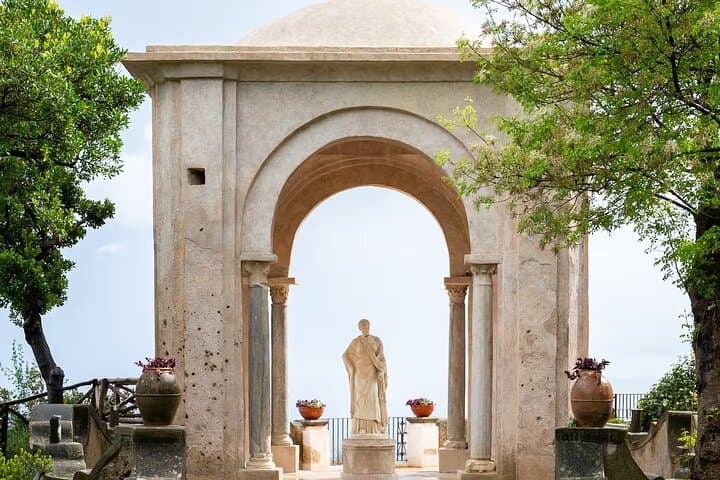
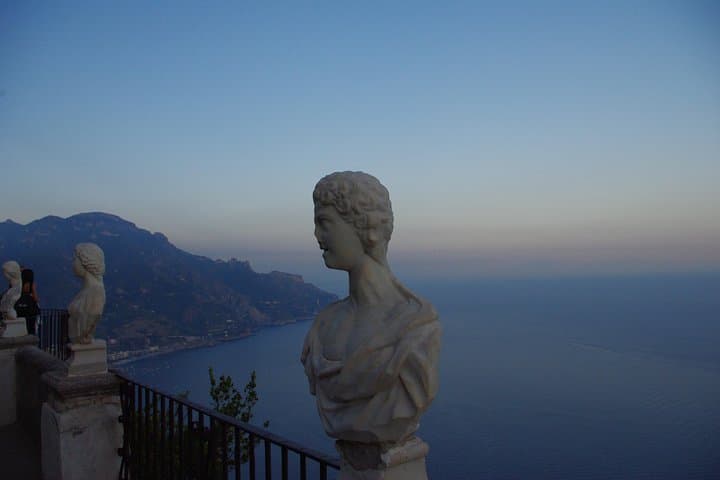
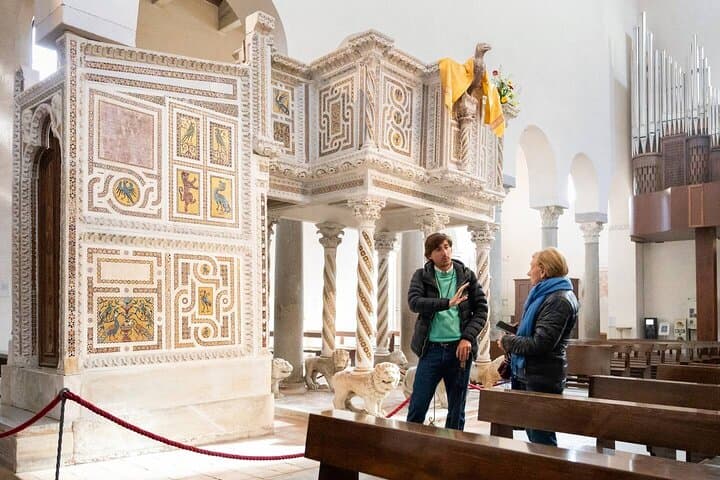
The walk centers on Villa Rufolo and Villa Cimbrone, estates with medieval roots and later 19th-century restorations, whose terraces frame the coast. Rufolo’s cloister and gardens were admired by Wagner; Cimbrone’s Terrazza dell’Infinito offers an unguarded sweep over terraced lemon groves and the Mediterranean. The San Pantaleone church shows Arab-Norman influences in stone and arch, echoing Naples and Sicily’s layered past. Local ceramics workshops continue a regional craft tradition—hand-painted tiles and vases that trace design lines back to medieval trade along these shores.
Terrain is compact: paved alleys, staircases and short uphill sections; expect gentle elevation changes rather than long climbs. Cultural insight is the core—history, artisans, and practical tips on where to taste limoncello or sit for concert views.
For visitors: bring comfortable shoes and a water bottle, aim for early morning or late afternoon light to avoid the busiest hours, and allow two hours for a paced private visit. The tour suits travelers who want focused context, local recommendations, and access to viewpoints that make the Amalfi Coast’s geology and human history feel both immediate and intact.
easy.
2 hours.
Light walking on paved streets and stairs; suitable for most fitness levels but requires stair negotiation.
Yes — the listing notes wheelchair-accessible options, but some historic sites have steps; check with the guide in advance to plan an accessible route.
Meeting details are provided at booking; Ravello is accessible by regional bus from Amalfi or by private car; parking and drop-off points are limited in the center.
This private tour description focuses on a guided visit—confirm at booking whether admissions are included or paid on-site.
According to the product terms all sales are final with no refunds; the operator may cancel for bad weather but check confirmation details before travel.
Ravello grew as a medieval maritime-linked town with villas owned by noble families; later 19th-century restorations shaped the gardens visitors see today.
The steep terraces and lemon groves are maintained through labor-intensive practices; visitors should stick to paths, avoid littering, and support local artisans to help sustain the town’s economy.
Tours with an archaeologist operates guided outdoor trips and adventures with an emphasis on safety, stewardship, and memorable experiences.
A narrow lane opens onto a sun-scrubbed piazza and the sea dares you from below — Ravello arrives like a view that insists you slow down. The town perches on limestone cliffs above the Amalfi Coast; palms and potted lemons line cobbled streets while the wind pushes the scent of salt and rosemary through open doorways.
A narrow lane opens onto a sun-scrubbed piazza and the sea dares you from below — Ravello arrives like a view that insists you slow down. The town perches on limestone cliffs above the Amalfi Coast; palms and potted lemons line cobbled streets while the wind pushes the scent of salt and rosemary through open doorways.
The walk centers on Villa Rufolo and Villa Cimbrone, estates with medieval roots and later 19th-century restorations, whose terraces frame the coast. Rufolo’s cloister and gardens were admired by Wagner; Cimbrone’s Terrazza dell’Infinito offers an unguarded sweep over terraced lemon groves and the Mediterranean. The San Pantaleone church shows Arab-Norman influences in stone and arch, echoing Naples and Sicily’s layered past. Local ceramics workshops continue a regional craft tradition—hand-painted tiles and vases that trace design lines back to medieval trade along these shores.
Terrain is compact: paved alleys, staircases and short uphill sections; expect gentle elevation changes rather than long climbs. Cultural insight is the core—history, artisans, and practical tips on where to taste limoncello or sit for concert views.
For visitors: bring comfortable shoes and a water bottle, aim for early morning or late afternoon light to avoid the busiest hours, and allow two hours for a paced private visit. The tour suits travelers who want focused context, local recommendations, and access to viewpoints that make the Amalfi Coast’s geology and human history feel both immediate and intact.