THE ADVENTURE COLLECTIVE® · Independent discovery and booking for outdoor travel

Walk the path of ancient lava in Raufarhólshellir, one of Iceland’s largest lava tubes, on this guided tour from Reykjavík. Expect hour-long cave exploration, protective gear, and vivid geological features revealed up close.
Walk the path of ancient lava in Raufarhólshellir, one of Iceland’s largest lava tubes, on this guided tour from Reykjavík. Expect hour-long cave exploration, protective gear, and vivid geological features revealed up close.
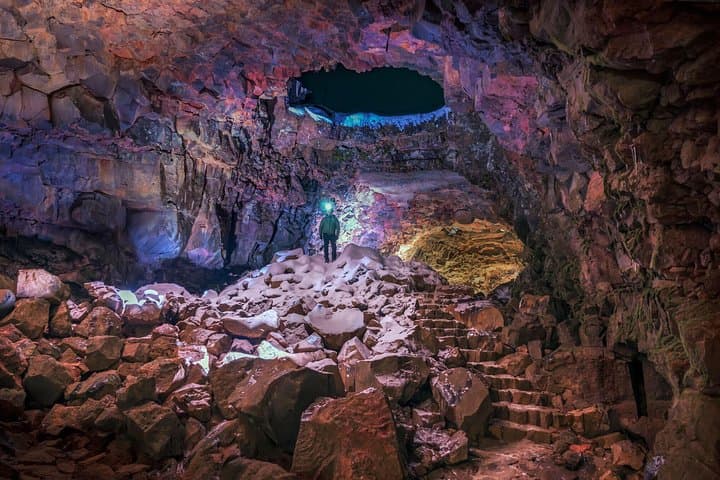
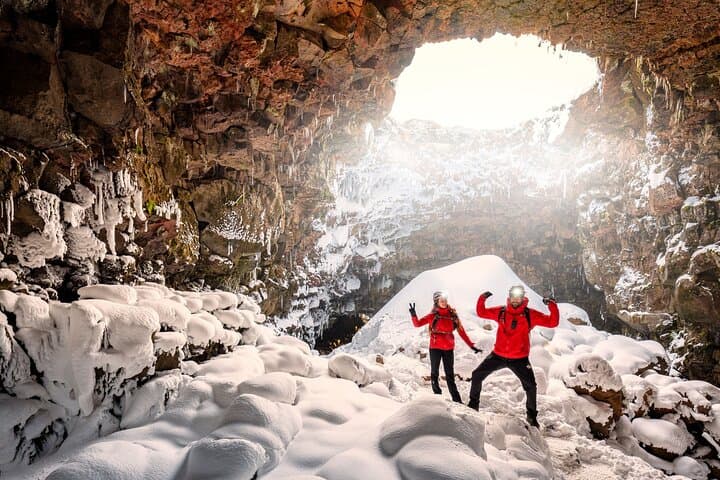
A short bus ride out of Reykjavík drops you at the ragged mouth of Raufarhólshellir, where the ceiling has fallen away to let daylight stitch columns of golden light onto black rock.
Verified experiences and guided adventures in the surrounding area.
Operated by Reykjavik Excursions · Reykjavík, Capital Region
A short bus ride out of Reykjavík drops you at the ragged mouth of Raufarhólshellir, where the ceiling has fallen away to let daylight stitch columns of golden light onto black rock.
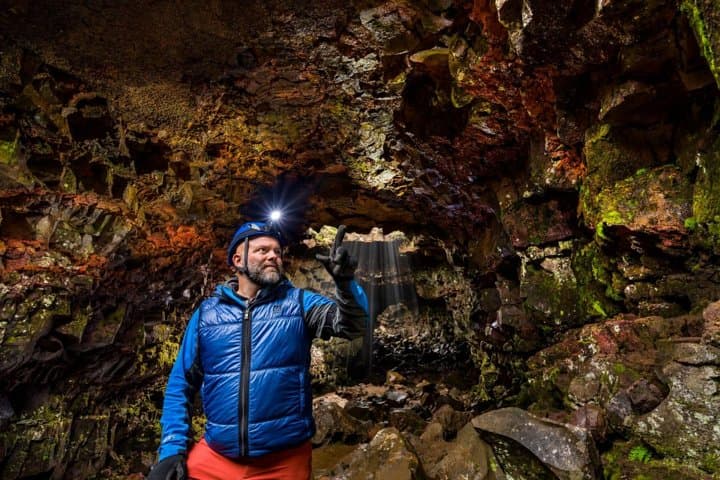
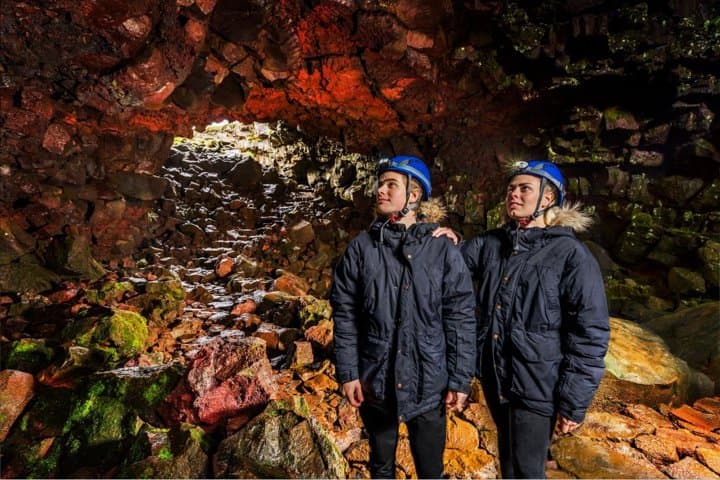
Step inside and the tunnel narrows and opens in turn; the lava that once moved like a molten river now sits cold and sculpted, its walls streaked with greens, oranges and blacks from mineral deposits. Guides walk a steady pace, pausing to point out ropy pahoehoe textures, former skylights and folded flow-bands—visible clues to eruptions that reshaped this coastal plain thousands of years ago. Film crews have used the cave’s cinematic scale; it can feel like walking through a chapter of Iceland’s volcanic biography.
Historically the tube formed during an effusive eruption when surface crust solidified while fluid lava drained beneath. Culturally, the area belongs to a live volcanic landscape Icelanders have learned to read and respect: geothermal fields, lava fields and riding winds that arrive with abruptness.
Practically, expect an easy-paced, guided walk of about an hour inside the tube and roughly three hours total including transfers. The tunnel floor is uneven and cool—temperatures hover near freezing compared with Reykjavik’s air—so bring sturdy footwear, warm layers and a helmet (provided). Flashlights are included but a personal headlamp helps hands-free exploration. Photography is permitted; use a wide lens for scale shots and reduce flash to preserve low-light views.
Timing your visit in shoulder seasons reduces coach crowds; keep to marked paths, follow your guide, and treat the cave as fragile—leave nothing behind and carry out what you carry in.
easy.
2–3 hours.
Light walking ability required; participants should be steady on uneven ground and able to climb short steps.
The guided walk inside the lava tunnel is about one hour; the entire experience including transfers is roughly 2–3 hours.
Yes—minimum age is 3. Supervise young children closely due to uneven ground and low ceilings.
Wear sturdy, closed-toe shoes and warm layers; the cave is cool year-round and footing can be uneven.
Yes—the tour includes protective helmets and flashlights; bringing a personal headlamp is recommended for hands-free light.
Raufarhólshellir formed when surface lava crusted over while molten lava drained away; its size reflects a high-volume, effusive eruption in Iceland’s volcanic past.
The tube is sensitive—avoid touching or removing formations, stick to paths, and pack out all waste; the operator emphasizes low-impact transfers and carbon-neutral options.
Reykjavik Excursions operates guided outdoor trips and adventures with an emphasis on safety, stewardship, and memorable experiences.
A short bus ride out of Reykjavík drops you at the ragged mouth of Raufarhólshellir, where the ceiling has fallen away to let daylight stitch columns of golden light onto black rock.
A short bus ride out of Reykjavík drops you at the ragged mouth of Raufarhólshellir, where the ceiling has fallen away to let daylight stitch columns of golden light onto black rock.
Step inside and the tunnel narrows and opens in turn; the lava that once moved like a molten river now sits cold and sculpted, its walls streaked with greens, oranges and blacks from mineral deposits. Guides walk a steady pace, pausing to point out ropy pahoehoe textures, former skylights and folded flow-bands—visible clues to eruptions that reshaped this coastal plain thousands of years ago. Film crews have used the cave’s cinematic scale; it can feel like walking through a chapter of Iceland’s volcanic biography.
Historically the tube formed during an effusive eruption when surface crust solidified while fluid lava drained beneath. Culturally, the area belongs to a live volcanic landscape Icelanders have learned to read and respect: geothermal fields, lava fields and riding winds that arrive with abruptness.
Practically, expect an easy-paced, guided walk of about an hour inside the tube and roughly three hours total including transfers. The tunnel floor is uneven and cool—temperatures hover near freezing compared with Reykjavik’s air—so bring sturdy footwear, warm layers and a helmet (provided). Flashlights are included but a personal headlamp helps hands-free exploration. Photography is permitted; use a wide lens for scale shots and reduce flash to preserve low-light views.
Timing your visit in shoulder seasons reduces coach crowds; keep to marked paths, follow your guide, and treat the cave as fragile—leave nothing behind and carry out what you carry in.