THE ADVENTURE COLLECTIVE® · Independent discovery and booking for outdoor travel

Walk among living ruins on a private half-day tour to Preah Khan, Neak Pean, Ta Som, East Mebon and Pre-Rup. This guided experience combines Khmer history, hydraulic engineering, and dramatic temple architecture with convenient hotel pickup.
Walk among living ruins on a private half-day tour to Preah Khan, Neak Pean, Ta Som, East Mebon and Pre-Rup. This guided experience combines Khmer history, hydraulic engineering, and dramatic temple architecture with convenient hotel pickup.
You arrive before the crowds, the road soft with dust and the air already warm — trees line the approach and shadow ancient stone like a slow-moving audience. At Preah Khan the corridors open into light and root, columns leaning under the weight of centuries and fig roots that seem to be reading the reliefs aloud.
Verified experiences and guided adventures in the surrounding area.
Operated by Journey2 Angkor · Siem Reap, Siem Reap Province
You arrive before the crowds, the road soft with dust and the air already warm — trees line the approach and shadow ancient stone like a slow-moving audience. At Preah Khan the corridors open into light and root, columns leaning under the weight of centuries and fig roots that seem to be reading the reliefs aloud.
These sites span several chapters of Khmer history. Preah Khan and Ta Som date to the late 12th century under Jayavarman VII and show the shift to Buddhist patronage layered atop older Hindu structures. Neak Pean sits on an artificial island within a former reservoir, a reminder of Khmer hydraulic engineering; East Mebon and Pre-Rup reach back to 10th-century temple-mountain design and cardinal planning tied to the East Baray.
Culturally the area remains alive: local boatmen, temple caretakers and villagers continue traditions around the water and farmland, and the APSARA Authority oversees conservation work and guided access.
Practicalities are straightforward on this private, air-conditioned tour. Expect 4–5 hours including hotel pickup, short walks on uneven laterite and sandstone, and timed stops at viewing points and landing stages. Wear sturdy shoes, sun protection and bring water; photo stops are frequent and shade is limited. Entry passes to Angkor are required and often purchased in Siem Reap; guides handle logistics and context, but carry small change for local offerings. Mornings are best for cooler light and clearer skies; monsoon season brings sudden showers and richer green backdrops.
Travelers should be ready for easy walking with uneven footing, modest humidity, and the thrill of moving through living ruins that still reclaim and reveal their stories.
easy.
4–5 hours.
Light fitness; able to walk 1–3 miles total on uneven surfaces and climb short temple steps.
Yes — an Angkor Archaeological Park pass is required; guides commonly advise buying it in Siem Reap before the tour to save time.
The tour listing notes accessibility for transportation, but temple grounds have steps and uneven terrain so full wheelchair access at each ruin is limited.
Most private tours exclude the Angkor pass fee; confirm with your operator whether park tickets are handled or need to be purchased separately.
Morning is preferable for cooler temperatures and optimal light; late afternoon can work but some sites close earlier and heat may be intense.
The tour’s temples span the 10th–12th centuries and reflect shifts between Hindu and Buddhist royal patronage, with Jayavarman VII responsible for major 12th-century additions.
APSARA Authority and international partners manage preservation; stay on paths, avoid touching carvings, and minimize waste to reduce visitor impact.
Journey2 Angkor operates guided outdoor trips and adventures with an emphasis on safety, stewardship, and memorable experiences.
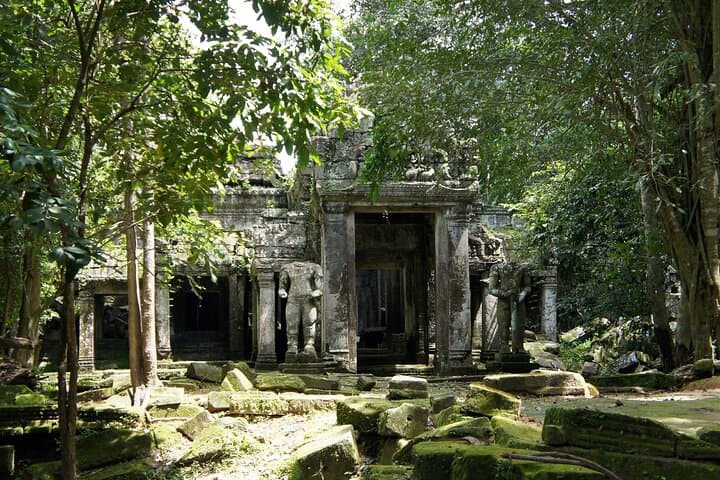
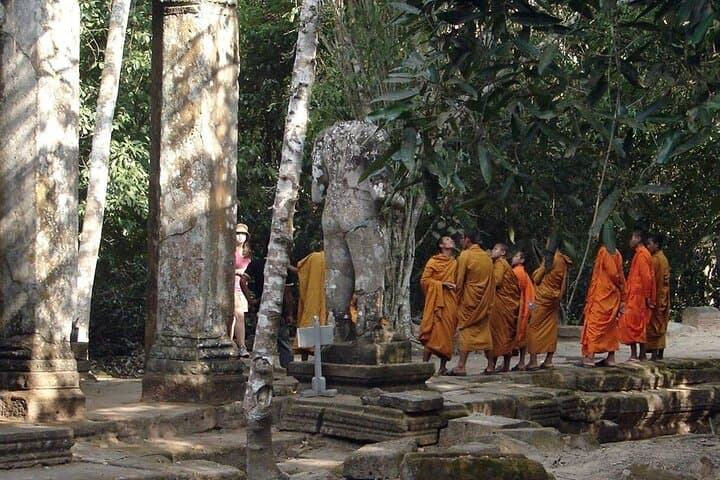
You arrive before the crowds, the road soft with dust and the air already warm — trees line the approach and shadow ancient stone like a slow-moving audience. At Preah Khan the corridors open into light and root, columns leaning under the weight of centuries and fig roots that seem to be reading the reliefs aloud.
You arrive before the crowds, the road soft with dust and the air already warm — trees line the approach and shadow ancient stone like a slow-moving audience. At Preah Khan the corridors open into light and root, columns leaning under the weight of centuries and fig roots that seem to be reading the reliefs aloud.
These sites span several chapters of Khmer history. Preah Khan and Ta Som date to the late 12th century under Jayavarman VII and show the shift to Buddhist patronage layered atop older Hindu structures. Neak Pean sits on an artificial island within a former reservoir, a reminder of Khmer hydraulic engineering; East Mebon and Pre-Rup reach back to 10th-century temple-mountain design and cardinal planning tied to the East Baray.
Culturally the area remains alive: local boatmen, temple caretakers and villagers continue traditions around the water and farmland, and the APSARA Authority oversees conservation work and guided access.
Practicalities are straightforward on this private, air-conditioned tour. Expect 4–5 hours including hotel pickup, short walks on uneven laterite and sandstone, and timed stops at viewing points and landing stages. Wear sturdy shoes, sun protection and bring water; photo stops are frequent and shade is limited. Entry passes to Angkor are required and often purchased in Siem Reap; guides handle logistics and context, but carry small change for local offerings. Mornings are best for cooler light and clearer skies; monsoon season brings sudden showers and richer green backdrops.
Travelers should be ready for easy walking with uneven footing, modest humidity, and the thrill of moving through living ruins that still reclaim and reveal their stories.