THE ADVENTURE COLLECTIVE® · Independent discovery and booking for outdoor travel

Walk Pompeii’s ash-dark streets with a local guide and skip the ticket lines. This two-hour small-group tour highlights daily Roman life, preserved architecture, and the science behind Vesuvius’s eruption.
Walk Pompeii’s ash-dark streets with a local guide and skip the ticket lines. This two-hour small-group tour highlights daily Roman life, preserved architecture, and the science behind Vesuvius’s eruption.
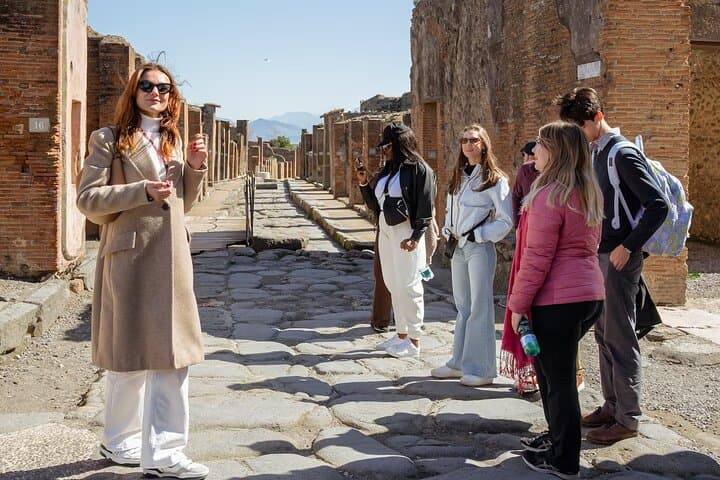
You step through a modern gate and the city that stopped in 79 AD unfolds: dusty streets slabbed in basalt, shop thresholds worn smooth, frescoed walls still holding color under the Italian sun.
Verified experiences and guided adventures in the surrounding area.
Operated by TASTETHEXPERIENCE · Pompeii, Campania
You step through a modern gate and the city that stopped in 79 AD unfolds: dusty streets slabbed in basalt, shop thresholds worn smooth, frescoed walls still holding color under the Italian sun.
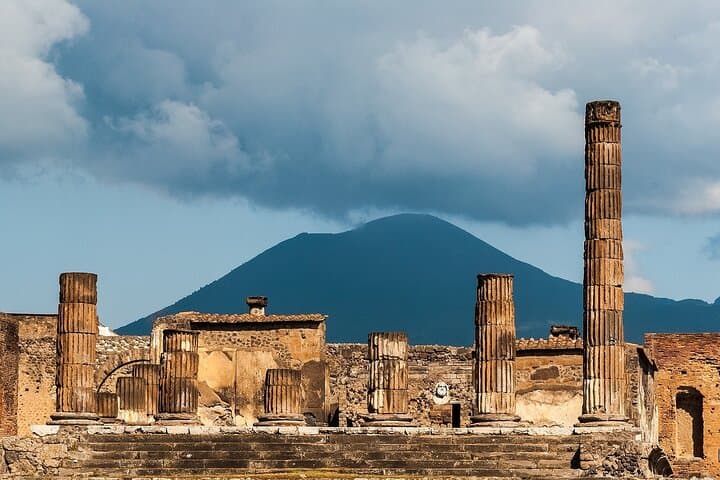
Pompeii is an archaeological classroom where Roman daily life is laid out—houses, baths, bakeries, and theaters—and Vesuvius, the volcano that froze the town, keeps a quiet, watchful presence on the horizon. Geologically, the eruption deposited pumice and ash that sealed organic material, preserving footprints and wooden beams that would otherwise have vanished centuries ago.
Culturally, Pompeii reveals everyday Roman innovations: water systems, public baths, and commercial façades that speak to a bustling port town connected to the wider empire. Local guides add context—who lived where, what markets sold, and how disaster reshaped the region.
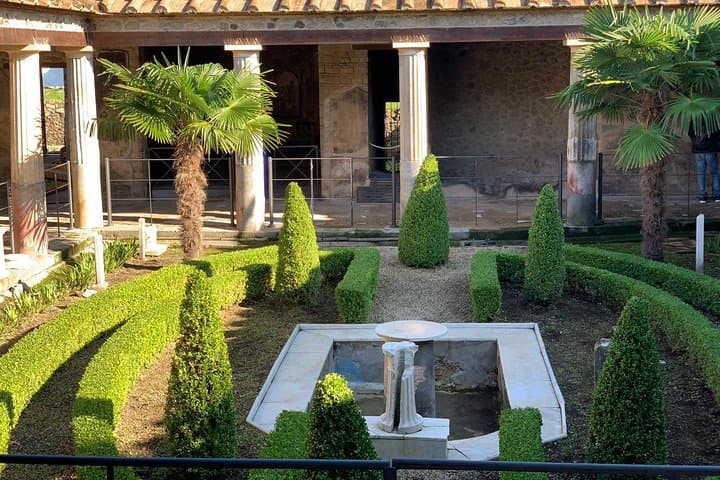
For visitors, the experience is both sensory and methodical: follow a guide through narrow alleys, pause at a frescoed atrium, and imagine the noise of carts and conversations. The site is expansive but walkable—expect paved streets and uneven surfaces rather than long climbs.
Practical guidance: bring sun protection and water, wear sturdy shoes for irregular stone, and budget at least two hours to move with a guide without rushing. Visit early or late in the day to avoid heat and crowds; skip-the-line access keeps your time efficient. Respect fenced areas and fragile mosaics—photograph, but don’t touch.
This tour is ideal for anyone curious about Roman life and archaeology who wants a focused, expertly narrated visit to one of history’s most poignant open-air museums.
easy.
2 hours.
Suitable for most fitness levels: mostly flat walking with standing and occasional steps; allow mobility considerations for uneven surfaces.
The guided portion lasts approximately two hours—enough time to cover key areas without rushing.
Yes; this tour includes skip-the-line admission to the Pompeii archaeological site.
The tour is family-friendly, but surfaces are uneven; strollers can be used in flatter sections, though a carrier may be easier in tight areas.
Roundtrip transport from Naples is offered as an option—confirm selection when booking.
Pompeii’s rapid burial in 79 AD preserved whole houses and public buildings, giving archaeologists a detailed snapshot of Roman urban life.
Conservation is ongoing—visitor numbers and weathering threaten fragile features, so follow site rules and support scheduled restorations.
TASTETHEXPERIENCE operates guided outdoor trips and adventures with an emphasis on safety, stewardship, and memorable experiences.

You step through a modern gate and the city that stopped in 79 AD unfolds: dusty streets slabbed in basalt, shop thresholds worn smooth, frescoed walls still holding color under the Italian sun.
You step through a modern gate and the city that stopped in 79 AD unfolds: dusty streets slabbed in basalt, shop thresholds worn smooth, frescoed walls still holding color under the Italian sun.
Pompeii is an archaeological classroom where Roman daily life is laid out—houses, baths, bakeries, and theaters—and Vesuvius, the volcano that froze the town, keeps a quiet, watchful presence on the horizon. Geologically, the eruption deposited pumice and ash that sealed organic material, preserving footprints and wooden beams that would otherwise have vanished centuries ago.
Culturally, Pompeii reveals everyday Roman innovations: water systems, public baths, and commercial façades that speak to a bustling port town connected to the wider empire. Local guides add context—who lived where, what markets sold, and how disaster reshaped the region.
For visitors, the experience is both sensory and methodical: follow a guide through narrow alleys, pause at a frescoed atrium, and imagine the noise of carts and conversations. The site is expansive but walkable—expect paved streets and uneven surfaces rather than long climbs.
Practical guidance: bring sun protection and water, wear sturdy shoes for irregular stone, and budget at least two hours to move with a guide without rushing. Visit early or late in the day to avoid heat and crowds; skip-the-line access keeps your time efficient. Respect fenced areas and fragile mosaics—photograph, but don’t touch.
This tour is ideal for anyone curious about Roman life and archaeology who wants a focused, expertly narrated visit to one of history’s most poignant open-air museums.