THE ADVENTURE COLLECTIVE® · Independent discovery and booking for outdoor travel

Navigate Pisa at your own pace with a GPS-driven e-scavenger hunt that combines history, local trivia, and self-guided exploration. Ideal for families or groups, the app-led walk highlights both famous monuments and tucked-away corners of the city.
Navigate Pisa at your own pace with a GPS-driven e-scavenger hunt that combines history, local trivia, and self-guided exploration. Ideal for families or groups, the app-led walk highlights both famous monuments and tucked-away corners of the city.
You step out of the train station and the river appears, the Arno daring you toward domes and marble facades. Cobblestones click underfoot as the app pins your first clue; the city hums—students, market vendors, tour groups—yet the game gives you agency to choose a quieter alley or linger on a sunlit bridge.
Verified experiences and guided adventures in the surrounding area.
Operated by Qula · Pisa, Tuscany
You step out of the train station and the river appears, the Arno daring you toward domes and marble facades. Cobblestones click underfoot as the app pins your first clue; the city hums—students, market vendors, tour groups—yet the game gives you agency to choose a quieter alley or linger on a sunlit bridge.
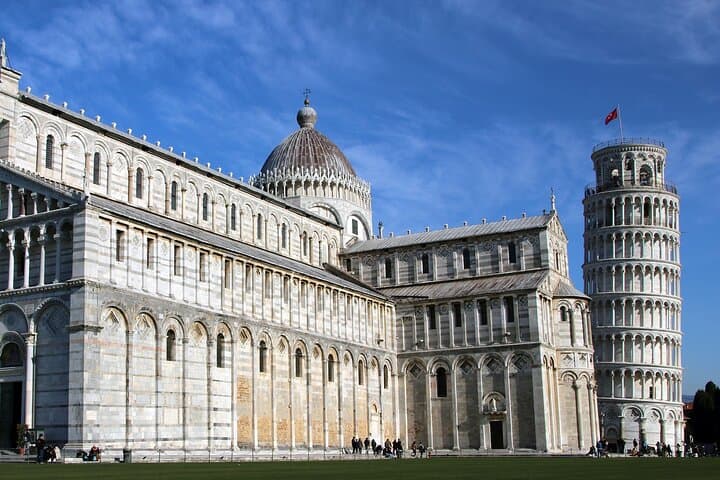
Pisa’s core is medieval and maritime: a republic that once rivaled Genoa and Venice. Its limestone and marble buildings along Piazza dei Miracoli reveal centuries of craftsmenhip, while the Arno’s alluvial plain explains the soft soils that let the Campanile lean. Local culture is casual—cafés spill into streets and university life colors the nightlife—so a self-guided hunt feels at home among everyday rhythms.
The e-Scavenger format walks you past the Baptistery, Piazza delle Vettovaglie and lesser-known gates, prompting observation rather than frantic ticking-off. You’ll read short historical notes, decode clues, and use GPS to locate details most guidebooks skip: a medieval plaque, a hidden courtyard, a botanical garden gate.
Practical guidance: allow 2–4 hours depending on pace and breaks. Battery life is the limiting factor—bring a power bank and offline maps if you want to stray from central Wi‑Fi. Wear comfortable shoes; surfaces are flat but often uneven. Start early to avoid mid-day crowds at the Miracoli, and pause in a café if rain rolls in—Pisa’s weather can change quickly. The experience is family-friendly and wheelchair accessible, giving groups and solo travelers a flexible, immersive way to read the city on their own terms.
easy.
2–4 hours.
Suitable for most fitness levels; expect moderate walking on flat but uneven urban surfaces.
You can start anytime after booking—the app is available 24/7 and the route is self-paced; aim for morning to avoid crowds at main monuments.
Yes—the experience notes indicate wheelchair accessibility for key surfaces and transportation options in the city center.
Typical completion time is 2–4 hours depending on how many stops and breaks you take.
The app uses GPS; limited internet may be required for initial login and some content—download offline maps and ensure you have battery power to minimize connectivity needs.
Pisa was a powerful maritime republic in the Middle Ages; many of the city’s monuments date from its 11th–14th century heyday and reflect its trading wealth.
Travelers are encouraged to stick to marked paths, avoid touching fragile stonework, and carry out any waste—conservation efforts in Pisa focus on preserving delicate historic marble and managing visitor impact.
Qula operates guided outdoor trips and adventures with an emphasis on safety, stewardship, and memorable experiences.


You step out of the train station and the river appears, the Arno daring you toward domes and marble facades. Cobblestones click underfoot as the app pins your first clue; the city hums—students, market vendors, tour groups—yet the game gives you agency to choose a quieter alley or linger on a sunlit bridge.
You step out of the train station and the river appears, the Arno daring you toward domes and marble facades. Cobblestones click underfoot as the app pins your first clue; the city hums—students, market vendors, tour groups—yet the game gives you agency to choose a quieter alley or linger on a sunlit bridge.
Pisa’s core is medieval and maritime: a republic that once rivaled Genoa and Venice. Its limestone and marble buildings along Piazza dei Miracoli reveal centuries of craftsmenhip, while the Arno’s alluvial plain explains the soft soils that let the Campanile lean. Local culture is casual—cafés spill into streets and university life colors the nightlife—so a self-guided hunt feels at home among everyday rhythms.
The e-Scavenger format walks you past the Baptistery, Piazza delle Vettovaglie and lesser-known gates, prompting observation rather than frantic ticking-off. You’ll read short historical notes, decode clues, and use GPS to locate details most guidebooks skip: a medieval plaque, a hidden courtyard, a botanical garden gate.
Practical guidance: allow 2–4 hours depending on pace and breaks. Battery life is the limiting factor—bring a power bank and offline maps if you want to stray from central Wi‑Fi. Wear comfortable shoes; surfaces are flat but often uneven. Start early to avoid mid-day crowds at the Miracoli, and pause in a café if rain rolls in—Pisa’s weather can change quickly. The experience is family-friendly and wheelchair accessible, giving groups and solo travelers a flexible, immersive way to read the city on their own terms.