THE ADVENTURE COLLECTIVE® · Independent discovery and booking for outdoor travel

Walk 5 km from Piazza dei Miracoli through Pisa’s lesser-known corners with an interactive self-guided route. Packed with history, student life, and river views, this easy urban walk is ideal for independent explorers.
Walk 5 km from Piazza dei Miracoli through Pisa’s lesser-known corners with an interactive self-guided route. Packed with history, student life, and river views, this easy urban walk is ideal for independent explorers.
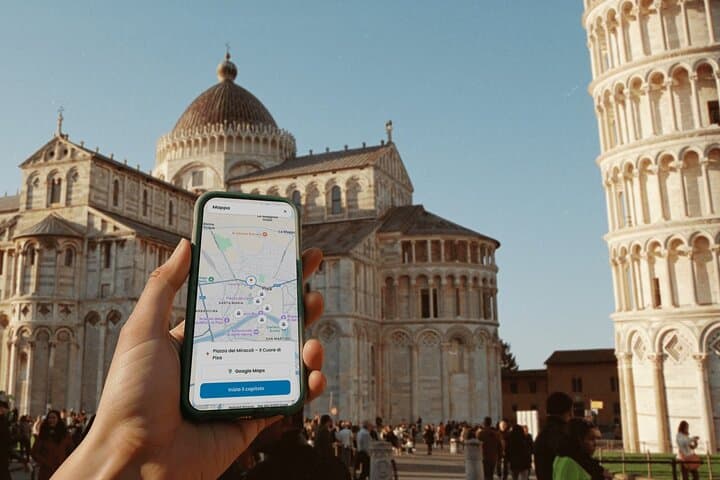
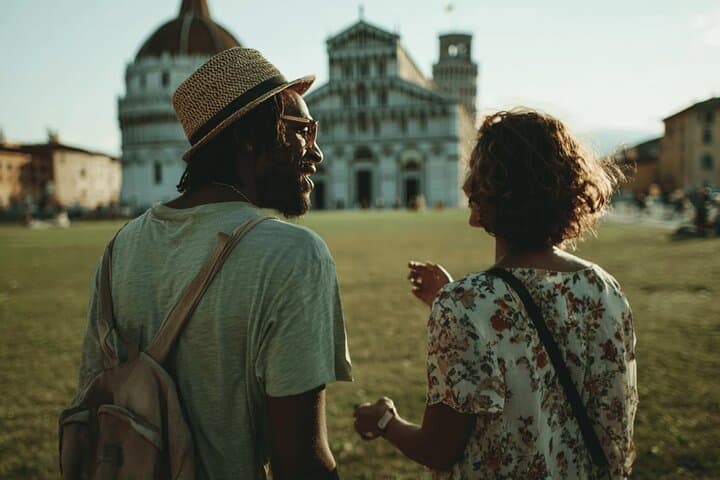
The tour opens in Piazza dei Miracoli with the Leaning Tower rising at an angle that has drawn travelers for centuries. A gentle crowd moves around the marble campanile while the Duomo and Baptistery keep steady guard; you step away from the square and into streets that reveal a different Pisa—student cafés, medieval lanes, river bridges and a quieter maritime quarter.
Verified experiences and guided adventures in the surrounding area.
Operated by Ciceru · Pisa, Tuscany
The tour opens in Piazza dei Miracoli with the Leaning Tower rising at an angle that has drawn travelers for centuries. A gentle crowd moves around the marble campanile while the Duomo and Baptistery keep steady guard; you step away from the square and into streets that reveal a different Pisa—student cafés, medieval lanes, river bridges and a quieter maritime quarter.
This self-guided route traces about 5 km and takes roughly 2.5 hours at a measured pace. Pisa grew as a maritime republic in the Middle Ages; its riverfront, shipyard walls and Renaissance façades record a city shaped by trade, naval power and university life. Geologically, the Arno valley is flat—cobbled streets and riverbanks rather than steep climbs—so the walk is physically easy but richly textured underfoot.
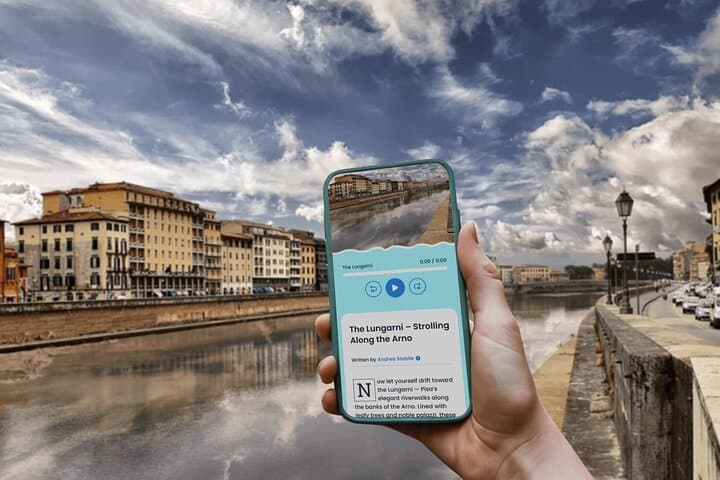
Cultural notes: expect student energy from the university, regional Tuscan cuisine at small trattorie, and architectural details that date from Romanesque to Renaissance. The experience uses an interactive smartphone guide with quizzes and multi-language narration; activate within a 48-hour window for flexible timing.
Practical guidance: wear supportive shoes for uneven paving, keep your phone charged for maps and quizzes, and allow extra time for stops at viewpoints and cafés. Start early to avoid peak crowds at the tower and late-afternoon to catch golden light along the Arno. Public transit and taxis connect easily to Pisa Centrale if you’re arriving by train. This is a low-impact, walkable way to read the city’s history at your own pace.
easy.
2–3 hours.
Suitable for most fitness levels; requires standing and walking on paved and cobbled surfaces for several hours.
You typically have a 48-hour window from activation to finish the self-guided experience.
No—this tour guides you externally; entry fees for the Leaning Tower or Duomo are paid separately and require separate tickets.
Much of the route is on paved streets, but cobbles, steps and narrow sidewalks can make some sections challenging for wheelchairs or strollers.
The tour offers narration and quizzes in seven languages, including English, Italian, French, Spanish, Portuguese, German and Chinese.
Pisa rose as a maritime republic between the 11th and 13th centuries; its architecture reflects centuries of naval trade and civic power, plus later university influence.
Stick to marked streets, avoid stepping on grass in protected monuments, and support local cafés and shops to help sustain the city’s small-business fabric.
Ciceru operates guided outdoor trips and adventures with an emphasis on safety, stewardship, and memorable experiences.

The tour opens in Piazza dei Miracoli with the Leaning Tower rising at an angle that has drawn travelers for centuries. A gentle crowd moves around the marble campanile while the Duomo and Baptistery keep steady guard; you step away from the square and into streets that reveal a different Pisa—student cafés, medieval lanes, river bridges and a quieter maritime quarter.
The tour opens in Piazza dei Miracoli with the Leaning Tower rising at an angle that has drawn travelers for centuries. A gentle crowd moves around the marble campanile while the Duomo and Baptistery keep steady guard; you step away from the square and into streets that reveal a different Pisa—student cafés, medieval lanes, river bridges and a quieter maritime quarter.
This self-guided route traces about 5 km and takes roughly 2.5 hours at a measured pace. Pisa grew as a maritime republic in the Middle Ages; its riverfront, shipyard walls and Renaissance façades record a city shaped by trade, naval power and university life. Geologically, the Arno valley is flat—cobbled streets and riverbanks rather than steep climbs—so the walk is physically easy but richly textured underfoot.
Cultural notes: expect student energy from the university, regional Tuscan cuisine at small trattorie, and architectural details that date from Romanesque to Renaissance. The experience uses an interactive smartphone guide with quizzes and multi-language narration; activate within a 48-hour window for flexible timing.
Practical guidance: wear supportive shoes for uneven paving, keep your phone charged for maps and quizzes, and allow extra time for stops at viewpoints and cafés. Start early to avoid peak crowds at the tower and late-afternoon to catch golden light along the Arno. Public transit and taxis connect easily to Pisa Centrale if you’re arriving by train. This is a low-impact, walkable way to read the city’s history at your own pace.