THE ADVENTURE COLLECTIVE® · Independent discovery and booking for outdoor travel

A compact half-day escape at St. Lucia’s northern tip: snorkel clear bays, climb to Fort Rodney for sweeping harbor views, and sample local shorefront eats. Expect short rocky trails, calm swim spots, and a strong dose of colonial history.
A compact half-day escape at St. Lucia’s northern tip: snorkel clear bays, climb to Fort Rodney for sweeping harbor views, and sample local shorefront eats. Expect short rocky trails, calm swim spots, and a strong dose of colonial history.
You step across the low causeway and the Caribbean opens: calm turquoise in the bays, heat soft on wind-carved rock, and a compact ridge that rewards a short climb with views across Rodney Bay.
Verified experiences and guided adventures in the surrounding area.
You step across the low causeway and the Caribbean opens: calm turquoise in the bays, heat soft on wind-carved rock, and a compact ridge that rewards a short climb with views across Rodney Bay.
Pigeon Island Landmark sits at St. Lucia’s northern tip and reads like a condensed field guide — coral-fringed swim spots, colonial-era ruins, and scrubby volcanic rock shaped by wind and surf. Fort Rodney, built by the British in the late 18th century, crowns the island and gives context to the cannons and stone stairways you’ll pass. Geologically, the headland is part of St. Lucia’s volcanic arc, with basalt outcrops and sandy spits that catch drift and sunlight.
Locals in Gros Islet and Rodney Bay use the island for quick escapes: morning swims, afternoon snorkeling, and sunset walks. Vendors and small cafés line the nearby shoreline, offering fresh fish, breadfruit, and a cold drink after a half-day on the water and trail.
Practically: expect 4–5 hours to combine a beach stop, snorkeling, and the Fort Rodney loop. The main trail to the fort is short — roughly 0.5–1 km one way — with an elevation gain around 50–100 m over rocky, stepped terrain. Water entries are generally gentle; reef snorkel sites are shallow and accessible from shore.
Bring reef-safe sunscreen, a basic snorkel kit or rent one locally, and sturdy sandals or light trail shoes for the rocky sections. Plan visits for morning or late afternoon to avoid peak sun; tides and boat traffic influence calm conditions. With straightforward logistics and concentrated variety, Pigeon Island makes a compact, satisfying half-day adventure in St. Lucia.
moderate.
4–5 hours.
Moderate fitness: able to walk short rocky climbs and swim/snorkel from shore
Plan about 4–5 hours to combine a beach stop, shore snorkeling, and the Fort Rodney loop; shorter visits of 1–2 hours are possible for a quick swim and viewpoint.
The climb is short and steep in sections with stone steps and uneven rock; suitable for most visitors with basic mobility and sturdy footwear.
Yes — several sheltered bays have shallow reefs accessible from shore; conditions are best in calm weather and at lower tide.
Yes — nearby Rodney Bay and the causeway area have small cafés and vendors offering local snacks and drinks; carry cash for the smaller stalls.
Pigeon Island contains 18th–19th century British military structures — Fort Rodney’s batteries were positioned to overlook shipping lanes into the north coast harbors.
Stick to marked paths and avoid touching coral; local groups and park authorities promote reef-safe practices and limit disturbance to nesting birds and intertidal life.
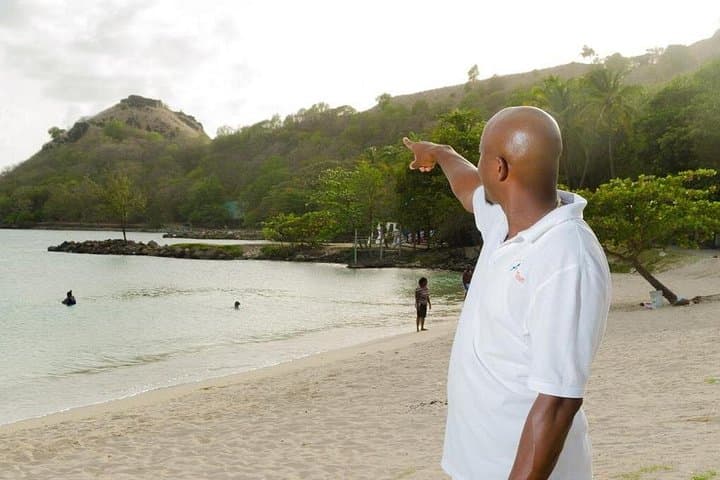
You step across the low causeway and the Caribbean opens: calm turquoise in the bays, heat soft on wind-carved rock, and a compact ridge that rewards a short climb with views across Rodney Bay.
You step across the low causeway and the Caribbean opens: calm turquoise in the bays, heat soft on wind-carved rock, and a compact ridge that rewards a short climb with views across Rodney Bay.
Pigeon Island Landmark sits at St. Lucia’s northern tip and reads like a condensed field guide — coral-fringed swim spots, colonial-era ruins, and scrubby volcanic rock shaped by wind and surf. Fort Rodney, built by the British in the late 18th century, crowns the island and gives context to the cannons and stone stairways you’ll pass. Geologically, the headland is part of St. Lucia’s volcanic arc, with basalt outcrops and sandy spits that catch drift and sunlight.
Locals in Gros Islet and Rodney Bay use the island for quick escapes: morning swims, afternoon snorkeling, and sunset walks. Vendors and small cafés line the nearby shoreline, offering fresh fish, breadfruit, and a cold drink after a half-day on the water and trail.
Practically: expect 4–5 hours to combine a beach stop, snorkeling, and the Fort Rodney loop. The main trail to the fort is short — roughly 0.5–1 km one way — with an elevation gain around 50–100 m over rocky, stepped terrain. Water entries are generally gentle; reef snorkel sites are shallow and accessible from shore.
Bring reef-safe sunscreen, a basic snorkel kit or rent one locally, and sturdy sandals or light trail shoes for the rocky sections. Plan visits for morning or late afternoon to avoid peak sun; tides and boat traffic influence calm conditions. With straightforward logistics and concentrated variety, Pigeon Island makes a compact, satisfying half-day adventure in St. Lucia.