THE ADVENTURE COLLECTIVE® · Independent discovery and booking for outdoor travel

Spend a full day exploring Phong Nha and Paradise Caves with hotel pickup from Dong Hoi. This guided tour covers geology, wartime history, and dramatic cave formations with lunch and park fees included.
Spend a full day exploring Phong Nha and Paradise Caves with hotel pickup from Dong Hoi. This guided tour covers geology, wartime history, and dramatic cave formations with lunch and park fees included.
You step out of the van with humidity clinging to your shirt and the limestone massif rising like a folded map ahead—jagged ridges, jungle-slick slopes, and the narrow entrance that ushers you into Phong Nha–Ke Bang’s underground world.
Verified experiences and guided adventures in the surrounding area.
Operated by Mekong Tourist · Phong Nha, Quang Binh Province
You step out of the van with humidity clinging to your shirt and the limestone massif rising like a folded map ahead—jagged ridges, jungle-slick slopes, and the narrow entrance that ushers you into Phong Nha–Ke Bang’s underground world.
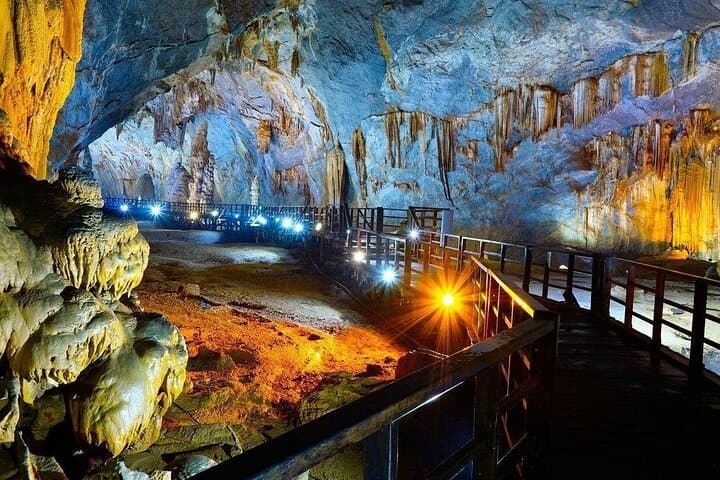
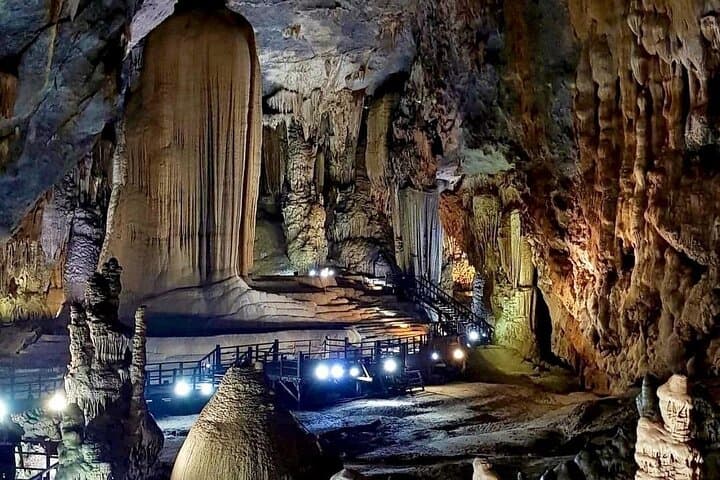
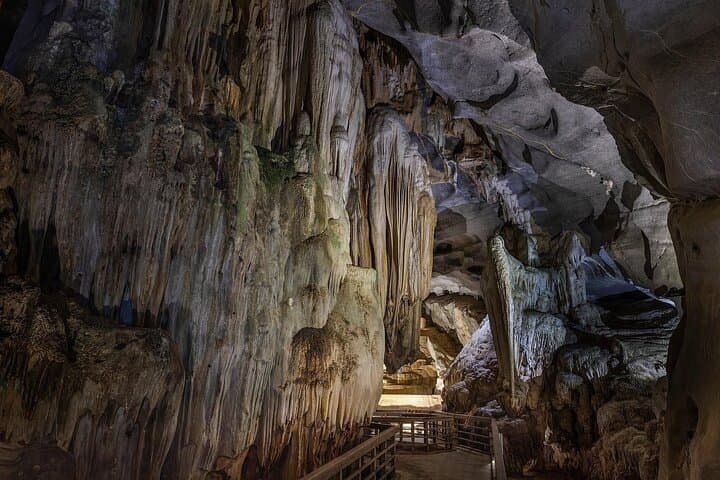
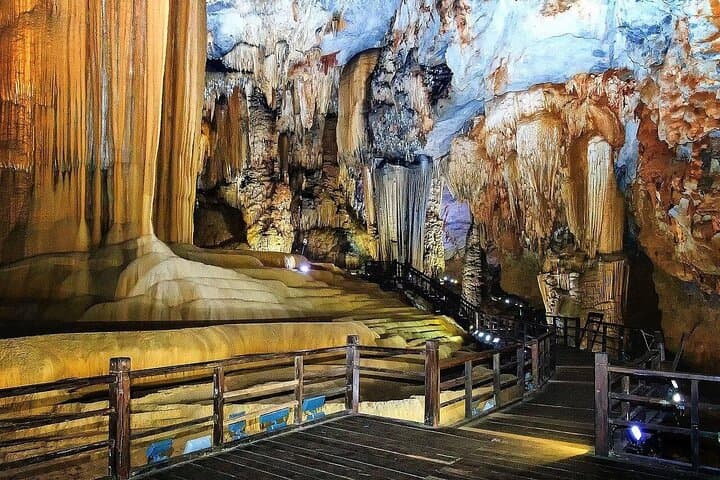
The tour pairs two of the park’s headline caves: Phong Nha, whose river-carved passages were once part of the Ho Chi Minh trail and shelter wartime stories, and Paradise Cave (Động Thiên Đường), a dry cave discovered in modern times but formed across millions of years of dripping calcite. Stalactites and stalagmites here take on sculptural roles—columns that catch your flashlight and pools that hold still, black reflections.
Geologically the park is old karst: soluble limestone uplifted and carved by water into caverns, collapse dolines and subterranean rivers. Culturally, the area blends rural village life with wartime memory; local guides often weave geology with folktales and history during the walk.
Practically, expect an 8–9 hour day with round-trip pickup from Dong Hoi, guided cave walks, boardwalks and stairs in Paradise Cave, and a short riverboat at Phong Nha. Terrain varies from paved paths to damp stone and steps—good footwear matters. Midday can be hot; caves are cooler but humid. Bring a light rain layer during monsoon months, extra water, and a camera with a protective case. The experience suits travelers with moderate fitness who can handle walking, stairs and occasional slippery patches. The trip is straightforward, richly visual, and deeply geological—where each passage feels like a slow conversation between water and stone.
moderate.
8–9 hours.
Suitable for travelers with moderate fitness who can walk several kilometers, climb stairs, and stand for extended periods.
The tour runs about 8–9 hours including hotel pickup, transport, guided visits to both caves, lunch, and return to Dong Hoi.
Both sites have stairs and uneven paths—Paradise Cave includes long stair sections and is not fully wheelchair accessible.
Yes, the tour includes a local lunch; if you have dietary restrictions note them at booking so the operator can accommodate where possible.
Small cameras and phones are fine; large tripods may be restricted in narrow passages and will be cumbersome on stairs—check with the guide for allowances.
Phong Nha cave was historically linked to the Ho Chi Minh trail and served as shelter during the Vietnam War, giving the area layers of natural and wartime significance.
Phong Nha–Ke Bang is a UNESCO Global Geopark—visitors are encouraged to stay on paths, avoid touching formations, and follow guide instructions to minimize impact.
Mekong Tourist operates guided outdoor trips and adventures with an emphasis on safety, stewardship, and memorable experiences.
You step out of the van with humidity clinging to your shirt and the limestone massif rising like a folded map ahead—jagged ridges, jungle-slick slopes, and the narrow entrance that ushers you into Phong Nha–Ke Bang’s underground world.
You step out of the van with humidity clinging to your shirt and the limestone massif rising like a folded map ahead—jagged ridges, jungle-slick slopes, and the narrow entrance that ushers you into Phong Nha–Ke Bang’s underground world.
The tour pairs two of the park’s headline caves: Phong Nha, whose river-carved passages were once part of the Ho Chi Minh trail and shelter wartime stories, and Paradise Cave (Động Thiên Đường), a dry cave discovered in modern times but formed across millions of years of dripping calcite. Stalactites and stalagmites here take on sculptural roles—columns that catch your flashlight and pools that hold still, black reflections.
Geologically the park is old karst: soluble limestone uplifted and carved by water into caverns, collapse dolines and subterranean rivers. Culturally, the area blends rural village life with wartime memory; local guides often weave geology with folktales and history during the walk.
Practically, expect an 8–9 hour day with round-trip pickup from Dong Hoi, guided cave walks, boardwalks and stairs in Paradise Cave, and a short riverboat at Phong Nha. Terrain varies from paved paths to damp stone and steps—good footwear matters. Midday can be hot; caves are cooler but humid. Bring a light rain layer during monsoon months, extra water, and a camera with a protective case. The experience suits travelers with moderate fitness who can handle walking, stairs and occasional slippery patches. The trip is straightforward, richly visual, and deeply geological—where each passage feels like a slow conversation between water and stone.