THE ADVENTURE COLLECTIVE® · Independent discovery and booking for outdoor travel

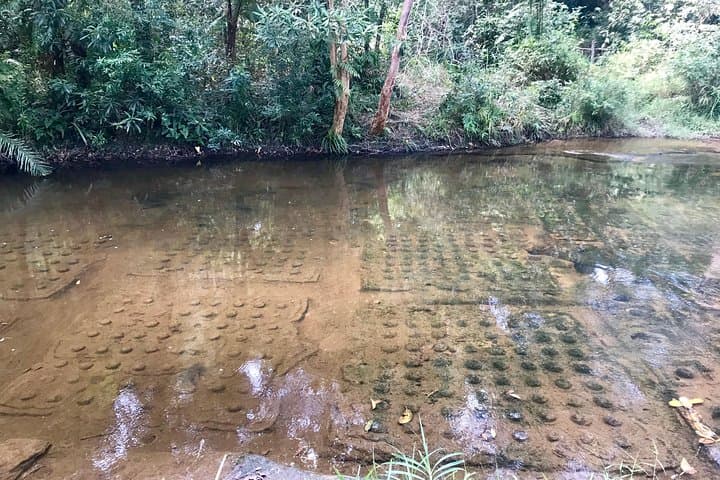
Head up Phnom Kulen for an eight‑hour journey through jungle, carved riverbeds and a hilltop Reclining Buddha. Swim beneath Kulen Waterfall, view thousand-year-old lingas under flowing water, and learn why this plateau is central to Khmer history.
Head up Phnom Kulen for an eight‑hour journey through jungle, carved riverbeds and a hilltop Reclining Buddha. Swim beneath Kulen Waterfall, view thousand-year-old lingas under flowing water, and learn why this plateau is central to Khmer history.
The first light on Phnom Kulen cuts across broad leaves and wet rock, and you can feel the mountain breathing as the jeep climbs toward the plateau. In the mist the waterfall grows louder—water daring you to step closer—while carved stones beneath the current glint like a lost city spilling its stories into the stream.
Verified experiences and guided adventures in the surrounding area.
Operated by Bayon Guide · Phnom Kulen, Siem Reap Province
The first light on Phnom Kulen cuts across broad leaves and wet rock, and you can feel the mountain breathing as the jeep climbs toward the plateau. In the mist the waterfall grows louder—water daring you to step closer—while carved stones beneath the current glint like a lost city spilling its stories into the stream.
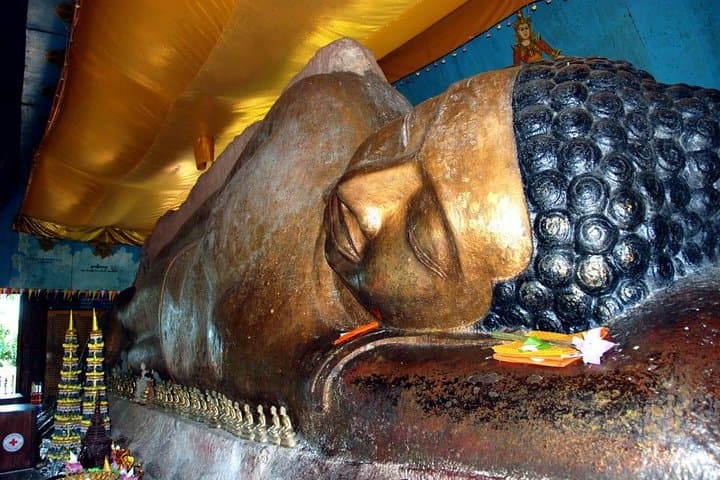
This day trip follows the cradle of the Khmer Empire. Phnom Kulen’s sandstone plateau was quarried and revered: the River of a Thousand Lingas carries centuries-old Shiva carvings worn smooth by water, and the Reclining Buddha is chiseled directly into the hilltop’s red stone. Geologically, the plateau is a rugged remnant of uplifted sandstone, its erosive rivers cutting shallow basins that feed cascades and pools.
Culturally the site blends pilgrimage and local life—families picnic at the falls, monks tend hilltop pagodas, and you may be offered a traditional Khmer water blessing at the river.
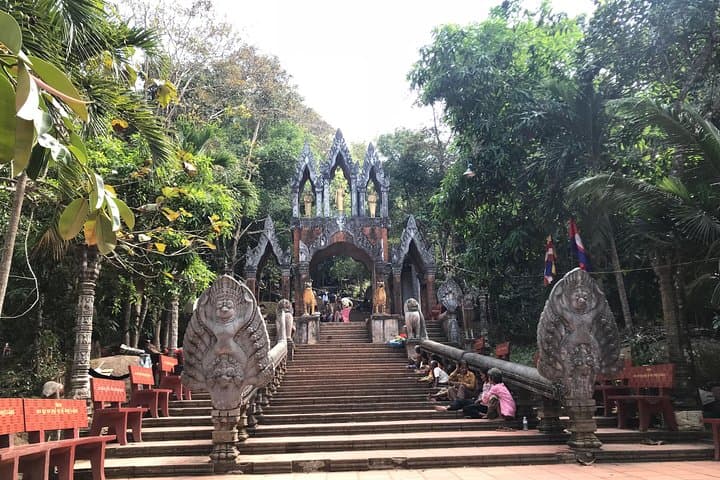
Practical guidance: expect uneven, sometimes slippery trails and short walks between viewpoints—bring good grip for walking on wet stone. The full tour runs about eight hours from Siem Reap and includes a set lunch and bottled water. Plan for sun and sudden showers by layering and carrying a dry bag for electronics. Arrive early to beat crowds and capture the Valley Viewpoint light. Respect sacred areas: modest clothing is required at pagodas and the Reclining Buddha. With simple preparation—sturdy footwear, hydration, and a light rain layer—you’ll move easily between archaeology, waterfall swims, and panoramic jungle views, making the mountain’s history and wildness tangible in a single day.
easy.
8 hours.
Light to moderate fitness; able to walk short uneven sections and climb steps at the pagoda.
Travel time is roughly 60–90 minutes each way depending on route and traffic; the full tour runs about 8 hours including stops.
Yes—many visitors swim in the pool beneath the falls, but currents can be strong after heavy rain; follow guide advice and avoid risky areas.
Yes, the carvings are visible beneath shallow flow; access can require walking on slick rock—wear appropriate footwear and step carefully.
Yes, many sites are religious—cover shoulders and knees when visiting pagodas and the Reclining Buddha, and be respectful during any blessing rituals.
Phnom Kulen is considered the birthplace of the Khmer Empire after King Jayavarman II declared independence from Java here in 802 AD; the plateau supplied sandstone and sacred motifs to early Angkorian projects.
The area is a protected national park; visitors are asked to avoid climbing on carvings, carry out waste, and follow local guidance to reduce erosion and cultural damage.
Bayon Guide operates guided outdoor trips and adventures with an emphasis on safety, stewardship, and memorable experiences.
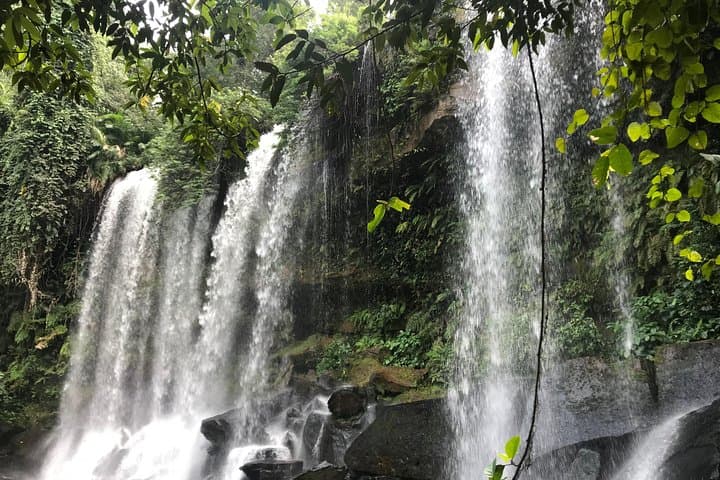
The first light on Phnom Kulen cuts across broad leaves and wet rock, and you can feel the mountain breathing as the jeep climbs toward the plateau. In the mist the waterfall grows louder—water daring you to step closer—while carved stones beneath the current glint like a lost city spilling its stories into the stream.
The first light on Phnom Kulen cuts across broad leaves and wet rock, and you can feel the mountain breathing as the jeep climbs toward the plateau. In the mist the waterfall grows louder—water daring you to step closer—while carved stones beneath the current glint like a lost city spilling its stories into the stream.
This day trip follows the cradle of the Khmer Empire. Phnom Kulen’s sandstone plateau was quarried and revered: the River of a Thousand Lingas carries centuries-old Shiva carvings worn smooth by water, and the Reclining Buddha is chiseled directly into the hilltop’s red stone. Geologically, the plateau is a rugged remnant of uplifted sandstone, its erosive rivers cutting shallow basins that feed cascades and pools.
Culturally the site blends pilgrimage and local life—families picnic at the falls, monks tend hilltop pagodas, and you may be offered a traditional Khmer water blessing at the river.
Practical guidance: expect uneven, sometimes slippery trails and short walks between viewpoints—bring good grip for walking on wet stone. The full tour runs about eight hours from Siem Reap and includes a set lunch and bottled water. Plan for sun and sudden showers by layering and carrying a dry bag for electronics. Arrive early to beat crowds and capture the Valley Viewpoint light. Respect sacred areas: modest clothing is required at pagodas and the Reclining Buddha. With simple preparation—sturdy footwear, hydration, and a light rain layer—you’ll move easily between archaeology, waterfall swims, and panoramic jungle views, making the mountain’s history and wildness tangible in a single day.