THE ADVENTURE COLLECTIVE® · Independent discovery and booking for outdoor travel

By the back entrance, Petra opens with fewer crowds and bolder light. This private guided route focuses on the Monastery, Royal Tombs and the Treasury, combining 4×4 access with a roughly 10 km walk through Nabatean history.
By the back entrance, Petra opens with fewer crowds and bolder light. This private guided route focuses on the Monastery, Royal Tombs and the Treasury, combining 4×4 access with a roughly 10 km walk through Nabatean history.
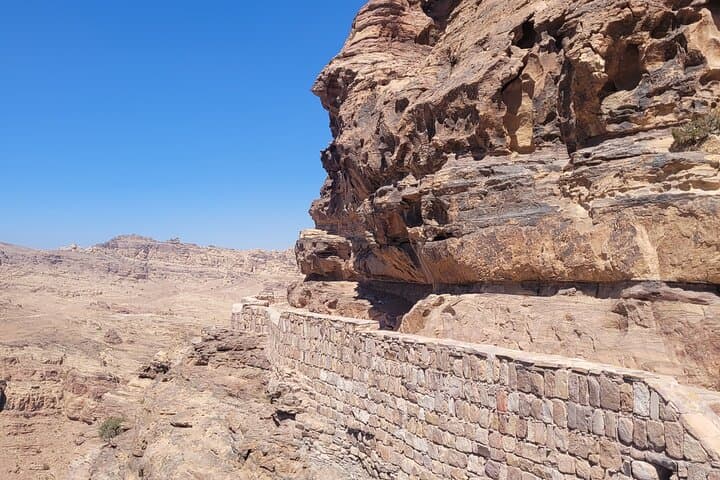
You step off the 4×4 where the rock thins into a stairway hewn centuries ago; wind brushes the sandstone like a careful editor, and the Monastery rises, raw and immediate. The back entrance to Petra lets the canyon breathe around you — fewer people, broader light, and a sense that the site can be read at your pace.
Verified experiences and guided adventures in the surrounding area.
Operated by Alfarajat - Tour guide in Petra Jordan . · Wadi Musa, Ma'an
You step off the 4×4 where the rock thins into a stairway hewn centuries ago; wind brushes the sandstone like a careful editor, and the Monastery rises, raw and immediate. The back entrance to Petra lets the canyon breathe around you — fewer people, broader light, and a sense that the site can be read at your pace.
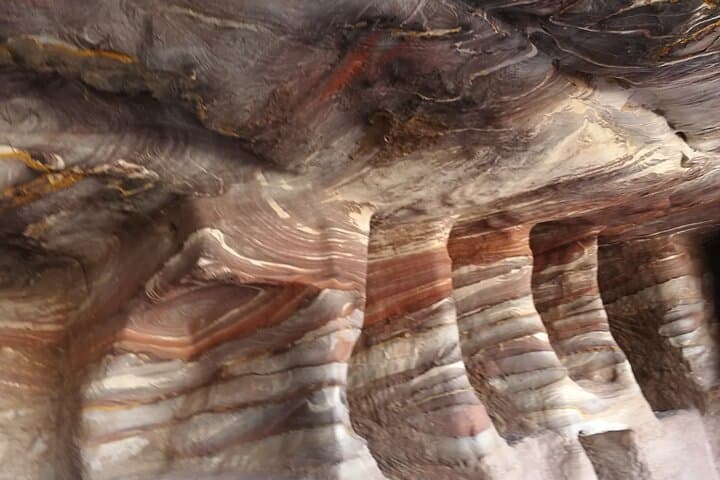
Petra’s carved facades date to the Nabatean Kingdom (1st century BCE–1st century CE), when desert traders cut monumental façades from living rock. The landscape is a layered geology of sandstone beds and aeolian veneers; colors shift from rose to rust as sun angle changes. Wadi Musa’s Bedouin culture remains visible in local hospitality and in small stalls outside key sights.
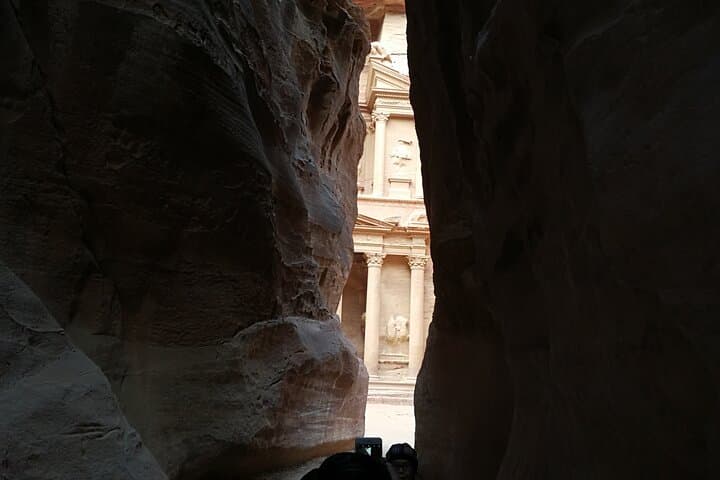
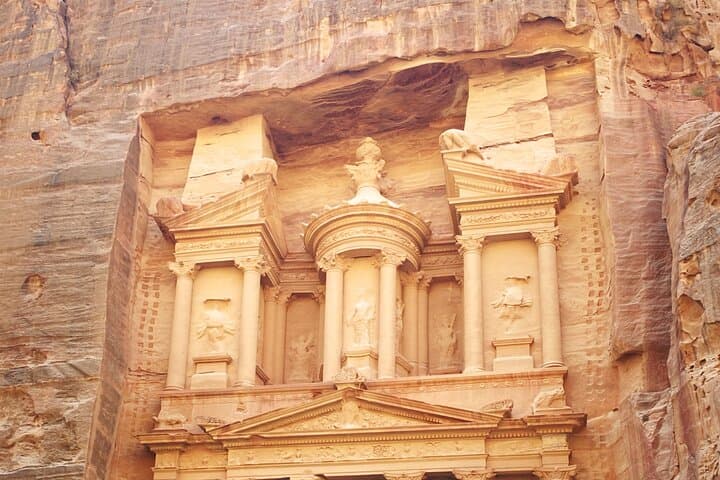
This private route begins with a hotel pickup, a short visit to Little Petra, and a 4×4 drop at the Monastery base. Expect steep stone steps, narrow canyons, and roughly 10 km of walking ending at the Treasury. Highlights include Qasr al-Bint, the Colonnaded Street, Royal Tombs and sweeping vantage points above the theatre.
Plan for sun, dust and uneven steps: bring a full water supply, sturdy shoes, and layered sun protection. The guide sets pace and covers history; you control stops for photos and exploration. If you prefer less walking, the tour’s 4×4 segments reduce strain. Finish at the Treasury with time to walk the canyon back to the Visitor Centre on your own — the path is exposed and requires attention to footing. This approach rewards curiosity: Petra not just seen, but felt underfoot.
moderate.
5–7 hours.
Moderate fitness: comfortable walking on uneven stone for up to 10 km and climbing stair sections.
Meeting is at the Petra Visitor Centre gate next to the ATM; hotel pickup is provided beforehand.
Yes—the itinerary includes Petra entry; the guide collects tickets at the Visitor Centre and uses Petra Authority shuttles where noted.
Not recommended for serious mobility limitations—there are many stairs and uneven paths; 4×4 segments reduce hiking but do not eliminate steps.
The route includes roughly 10 km of walking; the tour ends at the Treasury with an option to walk the 40-minute canyon route back to the Visitor Centre on your own.
Petra was the Nabatean capital and a major caravan hub; its rock-cut architecture reflects desert-adapted engineering and trade wealth.
Visit with a licensed guide to limit route impact; stick to paths and avoid climbing façades—sandstone erodes quickly under touch and foot traffic.
Alfarajat - Tour guide in Petra Jordan . operates guided outdoor trips and adventures with an emphasis on safety, stewardship, and memorable experiences.
You step off the 4×4 where the rock thins into a stairway hewn centuries ago; wind brushes the sandstone like a careful editor, and the Monastery rises, raw and immediate. The back entrance to Petra lets the canyon breathe around you — fewer people, broader light, and a sense that the site can be read at your pace.
You step off the 4×4 where the rock thins into a stairway hewn centuries ago; wind brushes the sandstone like a careful editor, and the Monastery rises, raw and immediate. The back entrance to Petra lets the canyon breathe around you — fewer people, broader light, and a sense that the site can be read at your pace.
Petra’s carved facades date to the Nabatean Kingdom (1st century BCE–1st century CE), when desert traders cut monumental façades from living rock. The landscape is a layered geology of sandstone beds and aeolian veneers; colors shift from rose to rust as sun angle changes. Wadi Musa’s Bedouin culture remains visible in local hospitality and in small stalls outside key sights.
This private route begins with a hotel pickup, a short visit to Little Petra, and a 4×4 drop at the Monastery base. Expect steep stone steps, narrow canyons, and roughly 10 km of walking ending at the Treasury. Highlights include Qasr al-Bint, the Colonnaded Street, Royal Tombs and sweeping vantage points above the theatre.
Plan for sun, dust and uneven steps: bring a full water supply, sturdy shoes, and layered sun protection. The guide sets pace and covers history; you control stops for photos and exploration. If you prefer less walking, the tour’s 4×4 segments reduce strain. Finish at the Treasury with time to walk the canyon back to the Visitor Centre on your own — the path is exposed and requires attention to footing. This approach rewards curiosity: Petra not just seen, but felt underfoot.