THE ADVENTURE COLLECTIVE® · Independent discovery and booking for outdoor travel

Step off the boulevards and into Paris’s hidden covered passages—glass-roofed arcades that hold shops, cafés and a slice of 19th-century city life. This two-hour guided walk reveals the architecture, stories and small-scale commerce that make these arcades worth a detour.
Step off the boulevards and into Paris’s hidden covered passages—glass-roofed arcades that hold shops, cafés and a slice of 19th-century city life. This two-hour guided walk reveals the architecture, stories and small-scale commerce that make these arcades worth a detour.
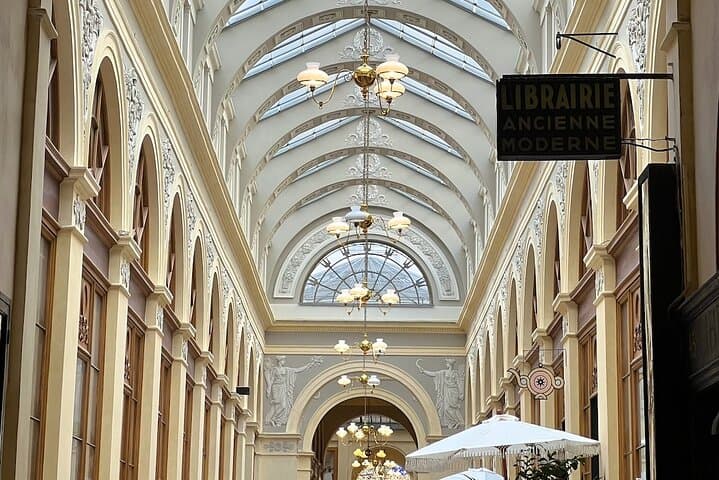
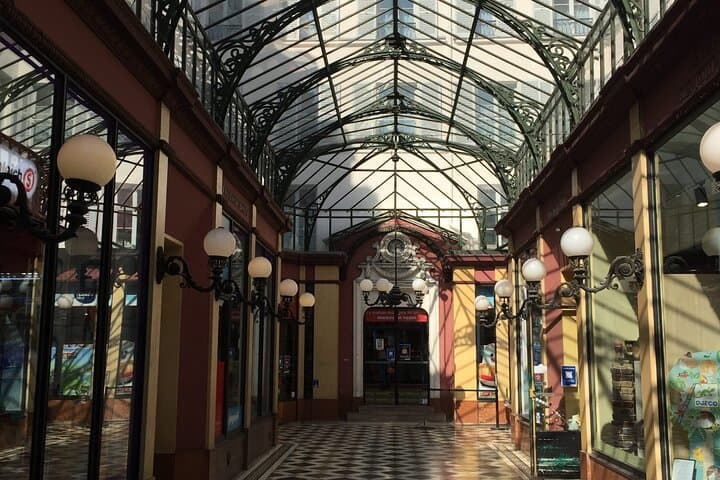
Under the low arc of a glass-and-iron gallery, a guided group slides from sunlight into a corridor of patterned tiles, gilt moldings and shop windows that seem frozen in amber. The covered passages of Paris offer a different pace from the boulevards: compact rooms of light and shadow where cafés, bookshops and old hatters hold onto nineteenth-century atmospheres.
Verified experiences and guided adventures in the surrounding area.
Operated by Interkultur Paris · Paris, Île-de-France
Under the low arc of a glass-and-iron gallery, a guided group slides from sunlight into a corridor of patterned tiles, gilt moldings and shop windows that seem frozen in amber. The covered passages of Paris offer a different pace from the boulevards: compact rooms of light and shadow where cafés, bookshops and old hatters hold onto nineteenth-century atmospheres.
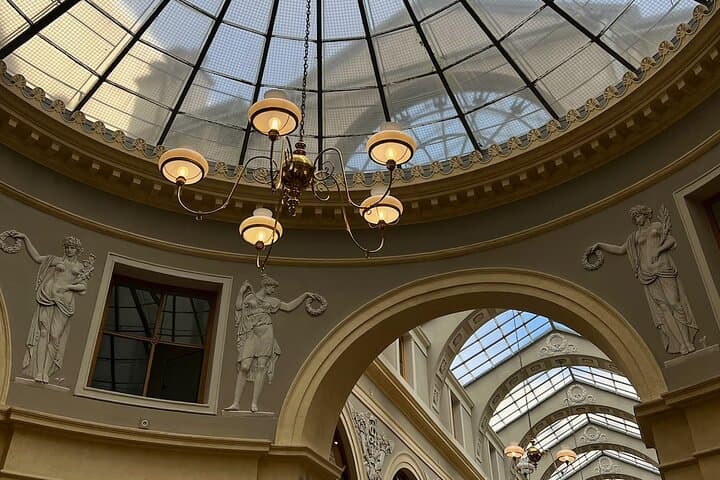
Built mostly between 1810 and 1900, these arcades were early indoor malls—engineering answers to Parisian weather and nascent consumer culture. Many survive because they thread through Haussmann-era stone and the city's older fabric; their cast-iron ribs and stained glass speak to the era’s taste for ornament and practical shelter. Strolling them reveals a social history of merchants, typographers and promenading Parisians as much as it shows tile patterns and carved shopfronts.
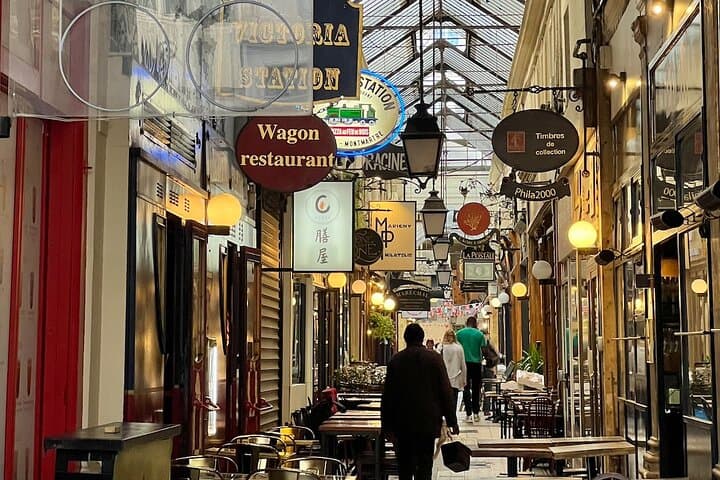
Culturally the passages are intimate: smaller proprietors, artisanal ateliers and cafés that keep neighborhood life moving. Visitors should listen for signboards, watch mosaic floors, and note how light passes differently through each arcade’s glass roof—some channels feel airy, others deliberate and dim.
Practical guidance: meet at Grands Boulevards metro, wear comfortable shoes for tile and stone floors, and bring a small amount of cash for boutiques that prefer it. Tours typically last about two hours and cover a dozen passages—ask the guide about quieter side arcades like Passage Verdeau or the bookshops of Galerie Vivienne if you want to linger. Respect private shops, keep group size polite inside narrow corridors, and plan mornings or late afternoons to avoid peak window-shopping crowds.
easy.
2 hours.
Suitable for most fitness levels; involves walking on flat, sometimes uneven surfaces for about two hours.
The tour starts at Grands Boulevards metro station; the exact meeting point will be given on your voucher or by the local operator.
Many passages are accessible, and the operator lists wheelchair accessibility—notify special requirements at booking to ensure a smooth route.
This listing offers an English-language guide; check availability for other languages with the operator.
Expect to visit about a dozen passages over roughly two hours, with short stops for history and photography.
Most covered passages were constructed in the 19th century as sheltered shopping arcades during Paris’s rapid urban expansion; fewer than thirty survive intact today.
Preservation relies on careful tourism—avoid obstructing shopfronts, respect private businesses, and support local artisans to help maintain these fragile interiors.
Interkultur Paris operates guided outdoor trips and adventures with an emphasis on safety, stewardship, and memorable experiences.
Under the low arc of a glass-and-iron gallery, a guided group slides from sunlight into a corridor of patterned tiles, gilt moldings and shop windows that seem frozen in amber. The covered passages of Paris offer a different pace from the boulevards: compact rooms of light and shadow where cafés, bookshops and old hatters hold onto nineteenth-century atmospheres.
Under the low arc of a glass-and-iron gallery, a guided group slides from sunlight into a corridor of patterned tiles, gilt moldings and shop windows that seem frozen in amber. The covered passages of Paris offer a different pace from the boulevards: compact rooms of light and shadow where cafés, bookshops and old hatters hold onto nineteenth-century atmospheres.
Built mostly between 1810 and 1900, these arcades were early indoor malls—engineering answers to Parisian weather and nascent consumer culture. Many survive because they thread through Haussmann-era stone and the city's older fabric; their cast-iron ribs and stained glass speak to the era’s taste for ornament and practical shelter. Strolling them reveals a social history of merchants, typographers and promenading Parisians as much as it shows tile patterns and carved shopfronts.
Culturally the passages are intimate: smaller proprietors, artisanal ateliers and cafés that keep neighborhood life moving. Visitors should listen for signboards, watch mosaic floors, and note how light passes differently through each arcade’s glass roof—some channels feel airy, others deliberate and dim.
Practical guidance: meet at Grands Boulevards metro, wear comfortable shoes for tile and stone floors, and bring a small amount of cash for boutiques that prefer it. Tours typically last about two hours and cover a dozen passages—ask the guide about quieter side arcades like Passage Verdeau or the bookshops of Galerie Vivienne if you want to linger. Respect private shops, keep group size polite inside narrow corridors, and plan mornings or late afternoons to avoid peak window-shopping crowds.