THE ADVENTURE COLLECTIVE® · Independent discovery and booking for outdoor travel

Walk among 2,500-year-old Doric temples and watch buffalo mozzarella made by hand on a full-day excursion from Naples. Combine archaeology, a working dairy visit, and a farm-to-table tasting away from the crowds.
Walk among 2,500-year-old Doric temples and watch buffalo mozzarella made by hand on a full-day excursion from Naples. Combine archaeology, a working dairy visit, and a farm-to-table tasting away from the crowds.
You step out of the minivan into a wide, sun-baked plain where Doric columns throw sharp, patient shadows across scrub and grass. The sea breathes nearby; wind through the fields nudges the lowing buffalo toward the dairy barn. Here, among three nearly intact temples, history is not a relic but a presence that presses gently against your shoulders as you walk.
Verified experiences and guided adventures in the surrounding area.
Operated by TASTETHEXPERIENCE · Capaccio-Paestum, Campania
You step out of the minivan into a wide, sun-baked plain where Doric columns throw sharp, patient shadows across scrub and grass. The sea breathes nearby; wind through the fields nudges the lowing buffalo toward the dairy barn. Here, among three nearly intact temples, history is not a relic but a presence that presses gently against your shoulders as you walk.
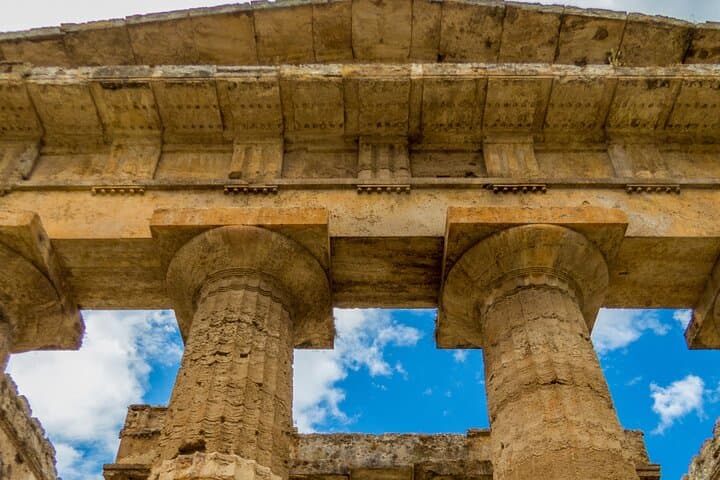
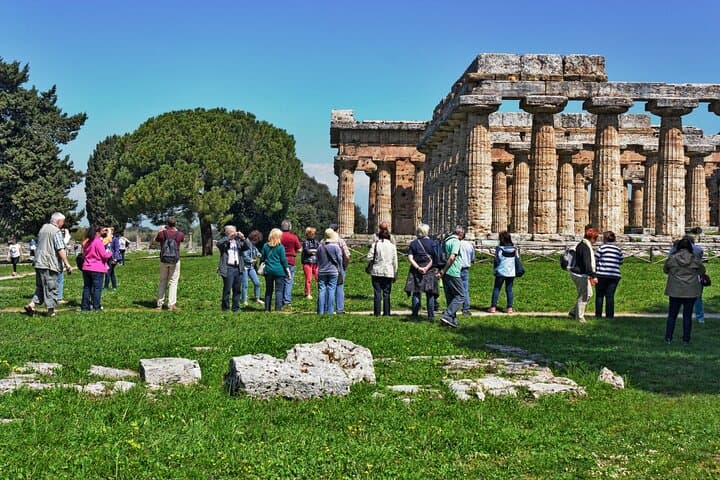
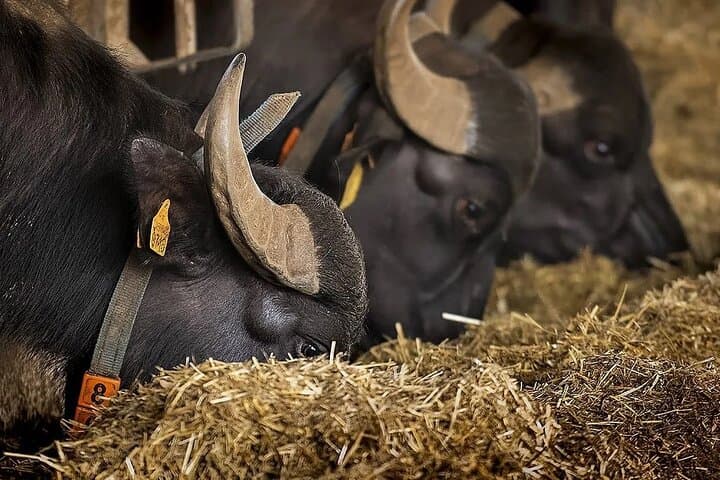
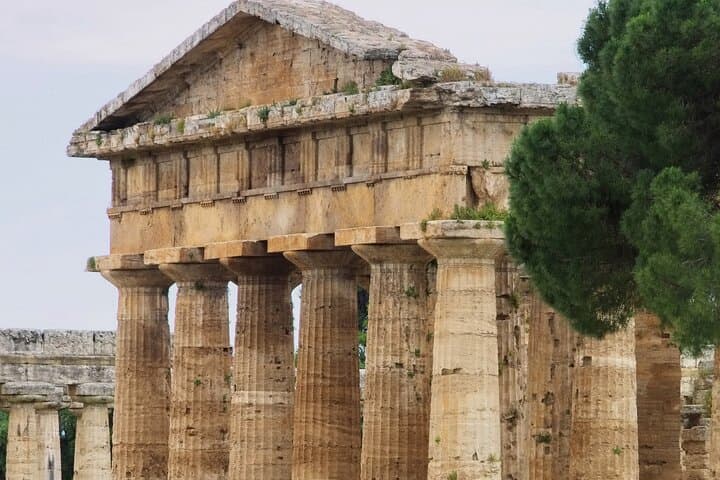
Paestum began as the Greek colony of Poseidonia around the 6th century BCE. The temples—Hera, Athena and the mighty temple often attributed to Poseidon—sit on smooth limestone, their fluted piers surviving millennia of weather and human hands. Geologically, the coastal plain is alluvium and clay, which supported both cereal fields and the rich pastures that made this area ideal for water buffalo farming. Local culture folds archaeology and food into a single day: an expert guide narrates the stones while a buffalo farm demonstrates how fresh mozzarella is pulled and cooled in whey.
Practical guidance: tours run about nine hours round-trip from Naples with roughly 3.5 hours of driving total included. Expect about 2–2.5 hours exploring the archaeological area and another 2–3 hours at the farm for demonstration, tasting and light lunch. Wear sturdy walking shoes for uneven temple terrain, sun protection for open plains, and bring a refillable bottle—a tasting often follows the lesson, not vice versa. The tour includes admission, farm demo, and a buffet of local cheeses and focaccia. Timing mid-morning through late afternoon gives the best light for photos and a quieter temple experience. This is a low-technical, moderately paced cultural day that pairs ancient stones with one of Italy’s living food traditions.
moderate.
9 hours.
Light-to-moderate activity: able to walk 1–3 miles across uneven terrain and stand during demonstrations.
Round-trip transfer is approximately 3.5 hours total, with about 1.5–2 hours each way depending on traffic.
Yes — the dairy tour is family-friendly and includes a hands-on demonstration and tastings; infant seats and strollers are accommodated.
Yes — admission to the Paestum Archaeological Site is included in the tour price.
Notify the operator in advance via booking questions; many farms can adjust portions or provide alternatives but planning ahead is recommended.
Founded as Poseidonia by Greek colonists in the 6th century BCE, Paestum later became a Roman town—its temples are unusually well-preserved examples of Doric architecture.
The archaeological park limits foot traffic to protect foundations, and local farms increasingly use sustainable grazing and water practices to preserve the wetlands that support both buffalo and birdlife.
TASTETHEXPERIENCE operates guided outdoor trips and adventures with an emphasis on safety, stewardship, and memorable experiences.
You step out of the minivan into a wide, sun-baked plain where Doric columns throw sharp, patient shadows across scrub and grass. The sea breathes nearby; wind through the fields nudges the lowing buffalo toward the dairy barn. Here, among three nearly intact temples, history is not a relic but a presence that presses gently against your shoulders as you walk.
You step out of the minivan into a wide, sun-baked plain where Doric columns throw sharp, patient shadows across scrub and grass. The sea breathes nearby; wind through the fields nudges the lowing buffalo toward the dairy barn. Here, among three nearly intact temples, history is not a relic but a presence that presses gently against your shoulders as you walk.
Paestum began as the Greek colony of Poseidonia around the 6th century BCE. The temples—Hera, Athena and the mighty temple often attributed to Poseidon—sit on smooth limestone, their fluted piers surviving millennia of weather and human hands. Geologically, the coastal plain is alluvium and clay, which supported both cereal fields and the rich pastures that made this area ideal for water buffalo farming. Local culture folds archaeology and food into a single day: an expert guide narrates the stones while a buffalo farm demonstrates how fresh mozzarella is pulled and cooled in whey.
Practical guidance: tours run about nine hours round-trip from Naples with roughly 3.5 hours of driving total included. Expect about 2–2.5 hours exploring the archaeological area and another 2–3 hours at the farm for demonstration, tasting and light lunch. Wear sturdy walking shoes for uneven temple terrain, sun protection for open plains, and bring a refillable bottle—a tasting often follows the lesson, not vice versa. The tour includes admission, farm demo, and a buffet of local cheeses and focaccia. Timing mid-morning through late afternoon gives the best light for photos and a quieter temple experience. This is a low-technical, moderately paced cultural day that pairs ancient stones with one of Italy’s living food traditions.