THE ADVENTURE COLLECTIVE® · Independent discovery and booking for outdoor travel

Trace European painting from Uccello to Monet with an art historian on a three-hour walk between the Ashmolean and Christ Church Picture Gallery. Expect rooftop views, close technical readings of works, and a small-group pace tailored to collectors and curious travelers alike.
Trace European painting from Uccello to Monet with an art historian on a three-hour walk between the Ashmolean and Christ Church Picture Gallery. Expect rooftop views, close technical readings of works, and a small-group pace tailored to collectors and curious travelers alike.
You step out of a narrow Oxford lane into the airy courtyard of the Ashmolean, the city's oldest public collection looming above in oolitic limestone that forms the famous 'dreaming spires.' The tour begins with a close look at paintings that reshaped European vision — from Paolo Uccello's perspectival drama to Monet's brushwork caught at sea — led by an art historian who moves between social context and technical detail with equal ease.
Verified experiences and guided adventures in the surrounding area.
Operated by Oxford Art Tours · Oxford, Oxfordshire
You step out of a narrow Oxford lane into the airy courtyard of the Ashmolean, the city's oldest public collection looming above in oolitic limestone that forms the famous 'dreaming spires.' The tour begins with a close look at paintings that reshaped European vision — from Paolo Uccello's perspectival drama to Monet's brushwork caught at sea — led by an art historian who moves between social context and technical detail with equal ease.
The walk links two distinct histories: the Ashmolean, founded in the 17th century as one of the first university museums, and Christ Church Picture Gallery, part of a college whose buildings date back to Tudor refoundation. Geology and architecture play supporting roles here; the university's stonework and rooftop views frame a city that grew on the trade in wool and learning.
Expect a three-hour, small-group rhythm: focused gallery time, a coffee pause on the Ashmolean rooftop overlooking spires, then a curated visit to the Christ Church collection where Italian Renaissance drawings and Botticelli's Sibyls sit behind controlled lighting. The guide will point out restorations, paper types, and techniques for spotting later interventions.
Practically, plan to arrive with comfortable shoes for cobbled streets, a notepad or phone for unobtrusive photos (no flash), and a readiness to stand during close examinations. The tour is paced for accessibility but rewards attention: quiet rooms, rotating displays, and the rare pleasure of seeing works normally kept in dark storage. Public transport and short walks connect each stop, making this a concentrated, teachable slice of Oxford's art history.
easy.
3 hours.
Suitable for all fitness levels; requires standing and short walks between sites.
The tour includes the Christ Church Picture Gallery ticket; Ashmolean's permanent collections are generally free but check seasonal exhibitions that may require a separate ticket.
Yes—content is accessible for older children with interest in art, though close attention during technical demonstrations may suit teenagers and adults best.
Photography rules vary by room; non-flash photography is often permitted, but always follow the guide and posted restrictions for each gallery.
The tour is rated easy and suitable for most mobility levels, but expect some standing and short walks; contact the operator ahead of time for specific accessibility arrangements.
The Ashmolean, established in the late 17th century, is one of the world’s earliest university museums; Christ Church was refounded in the 16th century and its picture gallery concentrates Italian old masters and Renaissance drawings.
Many drawings and works are light-sensitive and rotated from storage; visitors are asked to limit flash photography and adhere to quiet, hands-off viewing to protect fragile materials.
Oxford Art Tours operates guided outdoor trips and adventures with an emphasis on safety, stewardship, and memorable experiences.
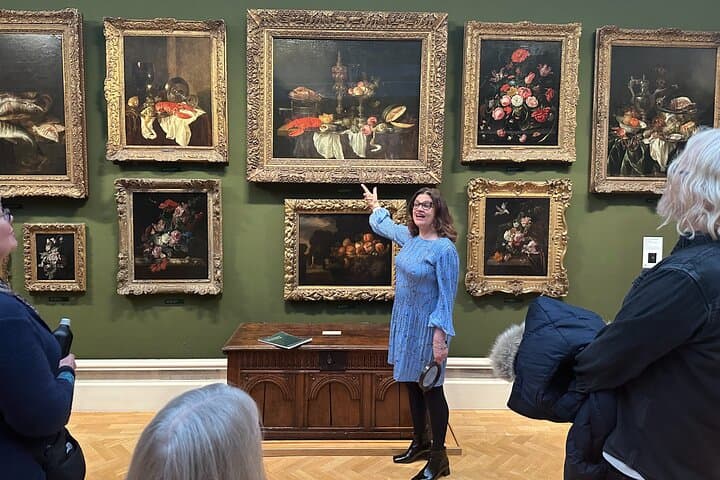



You step out of a narrow Oxford lane into the airy courtyard of the Ashmolean, the city's oldest public collection looming above in oolitic limestone that forms the famous 'dreaming spires.' The tour begins with a close look at paintings that reshaped European vision — from Paolo Uccello's perspectival drama to Monet's brushwork caught at sea — led by an art historian who moves between social context and technical detail with equal ease.
You step out of a narrow Oxford lane into the airy courtyard of the Ashmolean, the city's oldest public collection looming above in oolitic limestone that forms the famous 'dreaming spires.' The tour begins with a close look at paintings that reshaped European vision — from Paolo Uccello's perspectival drama to Monet's brushwork caught at sea — led by an art historian who moves between social context and technical detail with equal ease.
The walk links two distinct histories: the Ashmolean, founded in the 17th century as one of the first university museums, and Christ Church Picture Gallery, part of a college whose buildings date back to Tudor refoundation. Geology and architecture play supporting roles here; the university's stonework and rooftop views frame a city that grew on the trade in wool and learning.
Expect a three-hour, small-group rhythm: focused gallery time, a coffee pause on the Ashmolean rooftop overlooking spires, then a curated visit to the Christ Church collection where Italian Renaissance drawings and Botticelli's Sibyls sit behind controlled lighting. The guide will point out restorations, paper types, and techniques for spotting later interventions.
Practically, plan to arrive with comfortable shoes for cobbled streets, a notepad or phone for unobtrusive photos (no flash), and a readiness to stand during close examinations. The tour is paced for accessibility but rewards attention: quiet rooms, rotating displays, and the rare pleasure of seeing works normally kept in dark storage. Public transport and short walks connect each stop, making this a concentrated, teachable slice of Oxford's art history.