THE ADVENTURE COLLECTIVE® · Independent discovery and booking for outdoor travel

Board a 40‑minute train from Rome and walk into a remarkably intact ancient port town. This private 5‑hour excursion to Ostia Antica pairs expert guiding with time to explore amphitheatres, baths, and everyday Roman streets.
Board a 40‑minute train from Rome and walk into a remarkably intact ancient port town. This private 5‑hour excursion to Ostia Antica pairs expert guiding with time to explore amphitheatres, baths, and everyday Roman streets.
The morning train slides out of Rome and, in forty minutes, the modern noise thins. Stepping off at Ostia Antica, visitors find a town that keeps its past at eye level: broad streets paved with flagstones, an amphitheatre whose stage still feels measured for spectators, and bathhouse mosaics that catch light like small, ancient mirrors.
Verified experiences and guided adventures in the surrounding area.
Operated by Travel Curious · Ostia Antica, Lazio
The morning train slides out of Rome and, in forty minutes, the modern noise thins. Stepping off at Ostia Antica, visitors find a town that keeps its past at eye level: broad streets paved with flagstones, an amphitheatre whose stage still feels measured for spectators, and bathhouse mosaics that catch light like small, ancient mirrors.
Ostia Antica was Rome’s principal port from the Republic through the Imperial era; its name means “mouth,” a reminder of its role at the Tiber’s outlet. Geologically the site sits on low, flat alluvial plain—easy walking but prone to soft, silty patches in wet weather. Archaeology and civic life mingle here: insulae (apartment blocks), tabernae (shops), public latrines, and a well-curated on-site museum preserve objects pulled from the soil. Culturally, Ostia offers a clearer picture of everyday Roman life than grander Pompeii—less volcanic drama, more ordinary commerce.
Practical guidance: plan for roughly 3 hours on-site within a 5-hour window that includes return train time and transfers; the walk is predominantly flat but surfaces are uneven and dusty. Bring a refillable water bottle, sturdy shoes with tread, sun protection, and a lightweight layer for coastal breezes. Visit early to avoid midday heat and use the private guide to orient your route—there’s more to cover than a casual map suggests. Accessibility is improved compared with many ruins, but some areas require stepping up and down stone thresholds. With a compact museum and well-marked ruins, Ostia Antica rewards curiosity: listen for the squeak of boots on ancient stone and imagine markets that once filled these streets.
moderate.
5 hours.
Moderate — comfortable walking for several hours on uneven surfaces and some short steps
The tour is five hours total: about 40 minutes each way by train plus roughly three hours on-site with your private guide.
Children can enjoy the open ruins; strollers may be usable on flatter routes but many areas have steps and uneven ground.
Yes—return train tickets and site admission are included with this excursion.
Parts of the site and the included transportation are accessible, but some archaeological areas have thresholds and uneven surfaces that limit access.
Ostia Antica developed as Rome’s main seaport from the 4th century BCE; its fortunes rose and fell with sedimentation at the Tiber and shifting trade routes.
Ongoing conservation focuses on stabilizing mosaics and limestones while managing visitor impact to protect exposed surfaces and fragile frescoes.
Travel Curious operates guided outdoor trips and adventures with an emphasis on safety, stewardship, and memorable experiences.
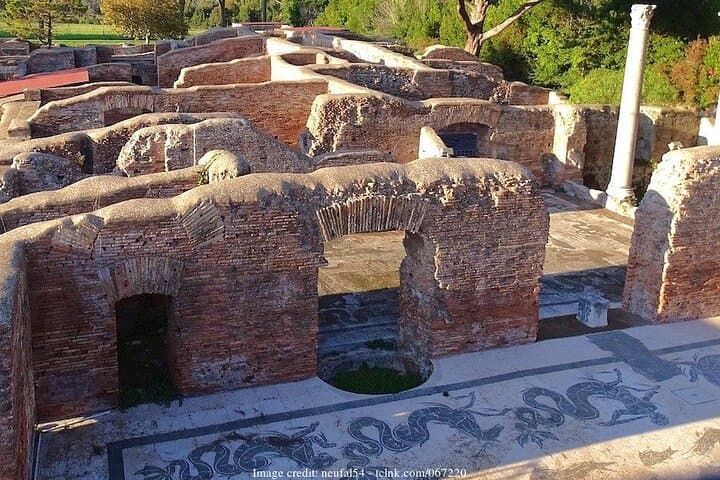
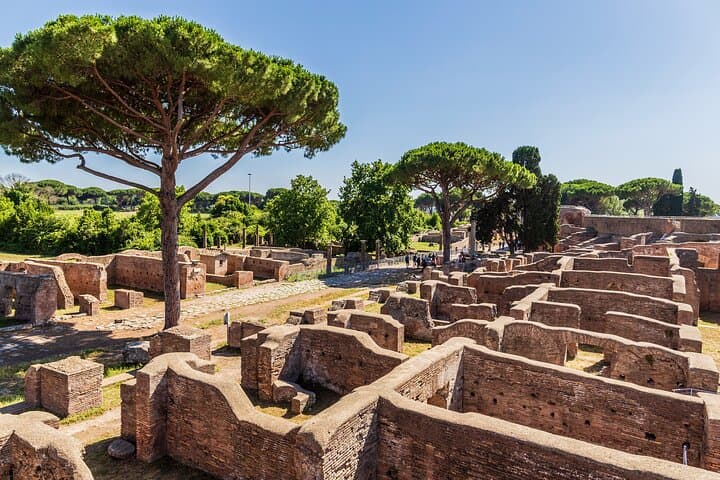
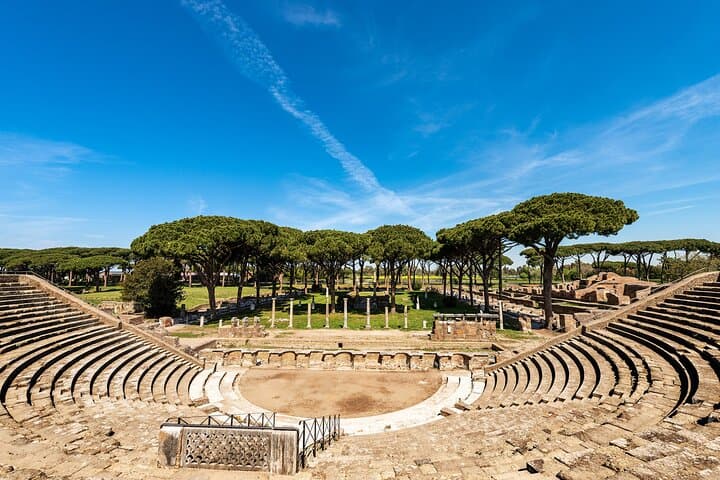
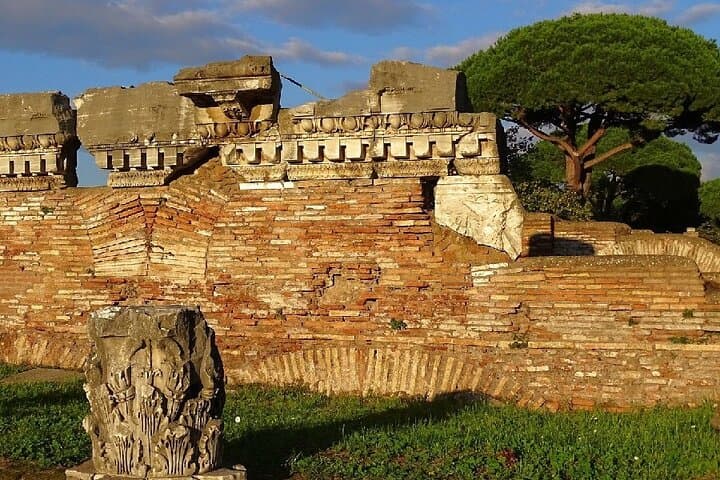
The morning train slides out of Rome and, in forty minutes, the modern noise thins. Stepping off at Ostia Antica, visitors find a town that keeps its past at eye level: broad streets paved with flagstones, an amphitheatre whose stage still feels measured for spectators, and bathhouse mosaics that catch light like small, ancient mirrors.
The morning train slides out of Rome and, in forty minutes, the modern noise thins. Stepping off at Ostia Antica, visitors find a town that keeps its past at eye level: broad streets paved with flagstones, an amphitheatre whose stage still feels measured for spectators, and bathhouse mosaics that catch light like small, ancient mirrors.
Ostia Antica was Rome’s principal port from the Republic through the Imperial era; its name means “mouth,” a reminder of its role at the Tiber’s outlet. Geologically the site sits on low, flat alluvial plain—easy walking but prone to soft, silty patches in wet weather. Archaeology and civic life mingle here: insulae (apartment blocks), tabernae (shops), public latrines, and a well-curated on-site museum preserve objects pulled from the soil. Culturally, Ostia offers a clearer picture of everyday Roman life than grander Pompeii—less volcanic drama, more ordinary commerce.
Practical guidance: plan for roughly 3 hours on-site within a 5-hour window that includes return train time and transfers; the walk is predominantly flat but surfaces are uneven and dusty. Bring a refillable water bottle, sturdy shoes with tread, sun protection, and a lightweight layer for coastal breezes. Visit early to avoid midday heat and use the private guide to orient your route—there’s more to cover than a casual map suggests. Accessibility is improved compared with many ruins, but some areas require stepping up and down stone thresholds. With a compact museum and well-marked ruins, Ostia Antica rewards curiosity: listen for the squeak of boots on ancient stone and imagine markets that once filled these streets.