THE ADVENTURE COLLECTIVE® · Independent discovery and booking for outdoor travel

Cover Manhattan at scooter speed: rent a Ninebot Max near Central Park and move from park paths to waterfront views in an afternoon. This practical guide covers what to expect, where to start, and how to ride safely through NYC streets.
Cover Manhattan at scooter speed: rent a Ninebot Max near Central Park and move from park paths to waterfront views in an afternoon. This practical guide covers what to expect, where to start, and how to ride safely through NYC streets.
You push off from the storefront on 7th Avenue and 56th Street, the city opening around you like a grid ready to be ridden. The scooter hums underfoot; a line of traffic glows to your left while the trees of Central Park lean in, as if urging you toward quieter paths. In a single afternoon you can move from manicured park lanes to the courthouse facades and then over to the waterfront where the Hudson dares you to slow down and look.
Verified experiences and guided adventures in the surrounding area.
Operated by Fancy Apple · New York, NY
You push off from the storefront on 7th Avenue and 56th Street, the city opening around you like a grid ready to be ridden. The scooter hums underfoot; a line of traffic glows to your left while the trees of Central Park lean in, as if urging you toward quieter paths. In a single afternoon you can move from manicured park lanes to the courthouse facades and then over to the waterfront where the Hudson dares you to slow down and look.
New York’s streets are layered with history — from Olmsted and Vaux’s 19th-century park design to the avenue grid that structured modern movement. Geology is less dramatic here than the built environment, but the island’s stone outcrops and reclaimed waterfronts have shaped promenades and bike lanes that scooters now share. Culturally, scooting is a pragmatic way to see neighborhoods: it’s fast enough to cover a lot but intimate enough to notice stoops, murals and corner markets.
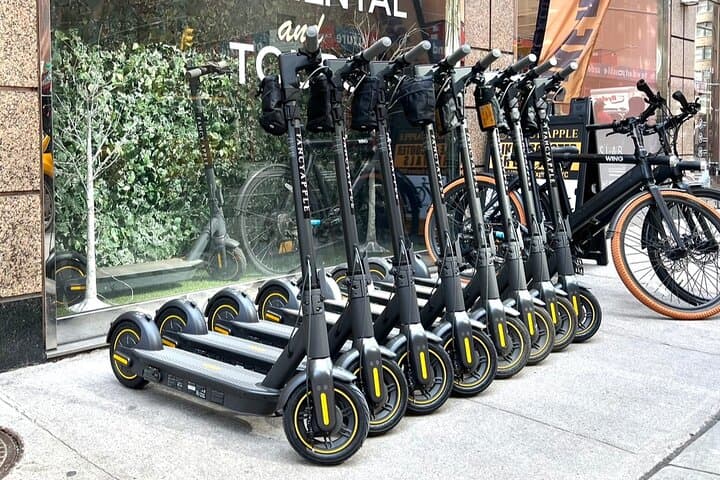
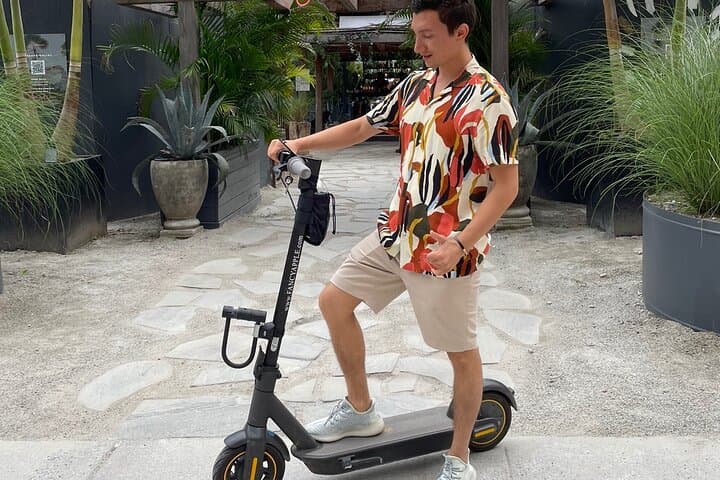
Practical guidance: rentals use the Ninebot Max, a high-range scooter with claimed ranges up to about 40 miles and a top speed typical for consumer models (ride responsibly). Two convenient pick-up/drop-off hubs—near Central Park (7th Ave & 56th St) and by the Brooklyn Bridge—put you near major bike routes. Helmets and U-locks are provided; bring a charged phone for navigation and to lock/unlock the scooter. Ride in marked bike lanes where available, yield to pedestrians, time rides outside peak commuting hours for calmer streets, and watch battery level on longer trips. Expect smooth pavement on main arteries, occasional cobbles in historic districts, and steady urban traffic — plan routes, keep situational awareness, and enjoy a quick, efficient way to experience New York.
easy.
1–4 hours.
Suitable for most fitness levels; basic balance and comfort riding in urban traffic recommended
Age requirements vary by operator; riders 12–16 must be accompanied by a guardian and under-18s are typically required to wear helmets.
Primary pick-up/drop-off is at the Fancy Apple storefront on 7th Ave & 56th St near Park Central Hotel, with a second hub near the Brooklyn Bridge—return to either location unless otherwise arranged.
Yes—helmets and a U-lock are provided with the rental at no extra charge according to the listing inclusions.
Regulations change; follow posted local rules, use bike lanes where permitted, avoid crowded sidewalks, and follow operator guidance to stay compliant.
Central Park was designed by Frederick Law Olmsted and Calvert Vaux in the mid-19th century; the avenue grid laid out in 1811 still dictates movement across Manhattan.
Keep scooters out of protected park cores and off narrow pedestrian paths, stow chargers and batteries properly, and return scooters to designated hubs to minimize street clutter.
Fancy Apple operates guided outdoor trips and adventures with an emphasis on safety, stewardship, and memorable experiences.
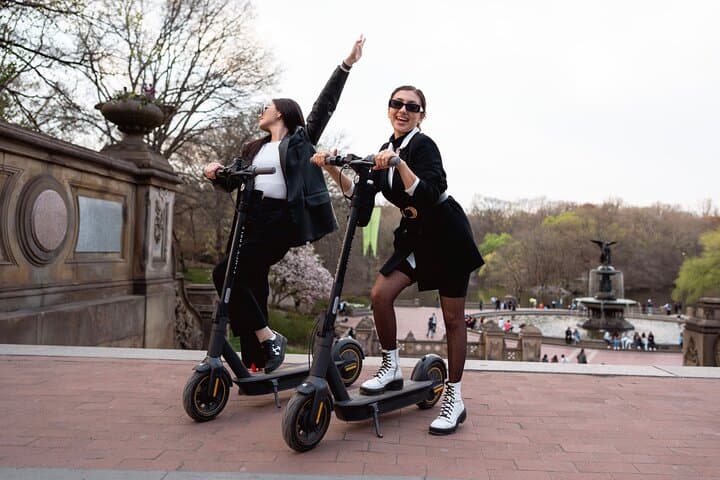
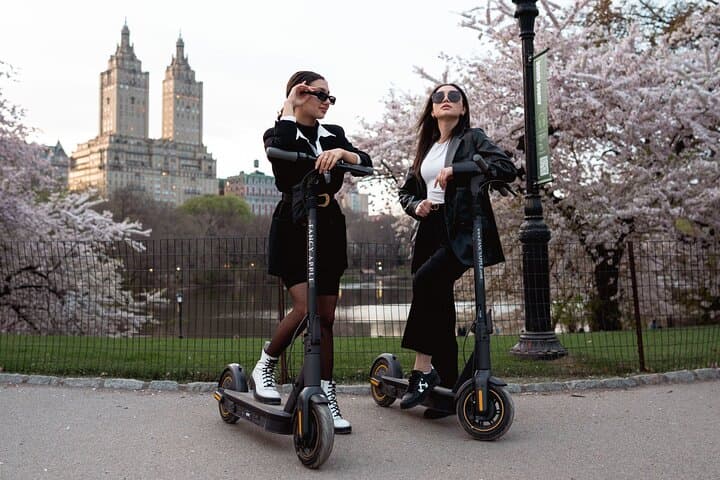
You push off from the storefront on 7th Avenue and 56th Street, the city opening around you like a grid ready to be ridden. The scooter hums underfoot; a line of traffic glows to your left while the trees of Central Park lean in, as if urging you toward quieter paths. In a single afternoon you can move from manicured park lanes to the courthouse facades and then over to the waterfront where the Hudson dares you to slow down and look.
You push off from the storefront on 7th Avenue and 56th Street, the city opening around you like a grid ready to be ridden. The scooter hums underfoot; a line of traffic glows to your left while the trees of Central Park lean in, as if urging you toward quieter paths. In a single afternoon you can move from manicured park lanes to the courthouse facades and then over to the waterfront where the Hudson dares you to slow down and look.
New York’s streets are layered with history — from Olmsted and Vaux’s 19th-century park design to the avenue grid that structured modern movement. Geology is less dramatic here than the built environment, but the island’s stone outcrops and reclaimed waterfronts have shaped promenades and bike lanes that scooters now share. Culturally, scooting is a pragmatic way to see neighborhoods: it’s fast enough to cover a lot but intimate enough to notice stoops, murals and corner markets.
Practical guidance: rentals use the Ninebot Max, a high-range scooter with claimed ranges up to about 40 miles and a top speed typical for consumer models (ride responsibly). Two convenient pick-up/drop-off hubs—near Central Park (7th Ave & 56th St) and by the Brooklyn Bridge—put you near major bike routes. Helmets and U-locks are provided; bring a charged phone for navigation and to lock/unlock the scooter. Ride in marked bike lanes where available, yield to pedestrians, time rides outside peak commuting hours for calmer streets, and watch battery level on longer trips. Expect smooth pavement on main arteries, occasional cobbles in historic districts, and steady urban traffic — plan routes, keep situational awareness, and enjoy a quick, efficient way to experience New York.