THE ADVENTURE COLLECTIVE® · Independent discovery and booking for outdoor travel

A compact conservation park that preserves one of Nouméa’s last dry-forest plots and showcases New Caledonia’s endemic wildlife. Ideal for short independent visits with panoramic bay views and accessible trails.
A compact conservation park that preserves one of Nouméa’s last dry-forest plots and showcases New Caledonia’s endemic wildlife. Ideal for short independent visits with panoramic bay views and accessible trails.
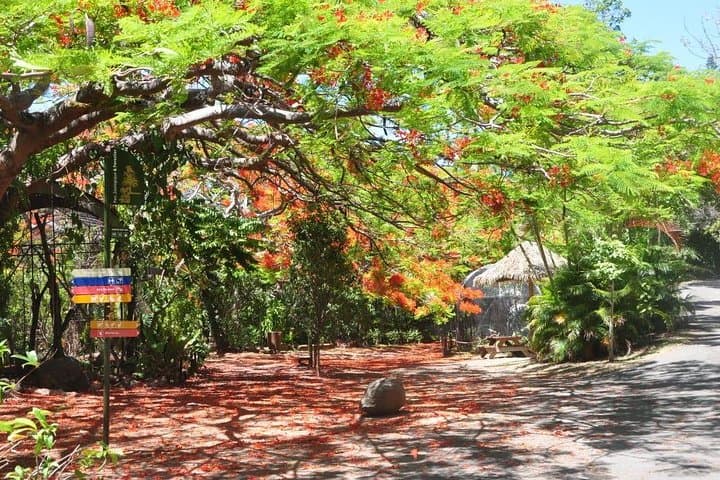
Morning light filters through low-canopy dry forest as visitors step into Nouméa’s Zoological and Forestry Park. The air smells faintly of araucaria resin and salt from the bay below; trails curve past cactus beds and palm groves, and an open terrace frames a broad view of Nouméa’s harbor.
Verified experiences and guided adventures in the surrounding area.
Operated by Lyvai · Nouméa, South Province
Morning light filters through low-canopy dry forest as visitors step into Nouméa’s Zoological and Forestry Park. The air smells faintly of araucaria resin and salt from the bay below; trails curve past cactus beds and palm groves, and an open terrace frames a broad view of Nouméa’s harbor.
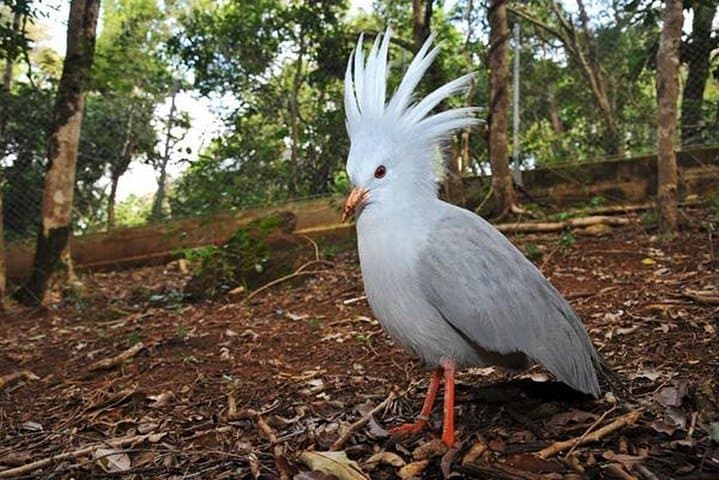
Set on roughly 34 hectares, the park was established to protect one of the last parcels of New Caledonia’s dry forest and to showcase endemic species. Geologically the site sits on weathered ultramafic soils that favor specialized plants; botanically you’ll find araucaria plantations, a dedicated palm area and a notable cactus collection. Culturally the park functions as both conservation campus and public green space—home to the kagu (cagou), Caledonian crow, flying fox and the giant gecko of Leach among more than 700 live specimens.
Practicalities are straightforward: this is an unguided visit with included transfers (common for cruise passengers), paper-ticket admission and flexible on-site time—most visitors spend 1–3 hours. Paths move between shaded boardwalks and compacted earth; many vantage points look back to the city and bays. Wildlife viewing is best in cooler morning hours when birds are active; late morning you’ll trade animal activity for clearer panoramas.
Plan for sun and variable showers, respect enclosures, and allow extra time for the lookout terraces. The park is accessible for strollers and wheelchairs, educational for families, and practical for independent travelers who want a concentrated encounter with New Caledonia’s endemic flora and fauna.
easy.
1–3 hours.
Suitable for most fitness levels; light walking on mostly accessible paths with occasional slopes.
No—this admission package includes transfers and park entry but not a guided tour; interpretive signs are onsite.
Visitors can stay as long as they like; typical visits range from 1 to 3 hours depending on interest in exhibits and viewpoints.
Yes—paths and transport options are listed as wheelchair- and stroller-accessible, with most main areas reachable.
Yes—this package is offered when cruise ships are docked; shuttle options commonly run from about 10:30 a.m. with a last return near 2:00 p.m.
The park was created to conserve one of Nouméa’s remaining dry-forest parcels and to assemble living collections of New Caledonia’s endemic species across 34 hectares.
The facility runs captive-breeding and education programs for endangered endemics and manages visitor access to reduce disturbance to fragile dry-forest habitat.
Lyvai operates guided outdoor trips and adventures with an emphasis on safety, stewardship, and memorable experiences.
Morning light filters through low-canopy dry forest as visitors step into Nouméa’s Zoological and Forestry Park. The air smells faintly of araucaria resin and salt from the bay below; trails curve past cactus beds and palm groves, and an open terrace frames a broad view of Nouméa’s harbor.
Morning light filters through low-canopy dry forest as visitors step into Nouméa’s Zoological and Forestry Park. The air smells faintly of araucaria resin and salt from the bay below; trails curve past cactus beds and palm groves, and an open terrace frames a broad view of Nouméa’s harbor.
Set on roughly 34 hectares, the park was established to protect one of the last parcels of New Caledonia’s dry forest and to showcase endemic species. Geologically the site sits on weathered ultramafic soils that favor specialized plants; botanically you’ll find araucaria plantations, a dedicated palm area and a notable cactus collection. Culturally the park functions as both conservation campus and public green space—home to the kagu (cagou), Caledonian crow, flying fox and the giant gecko of Leach among more than 700 live specimens.
Practicalities are straightforward: this is an unguided visit with included transfers (common for cruise passengers), paper-ticket admission and flexible on-site time—most visitors spend 1–3 hours. Paths move between shaded boardwalks and compacted earth; many vantage points look back to the city and bays. Wildlife viewing is best in cooler morning hours when birds are active; late morning you’ll trade animal activity for clearer panoramas.
Plan for sun and variable showers, respect enclosures, and allow extra time for the lookout terraces. The park is accessible for strollers and wheelchairs, educational for families, and practical for independent travelers who want a concentrated encounter with New Caledonia’s endemic flora and fauna.