THE ADVENTURE COLLECTIVE® · Independent discovery and booking for outdoor travel

Drive deep into São Miguel’s northeastern spine on a private full-day tour that climbs off-road to Pico da Vara, visits historic tea fields and wind-scoured viewpoints, and finishes at the waterfalls of Ribeira dos Caldeirões. Expect varied terrain, short walks, and a traditional lunch in Nordeste.
Drive deep into São Miguel’s northeastern spine on a private full-day tour that climbs off-road to Pico da Vara, visits historic tea fields and wind-scoured viewpoints, and finishes at the waterfalls of Ribeira dos Caldeirões. Expect varied terrain, short walks, and a traditional lunch in Nordeste.
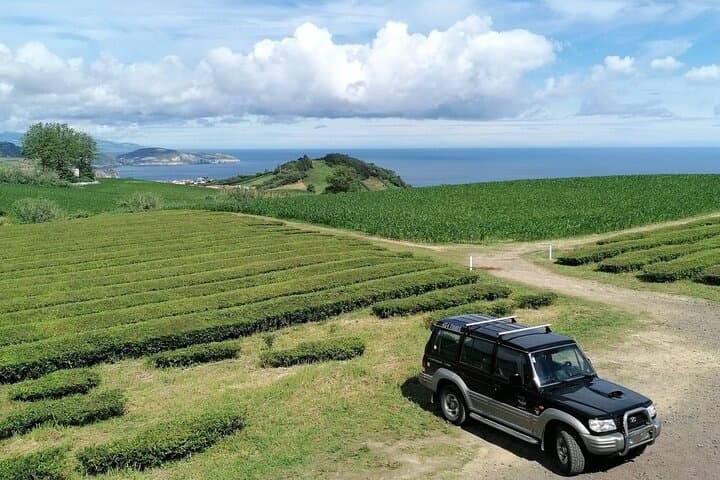
You step out of a low-slung Jeep onto a gravel ridge and the Atlantic immediately presses against the cliffs, salt on the wind and the scrub smelling of wet stone. The road climbs through a stand of pines and endemic laurel; fog flirts with the summit and then clears to reveal a serrated coastline that feels older than the maps.
Verified experiences and guided adventures in the surrounding area.
Operated by Frigate Tours Azores · Nordeste, Azores
You step out of a low-slung Jeep onto a gravel ridge and the Atlantic immediately presses against the cliffs, salt on the wind and the scrub smelling of wet stone. The road climbs through a stand of pines and endemic laurel; fog flirts with the summit and then clears to reveal a serrated coastline that feels older than the maps.
This full-day loop through Nordeste traces volcanic valleys and human stories: from the 15th-century landing at Povoação to the island’s industrial-era tea plantations still operating since 1883. Geology writes the route — basalt cones, scoured cols, and deep river gorges carved by old eruptions — and you’ll pass geothermal vents that still sigh steam from the earth.
Culturally the north coast is rural and deliberate: stone mills, small chapels, and family-run restaurants serving local cozido and fish. The Serra da Tronqueira road climbs near Pico da Vara, the island’s highest point, where laurel forest shelters the rare Azores bullfinch.
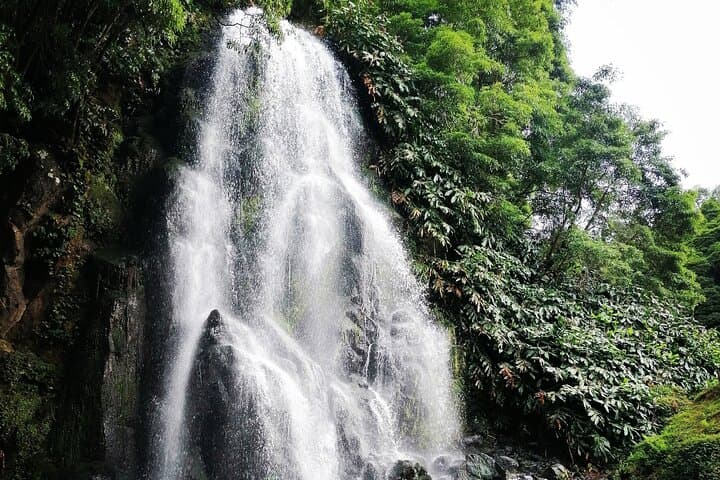
Practical guide: the day is long (expect 8–10 hours), mostly by private 4x4 on dirt tracks with short walks and viewpoint stops. Bring layered waterproofs; weather shifts quickly at elevation. Photography windows are frequent — have a charged battery and a lightweight tripod if you like long exposures of waterfalls. Plan for a sit-down lunch in Nordeste village; restroom stops are limited en route. Respect marked trails in protected areas and leave no trace: these slopes recover slowly. By afternoon the tour winds down along the Ribeira dos Caldeirões, where watermills and falls slow the pace and the island’s quieter rhythms reassert themselves.
moderate.
8–10 hours.
Suitable for travelers with light to moderate fitness; involves periods of vehicle travel with short uphill and uneven walks.
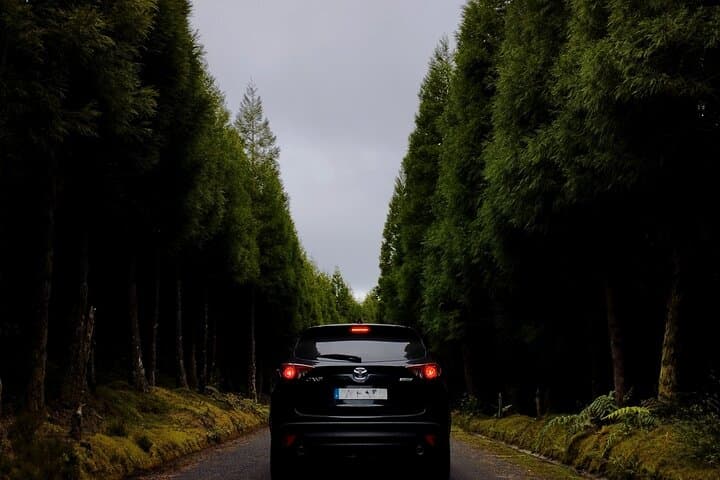
Pickup is arranged in advance (usually Ponta Delgada); the tour uses a marked black/blue Jeep or SUV from the local operator.
No sustained hikes are required; most stops involve short, uneven walks and brief uphill sections to viewpoints.
Lunch is at a traditional local restaurant; most dietary needs can be accommodated with advance notice when booking.
Yes, but heavy rain or high winds may force route changes or cancellations for safety; operators may use coastal alternatives if tracks are impassable.
Nordeste and nearby Povoação are among the earliest settled parts of São Miguel (15th century); the area preserves watermills and agricultural practices dating back centuries.
Much of the Serra da Tronqueira and Pico da Vara area is protected; stay on designated roads and trails to avoid damaging fragile laurel forest and endemic species.
Frigate Tours Azores operates guided outdoor trips and adventures with an emphasis on safety, stewardship, and memorable experiences.

You step out of a low-slung Jeep onto a gravel ridge and the Atlantic immediately presses against the cliffs, salt on the wind and the scrub smelling of wet stone. The road climbs through a stand of pines and endemic laurel; fog flirts with the summit and then clears to reveal a serrated coastline that feels older than the maps.
You step out of a low-slung Jeep onto a gravel ridge and the Atlantic immediately presses against the cliffs, salt on the wind and the scrub smelling of wet stone. The road climbs through a stand of pines and endemic laurel; fog flirts with the summit and then clears to reveal a serrated coastline that feels older than the maps.
This full-day loop through Nordeste traces volcanic valleys and human stories: from the 15th-century landing at Povoação to the island’s industrial-era tea plantations still operating since 1883. Geology writes the route — basalt cones, scoured cols, and deep river gorges carved by old eruptions — and you’ll pass geothermal vents that still sigh steam from the earth.
Culturally the north coast is rural and deliberate: stone mills, small chapels, and family-run restaurants serving local cozido and fish. The Serra da Tronqueira road climbs near Pico da Vara, the island’s highest point, where laurel forest shelters the rare Azores bullfinch.
Practical guide: the day is long (expect 8–10 hours), mostly by private 4x4 on dirt tracks with short walks and viewpoint stops. Bring layered waterproofs; weather shifts quickly at elevation. Photography windows are frequent — have a charged battery and a lightweight tripod if you like long exposures of waterfalls. Plan for a sit-down lunch in Nordeste village; restroom stops are limited en route. Respect marked trails in protected areas and leave no trace: these slopes recover slowly. By afternoon the tour winds down along the Ribeira dos Caldeirões, where watermills and falls slow the pace and the island’s quieter rhythms reassert themselves.