THE ADVENTURE COLLECTIVE® · Independent discovery and booking for outdoor travel

Explore Nizwa’s imposing 17th‑century fort and the lively souq in a guided day tour that blends history, local craft, and market life. Practical tips and local insights help you plan for heat, walking, and authentic encounters.
Explore Nizwa’s imposing 17th‑century fort and the lively souq in a guided day tour that blends history, local craft, and market life. Practical tips and local insights help you plan for heat, walking, and authentic encounters.
You step from the air‑conditioned vehicle into a sunlit courtyard where stone keeps a cool memory of centuries; the round tower of Nizwa Fort rises, its slit windows watching the souq like an old guardian.
Verified experiences and guided adventures in the surrounding area.
Operated by LocalGuide · Nizwa, Ad Dakhiliyah
You step from the air‑conditioned vehicle into a sunlit courtyard where stone keeps a cool memory of centuries; the round tower of Nizwa Fort rises, its slit windows watching the souq like an old guardian.
The fort, largely rebuilt in the 17th century under Omani Imamate rule, sits on an older settlement that made Nizwa a center of trade, learning and date commerce for the interior. The surrounding plain drains toward the Hajjar foothills; the local falaj irrigation channels—ancient engineered lifelines—still pulse quietly beneath market stalls.
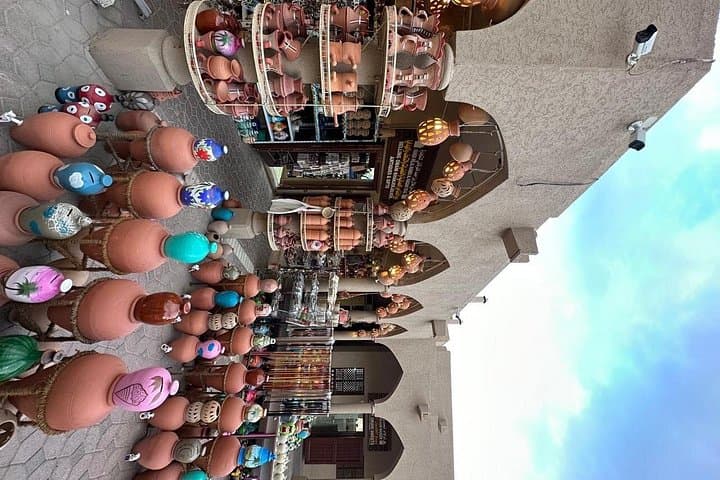
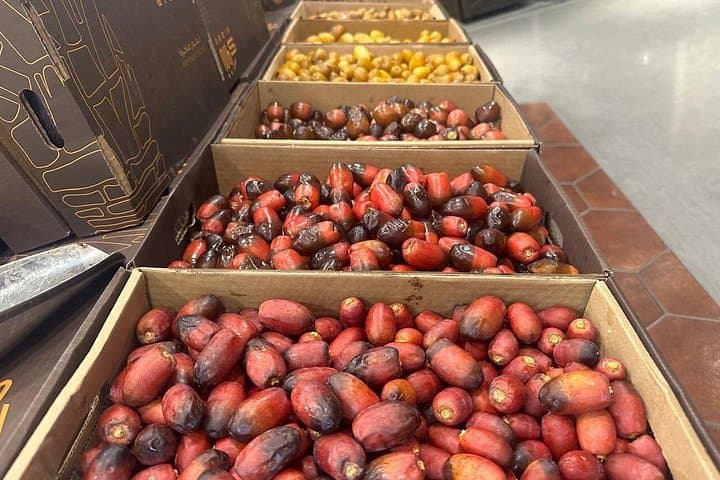
Culture here is tactile: merchants unroll woven mats, dates sit stacked in dark, honeyed rows, and artisans hammer silver into khanjars and jewelry. Geologically, the area is limestone and conglomerate folded down from the Hajjar range; weathered stone and compacted earth give the town its warm ochre tone. Local guides link these threads—ecology, irrigation, architecture—so the visit reads as both social history and practical engineering.
Practical guidance: plan for 8–11 hours if coming from Muscat, and arrive early to beat midday heat and crowded souq aisles. Wear sturdy walking shoes for uneven fort ramps and narrow souq paths, and carry at least 1–2 liters of water per person. Bring cash for small vendors and modest bargaining skills; photography is common but ask before shooting people. Respect conservative dress codes—cover shoulders and knees in public spaces—and leave room in your schedule for a relaxed souq stroll and a sit‑down lunch. The experience balances living history with hands‑on market life—direct, sensory, and easy to navigate for most visitors.
easy.
8–11 hours.
Light walking ability; must be able to climb uneven stone steps and stand for short periods.
Yes—this tour includes entry to Nizwa Fort as listed in the itinerary.
The operator notes they cannot guarantee vegetarian, vegan, or gluten‑free accommodations—plan accordingly or bring snacks.
Yes—the tour is rated easy with minimal strenuous activity; however, fort ramps and steps may be challenging for limited mobility—notify at booking for assistance.
Expect roughly 1.5–2 hours each way from Muscat, depending on traffic, making the full day 8–11 hours as scheduled.
Nizwa was historically a political and commercial capital of Oman’s interior; the present fort was significantly rebuilt in the 17th century by the Omani Imamate as a defensive and administrative center.
The region relies on ancient falaj irrigation; avoid wasting water, minimize plastic, and support local handicraft vendors to sustain cultural economies.
LocalGuide operates guided outdoor trips and adventures with an emphasis on safety, stewardship, and memorable experiences.
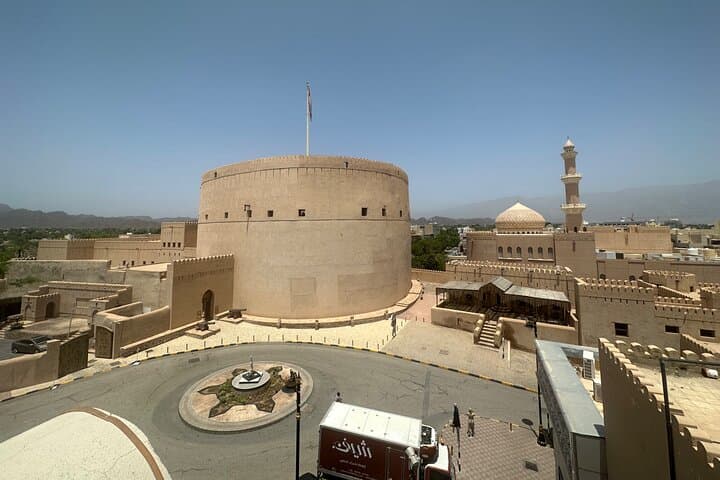
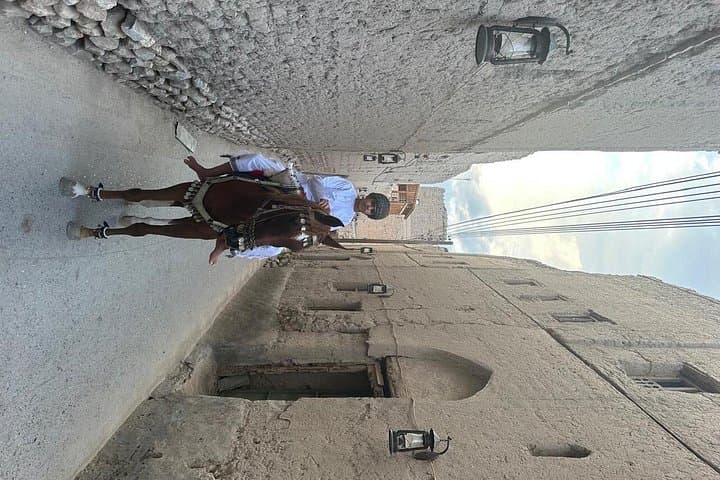
You step from the air‑conditioned vehicle into a sunlit courtyard where stone keeps a cool memory of centuries; the round tower of Nizwa Fort rises, its slit windows watching the souq like an old guardian.
You step from the air‑conditioned vehicle into a sunlit courtyard where stone keeps a cool memory of centuries; the round tower of Nizwa Fort rises, its slit windows watching the souq like an old guardian.
The fort, largely rebuilt in the 17th century under Omani Imamate rule, sits on an older settlement that made Nizwa a center of trade, learning and date commerce for the interior. The surrounding plain drains toward the Hajjar foothills; the local falaj irrigation channels—ancient engineered lifelines—still pulse quietly beneath market stalls.
Culture here is tactile: merchants unroll woven mats, dates sit stacked in dark, honeyed rows, and artisans hammer silver into khanjars and jewelry. Geologically, the area is limestone and conglomerate folded down from the Hajjar range; weathered stone and compacted earth give the town its warm ochre tone. Local guides link these threads—ecology, irrigation, architecture—so the visit reads as both social history and practical engineering.
Practical guidance: plan for 8–11 hours if coming from Muscat, and arrive early to beat midday heat and crowded souq aisles. Wear sturdy walking shoes for uneven fort ramps and narrow souq paths, and carry at least 1–2 liters of water per person. Bring cash for small vendors and modest bargaining skills; photography is common but ask before shooting people. Respect conservative dress codes—cover shoulders and knees in public spaces—and leave room in your schedule for a relaxed souq stroll and a sit‑down lunch. The experience balances living history with hands‑on market life—direct, sensory, and easy to navigate for most visitors.