THE ADVENTURE COLLECTIVE® · Independent discovery and booking for outdoor travel

A 12-day circuit from Kathmandu to the Annapurna foothills and Chitwan National Park, combining classic teahouse trekking, sunrise at Poon Hill, Pokhara’s lakefront, and a Terai wildlife safari. Ideal for travelers seeking varied landscapes and cultural stops with guide-supported logistics.
A 12-day circuit from Kathmandu to the Annapurna foothills and Chitwan National Park, combining classic teahouse trekking, sunrise at Poon Hill, Pokhara’s lakefront, and a Terai wildlife safari. Ideal for travelers seeking varied landscapes and cultural stops with guide-supported logistics.
The morning smells of simmering tea and dust from the Kathmandu ring road follow you as a driver eases through Thamel toward the Valley’s temples. In twelve days the trip shifts like a set of postcards: crowded Durbar squares, the reflective calm of Phewa Tal in Pokhara, rhododendron corridors climbing to Ghorepani, and the low, humid beat of Chitwan’s jungles where the river calls you to the riverbank.
Verified experiences and guided adventures in the surrounding area.
Operated by Travel Max Guide · Kathmandu, Bagmati Province
The morning smells of simmering tea and dust from the Kathmandu ring road follow you as a driver eases through Thamel toward the Valley’s temples. In twelve days the trip shifts like a set of postcards: crowded Durbar squares, the reflective calm of Phewa Tal in Pokhara, rhododendron corridors climbing to Ghorepani, and the low, humid beat of Chitwan’s jungles where the river calls you to the riverbank.
Historically Kathmandu Valley has been a crossroads of Newari culture and Himalayan trade routes; geologically the route moves from Kathmandu’s bowl (1,400 m) across terraced foothills into the Annapurna massif—Poon Hill rewards early-risers at 3,210 m with panoramic serrated peaks. Cultural highlights include Gurung villages like Ghandruk and Tharu communities in Chitwan, each with museums and living traditions.
Practical guidance: the itinerary covers long drives (Kathmandu–Pokhara ~6–7 hours) and daily treks of 4–6 hours with elevation gain of up to ~1,200 m on multi-day sections. Lodging alternates between hotels in cities and mountain teahouses on the trail. Guides and permits are included; pack for cold mornings above 3,000 m, expect simple teahouse meals, and allow time to acclimatize after Poon Hill. Hydration, a steady pace, and layered clothing are essential.
Logistics: airport transfers, internal bus travel between hubs, and a certified English-speaking guide are part of the package. This trip suits travelers who want structured access to classic Annapurna viewpoints, cultural stops in Pokhara and Kathmandu, plus a wildlife window in Chitwan.
moderate.
12 days.
Good general fitness with regular hill-walking; able to manage 4–6 hours of walking on consecutive days and basic stair-like ascent/descent.
Permits for the Annapurna Conservation Area (ACAP) and TIMS are required for trekking; Chitwan park entry fees and permits are also necessary—your operator handles these.
Accommodation alternates between hotels in Kathmandu and Pokhara and lodge/teahouse rooms on the Ghorepani route—simple, twin-share facilities with basic hot meals.
The Poon Hill ascent is steep but short—typically 1–1.5 hours up from Ghorepani; expect cold temperatures pre-dawn and uneven stone steps.
Chitwan offers guided safaris (jeep, canoe, and walking) where sightings of deer, monkeys, and birds are common; sightings of larger mammals like rhinoceros are possible but not guaranteed.
Kathmandu Valley served as a cultural and trade crossroads for Newar civilization; Gurung and Tharu groups have long inhabited the Annapurna and Terai regions respectively.
The Annapurna Conservation Area and Chitwan National Park rely on regulated permits and community tourism; follow leave-no-trace practices and respect local wildlife regulations.
Travel Max Guide operates guided outdoor trips and adventures with an emphasis on safety, stewardship, and memorable experiences.



The morning smells of simmering tea and dust from the Kathmandu ring road follow you as a driver eases through Thamel toward the Valley’s temples. In twelve days the trip shifts like a set of postcards: crowded Durbar squares, the reflective calm of Phewa Tal in Pokhara, rhododendron corridors climbing to Ghorepani, and the low, humid beat of Chitwan’s jungles where the river calls you to the riverbank.
The morning smells of simmering tea and dust from the Kathmandu ring road follow you as a driver eases through Thamel toward the Valley’s temples. In twelve days the trip shifts like a set of postcards: crowded Durbar squares, the reflective calm of Phewa Tal in Pokhara, rhododendron corridors climbing to Ghorepani, and the low, humid beat of Chitwan’s jungles where the river calls you to the riverbank.
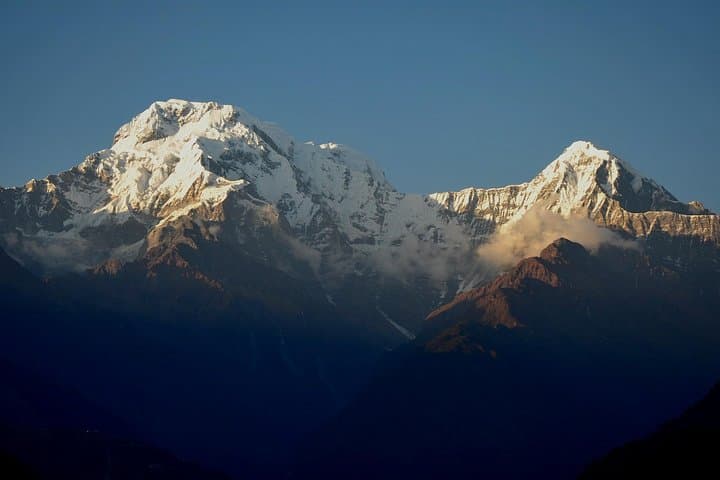
Historically Kathmandu Valley has been a crossroads of Newari culture and Himalayan trade routes; geologically the route moves from Kathmandu’s bowl (1,400 m) across terraced foothills into the Annapurna massif—Poon Hill rewards early-risers at 3,210 m with panoramic serrated peaks. Cultural highlights include Gurung villages like Ghandruk and Tharu communities in Chitwan, each with museums and living traditions.
Practical guidance: the itinerary covers long drives (Kathmandu–Pokhara ~6–7 hours) and daily treks of 4–6 hours with elevation gain of up to ~1,200 m on multi-day sections. Lodging alternates between hotels in cities and mountain teahouses on the trail. Guides and permits are included; pack for cold mornings above 3,000 m, expect simple teahouse meals, and allow time to acclimatize after Poon Hill. Hydration, a steady pace, and layered clothing are essential.
Logistics: airport transfers, internal bus travel between hubs, and a certified English-speaking guide are part of the package. This trip suits travelers who want structured access to classic Annapurna viewpoints, cultural stops in Pokhara and Kathmandu, plus a wildlife window in Chitwan.