THE ADVENTURE COLLECTIVE® · Independent discovery and booking for outdoor travel

See Nairobi from the KICC rooftop to bustling markets in one efficient half-day walk. This guided tour pairs historical context with local market stops and green-space views, ideal for first-time visitors who want a focused city introduction.
See Nairobi from the KICC rooftop to bustling markets in one efficient half-day walk. This guided tour pairs historical context with local market stops and green-space views, ideal for first-time visitors who want a focused city introduction.
Morning light slices between glass and concrete as you step into Nairobi’s compact center — a city where traffic hums and parks draw the air into quiet pockets. The tour often begins with the Kenyatta International Conference Centre rooftop, where a 360° glance stretches from civic plazas to the distant strip of Nairobi National Park, its grasslands daring you to look closer.
Verified experiences and guided adventures in the surrounding area.
Operated by Sabilom Kenya Tours & Safaris · Nairobi, Nairobi County
Morning light slices between glass and concrete as you step into Nairobi’s compact center — a city where traffic hums and parks draw the air into quiet pockets. The tour often begins with the Kenyatta International Conference Centre rooftop, where a 360° glance stretches from civic plazas to the distant strip of Nairobi National Park, its grasslands daring you to look closer.
This walk threads colonial-era landmarks and post-independence memory: Parliament and the Kenya National Archives anchor state history; Jomo Kenyatta’s mausoleum and the American Embassy Memorial Park recall national and international chapters that shaped modern Nairobi. Geologically you’re on the Nairobi Plateau at the eastern edge of the Rift Valley, the flat urban sweep punctuated by green spaces—Uhuru Park and City Park—that act as the city’s lungs.
Markets bring the city’s pulse: City Market and Maasai Market offer beadwork, textiles, and sharp bargaining lessons led by local vendors and your guide. Guides explain tribal histories, Nairobi’s rapid 20th-century growth, and how urban wildlife — from vervet monkeys to the occasional distant giraffe — continues to press against development.
Practically: dress for sun and wind, carry water, and plan for four hours with stops. Expect paved streets, crowded sidewalks, short uphill walks to viewpoints, and market browsing. Photography is welcomed but be respectful at memorials and private property. With a knowledgeable guide you’ll move efficiently through key sites, learn how Nairobi fits into Kenyan history, and finish with practical tips for the city’s museums, cafés, and onward wildlife excursions.
easy.
3–4 hours.
Suitable for most fitness levels; requires standing and walking on paved city streets for up to four hours.
The tour lasts about four hours and typically includes pickup/drop-off within Nairobi, a professional guide, and entrance fees listed in the itinerary.
Yes — the pace is gentle with paved routes and short stops; infants must sit on an adult’s lap per the operator’s policy.
Yes — guides bring you to City Market and Maasai Market where you can shop; bring small change and be prepared to bargain politely.
Dress in layers and bring a windproof jacket; the rooftop is exposed and can be noticeably cooler and breezier than street level.
Nairobi grew from a colonial railway depot into Kenya’s capital; landmarks like the Kenyatta International Conference Centre and the Kenya National Archives reflect both colonial planning and post-independence national identity.
Urban green spaces and nearby Nairobi National Park face pressure from development; stay on paths, avoid feeding wildlife, and support local conservation initiatives when possible.
Sabilom Kenya Tours & Safaris operates guided outdoor trips and adventures with an emphasis on safety, stewardship, and memorable experiences.
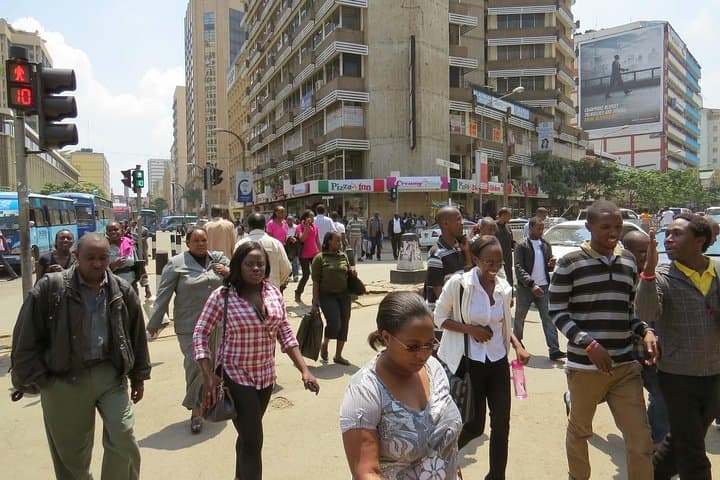


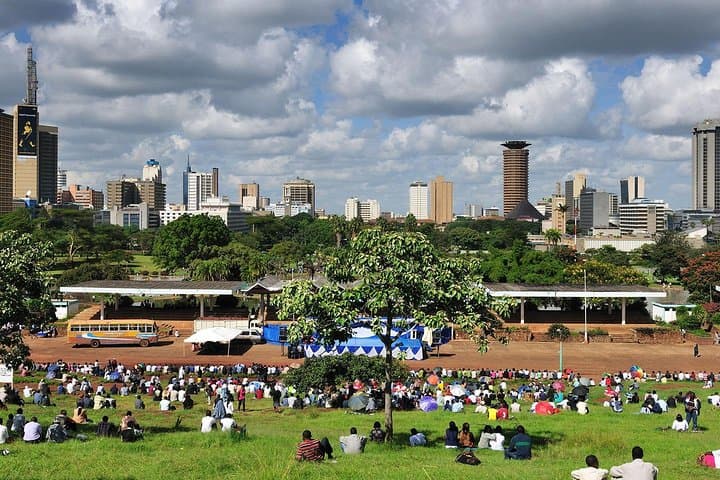
Morning light slices between glass and concrete as you step into Nairobi’s compact center — a city where traffic hums and parks draw the air into quiet pockets. The tour often begins with the Kenyatta International Conference Centre rooftop, where a 360° glance stretches from civic plazas to the distant strip of Nairobi National Park, its grasslands daring you to look closer.
Morning light slices between glass and concrete as you step into Nairobi’s compact center — a city where traffic hums and parks draw the air into quiet pockets. The tour often begins with the Kenyatta International Conference Centre rooftop, where a 360° glance stretches from civic plazas to the distant strip of Nairobi National Park, its grasslands daring you to look closer.
This walk threads colonial-era landmarks and post-independence memory: Parliament and the Kenya National Archives anchor state history; Jomo Kenyatta’s mausoleum and the American Embassy Memorial Park recall national and international chapters that shaped modern Nairobi. Geologically you’re on the Nairobi Plateau at the eastern edge of the Rift Valley, the flat urban sweep punctuated by green spaces—Uhuru Park and City Park—that act as the city’s lungs.
Markets bring the city’s pulse: City Market and Maasai Market offer beadwork, textiles, and sharp bargaining lessons led by local vendors and your guide. Guides explain tribal histories, Nairobi’s rapid 20th-century growth, and how urban wildlife — from vervet monkeys to the occasional distant giraffe — continues to press against development.
Practically: dress for sun and wind, carry water, and plan for four hours with stops. Expect paved streets, crowded sidewalks, short uphill walks to viewpoints, and market browsing. Photography is welcomed but be respectful at memorials and private property. With a knowledgeable guide you’ll move efficiently through key sites, learn how Nairobi fits into Kenyan history, and finish with practical tips for the city’s museums, cafés, and onward wildlife excursions.