THE ADVENTURE COLLECTIVE® · Independent discovery and booking for outdoor travel

Redeem one mobile pass to visit 10+ museums, Civil Rights Trail sites, a zoo and a vineyard across Montgomery, Selma and Tuskegee. Plan 1–5 days to see highlights like the Alabama State Capitol, Edmund Pettus Bridge and the Rosa Parks Museum.
Redeem one mobile pass to visit 10+ museums, Civil Rights Trail sites, a zoo and a vineyard across Montgomery, Selma and Tuskegee. Plan 1–5 days to see highlights like the Alabama State Capitol, Edmund Pettus Bridge and the Rosa Parks Museum.
You step off the sidewalk and the city exhales history: the Capitol’s white dome holds the hush of speeches and the bootprints of marches, while the Alabama River glints and dares you to follow the riverfront toward the Edmund Pettus Bridge.
Verified experiences and guided adventures in the surrounding area.
Operated by Alabama Tourism · Montgomery, Alabama
You step off the sidewalk and the city exhales history: the Capitol’s white dome holds the hush of speeches and the bootprints of marches, while the Alabama River glints and dares you to follow the riverfront toward the Edmund Pettus Bridge.
This multi-attraction pass strings together Montgomery’s political landmarks, Selma’s protest ground, and Tuskegee’s complicated legacy. Walk where the Selma-to-Montgomery march finished; stand near the Civil Rights Memorial by Maya Lin and feel the names reverberate. Inside the Museum of Alabama, geology and prehistory meet agricultural and industrial change—the soils and rivers that shaped settlement patterns are visible in exhibits that explain how the landscape informed economy and conflict.
Cultural notes: Montgomery’s music scene echoes Hank Williams’ country roots, Cloverdale’s Fitzgerald house captures Jazz Age literary life, and small vineyards outside town offer Southern tasting-room hospitality. The Tuskegee History Center reframes medical and military history side by side, from the Tuskegee Airmen to ethical reckoning.
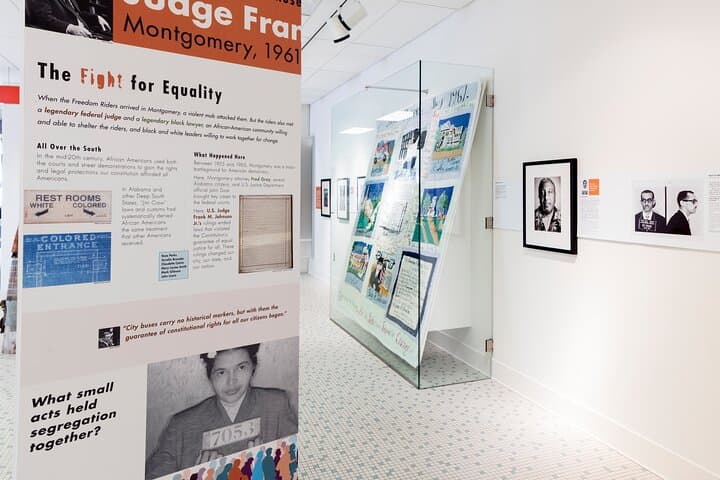
Practical guidance: the pass is mobile-first—redeem at your first stop. Plan one to five days depending on depth; prioritize the Freedom Riders Museum and Edmund Pettus Bridge early for smaller crowds and cooler light for photos. Wear sturdy walking shoes for uneven historic sidewalks, carry water, and allow transit time between Selma and Montgomery (about 50 miles). Accessibility varies by site—call ahead for timed experiences. This pass is a compact, self-directed way to connect civic history, science exhibits, live music heritage, and wildlife encounters across central Alabama.
easy.
1–5 days.
Suitable for most fitness levels; expect multiple short walks and standing during exhibits.
The pass is designed for self-paced visits; typical use spans one to five days depending on how many sites you wish to visit.
No—this is a mobile-first pass. You’ll receive a link by text or email; present it at your first attraction to redeem.
No—transport is not included. Many sites are within Montgomery but Selma and Tuskegee require driving (or arranged transfers).
Many participating sites list wheelchair access, but accessibility details vary—contact individual venues ahead for specifics and accommodations.
Montgomery was the first capital of the Confederacy and later became focal in the Civil Rights Movement; the Capitol lawn is where the Selma-to-Montgomery march concluded in 1965.
Historic preservation and riverfront stewardship are priorities—stay on marked paths at outdoor memorials and support institutions that invest in accessibility and education.
Alabama Tourism operates guided outdoor trips and adventures with an emphasis on safety, stewardship, and memorable experiences.



You step off the sidewalk and the city exhales history: the Capitol’s white dome holds the hush of speeches and the bootprints of marches, while the Alabama River glints and dares you to follow the riverfront toward the Edmund Pettus Bridge.
You step off the sidewalk and the city exhales history: the Capitol’s white dome holds the hush of speeches and the bootprints of marches, while the Alabama River glints and dares you to follow the riverfront toward the Edmund Pettus Bridge.
This multi-attraction pass strings together Montgomery’s political landmarks, Selma’s protest ground, and Tuskegee’s complicated legacy. Walk where the Selma-to-Montgomery march finished; stand near the Civil Rights Memorial by Maya Lin and feel the names reverberate. Inside the Museum of Alabama, geology and prehistory meet agricultural and industrial change—the soils and rivers that shaped settlement patterns are visible in exhibits that explain how the landscape informed economy and conflict.
Cultural notes: Montgomery’s music scene echoes Hank Williams’ country roots, Cloverdale’s Fitzgerald house captures Jazz Age literary life, and small vineyards outside town offer Southern tasting-room hospitality. The Tuskegee History Center reframes medical and military history side by side, from the Tuskegee Airmen to ethical reckoning.
Practical guidance: the pass is mobile-first—redeem at your first stop. Plan one to five days depending on depth; prioritize the Freedom Riders Museum and Edmund Pettus Bridge early for smaller crowds and cooler light for photos. Wear sturdy walking shoes for uneven historic sidewalks, carry water, and allow transit time between Selma and Montgomery (about 50 miles). Accessibility varies by site—call ahead for timed experiences. This pass is a compact, self-directed way to connect civic history, science exhibits, live music heritage, and wildlife encounters across central Alabama.