THE ADVENTURE COLLECTIVE® · Independent discovery and booking for outdoor travel

Join a guided, three-hour walk through a UNESCO-linked research area outside Polonnaruwa to observe toque macaques and grey langurs. Learn primate behavior from a naturalist while following clear safety rules and staying on gentle forest paths.
Join a guided, three-hour walk through a UNESCO-linked research area outside Polonnaruwa to observe toque macaques and grey langurs. Learn primate behavior from a naturalist while following clear safety rules and staying on gentle forest paths.
You step off the shaded track and into a smaller world of chatter and movement: a troop of toque macaques threads through low branches while a grey langur perches on a sculpted rock, tail flicking as if measuring your approach. The air is warm and dry; the guide’s voice cuts a clear line through the ambient calls as they explain behavior and safety before the walk begins.
Verified experiences and guided adventures in the surrounding area.
Operated by Lakpura LLC · Polonnaruwa, North Central Province
You step off the shaded track and into a smaller world of chatter and movement: a troop of toque macaques threads through low branches while a grey langur perches on a sculpted rock, tail flicking as if measuring your approach. The air is warm and dry; the guide’s voice cuts a clear line through the ambient calls as they explain behavior and safety before the walk begins.
Polonnaruwa sits in Sri Lanka’s Cultural Triangle, a region shaped by ancient irrigation works and the limestone and laterite soils of the dry zone. The research site itself operates as a living classroom—primatology meets local ecology—where Hanuman langurs and toque macaques coexist with agricultural plots and seasonal tanks. Cultural threads are visible: nearby villages, irrigation canals that date back over a millennium, and the long history of people and primates sharing resources.
Practically, expect 3 hours of mostly level walking on compact dirt paths with occasional roots and shade. The experience focuses on observation and guided interpretation rather than close contact; a safety briefing and an English-speaking naturalist are provided, and light hydration is supplied. Photo opportunities are excellent but follow the guide’s distance rules—do not feed or provoke the animals.
Timing matters: mornings often yield the most active primate behavior before midday heat. Wear sturdy closed shoes, bring sun protection and insect repellent, and carry patience—primates set the schedule. This is an accessible wildlife walk that pairs cultural context with responsible observation, ideal for travelers curious about behavior, ecology, and the living landscape around a UNESCO-listed heritage area.
easy.
3 hours.
Suitable for all fitness levels; walkers should be comfortable on uneven, low-gradient trails for a few hours.
The experience is a guided three-hour walk that includes a pre-walk safety briefing and observation time.
Guides position the group for good viewing but maintain distance to avoid disturbing the animals; feeding or touching is not permitted.
Yes—children can join if supervised; the tour is rated easy but guardians should follow guide instructions for safety around wildlife.
An English-speaking naturalist is provided; confirm language needs at booking if you require another language.
Polonnaruwa is part of Sri Lanka’s Cultural Triangle, with irrigation works and settlements dating to medieval kingdoms; the landscape today still reflects those ancient water-management practices.
The research site emphasizes non-invasive observation—do not feed or leave litter; stay on designated paths to reduce habitat disturbance and disease transmission between humans and primates.
Lakpura LLC operates guided outdoor trips and adventures with an emphasis on safety, stewardship, and memorable experiences.
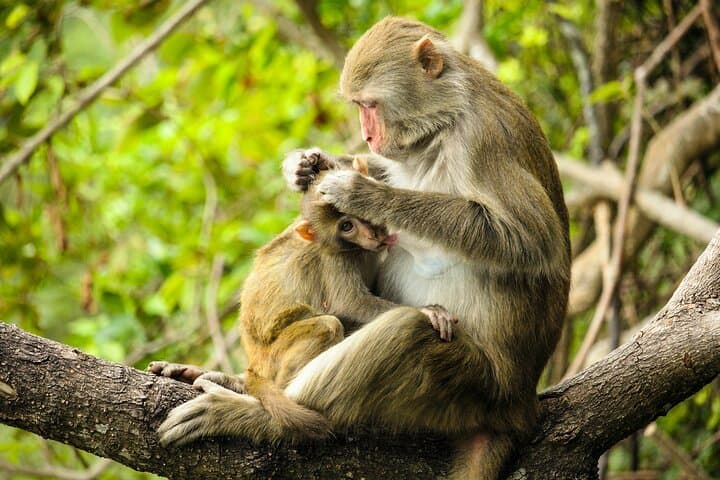
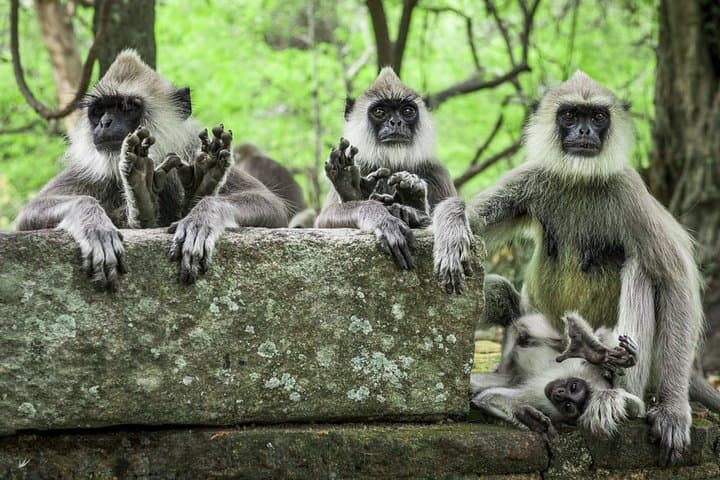
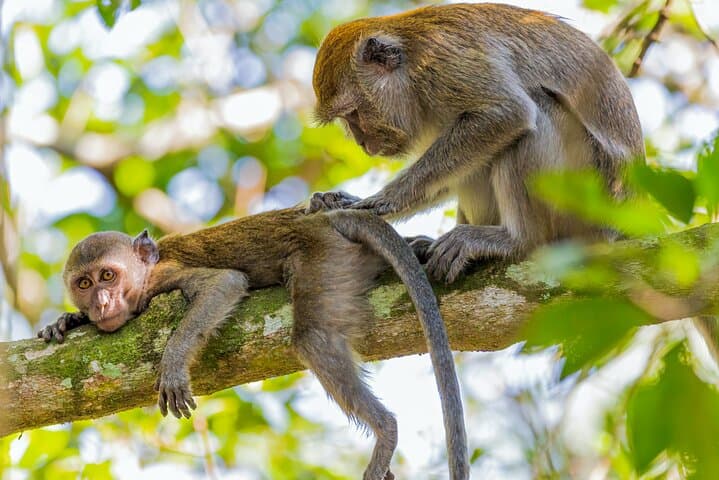
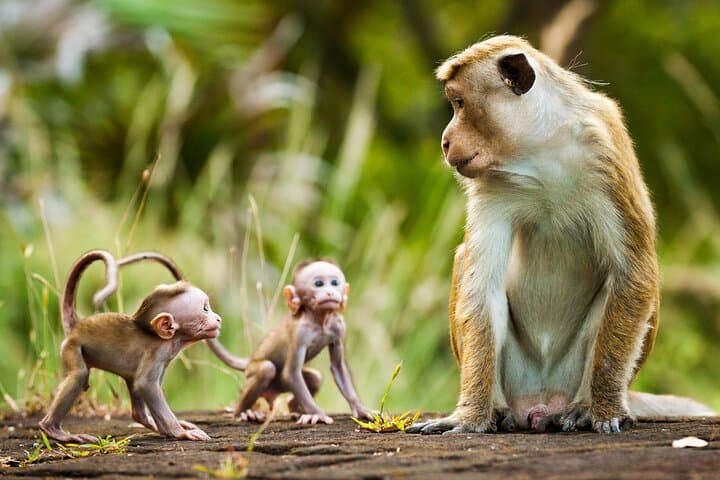
You step off the shaded track and into a smaller world of chatter and movement: a troop of toque macaques threads through low branches while a grey langur perches on a sculpted rock, tail flicking as if measuring your approach. The air is warm and dry; the guide’s voice cuts a clear line through the ambient calls as they explain behavior and safety before the walk begins.
You step off the shaded track and into a smaller world of chatter and movement: a troop of toque macaques threads through low branches while a grey langur perches on a sculpted rock, tail flicking as if measuring your approach. The air is warm and dry; the guide’s voice cuts a clear line through the ambient calls as they explain behavior and safety before the walk begins.
Polonnaruwa sits in Sri Lanka’s Cultural Triangle, a region shaped by ancient irrigation works and the limestone and laterite soils of the dry zone. The research site itself operates as a living classroom—primatology meets local ecology—where Hanuman langurs and toque macaques coexist with agricultural plots and seasonal tanks. Cultural threads are visible: nearby villages, irrigation canals that date back over a millennium, and the long history of people and primates sharing resources.
Practically, expect 3 hours of mostly level walking on compact dirt paths with occasional roots and shade. The experience focuses on observation and guided interpretation rather than close contact; a safety briefing and an English-speaking naturalist are provided, and light hydration is supplied. Photo opportunities are excellent but follow the guide’s distance rules—do not feed or provoke the animals.
Timing matters: mornings often yield the most active primate behavior before midday heat. Wear sturdy closed shoes, bring sun protection and insect repellent, and carry patience—primates set the schedule. This is an accessible wildlife walk that pairs cultural context with responsible observation, ideal for travelers curious about behavior, ecology, and the living landscape around a UNESCO-listed heritage area.