THE ADVENTURE COLLECTIVE® · Independent discovery and booking for outdoor travel

Walk on Alaska’s largest road-accessible glacier during a full-day guided summer tour from Anchorage. Spend two hours on blue ice, learn glacier geology from local guides, and return via the scenic Glenn Highway.
Walk on Alaska’s largest road-accessible glacier during a full-day guided summer tour from Anchorage. Spend two hours on blue ice, learn glacier geology from local guides, and return via the scenic Glenn Highway.
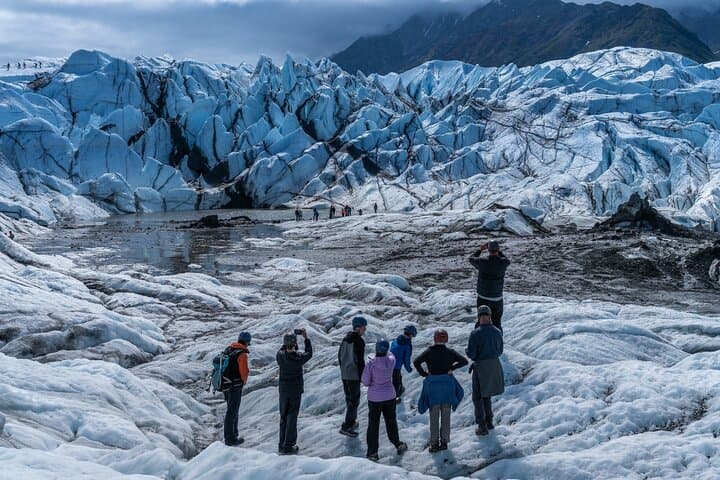
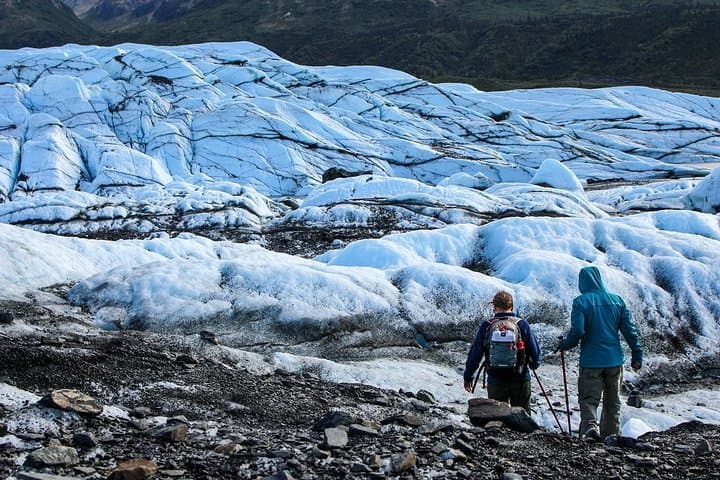
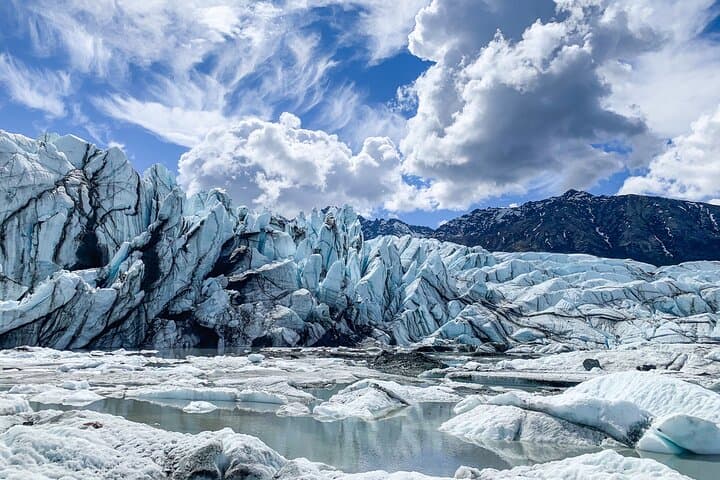
The van eases off the Glenn Highway and the trees open like a curtain. Blue ice waits beyond a low moraine—honed, striated, and suddenly visible where the valley flattens and the Matanuska River spreads out. You step out into cold air that smells faintly of mineral and meltwater; guides fit helmets and ice cleats while the glacier’s rim glints with the pale, otherworldly light only old ice can hold. For the next half-day the glacier is not a postcard but a landscape that pushes back: crevasses yaw, ridgelines rise and fall, and every footfall sounds different on the compacted ice.
Verified experiences and guided adventures in the surrounding area.
Operated by Greatland Adventures · Glacier View, Alaska
The van eases off the Glenn Highway and the trees open like a curtain. Blue ice waits beyond a low moraine—honed, striated, and suddenly visible where the valley flattens and the Matanuska River spreads out. You step out into cold air that smells faintly of mineral and meltwater; guides fit helmets and ice cleats while the glacier’s rim glints with the pale, otherworldly light only old ice can hold. For the next half-day the glacier is not a postcard but a landscape that pushes back: crevasses yaw, ridgelines rise and fall, and every footfall sounds different on the compacted ice.
This is Alaska’s largest road-accessible glacier, a 27-mile-long river of ice born high in the Chugach Mountains and fed by winter snow that compressed into blue granules over millennia. The valley itself—Matanuska—was carved by repeated advances and retreats of this glacier, leaving behind moraines and a braided river system that still dares you to read its channels. Native Athabaskan peoples traveled these valleys for generations; later miners and homesteaders used the same corridors the highway now follows. Today, Glacier View and Palmer serve as small voices of settlement against the scale of the ice.
Geology is obvious here: pressure squeezes air out of snow and forces crystal lattice to refract light deeper into the ice, which is why the glacier reads as blue. The toe—where most guided walks take place—changes yearly, so expect a dynamic route with ledges, shallow crevasses, and occasional melt pools. Guides spend roughly two hours on the ice and cover about three miles on foot; the total tour runs a full day (about eight hours) including scenic drives and a lunch stop at a local café with glacier views.
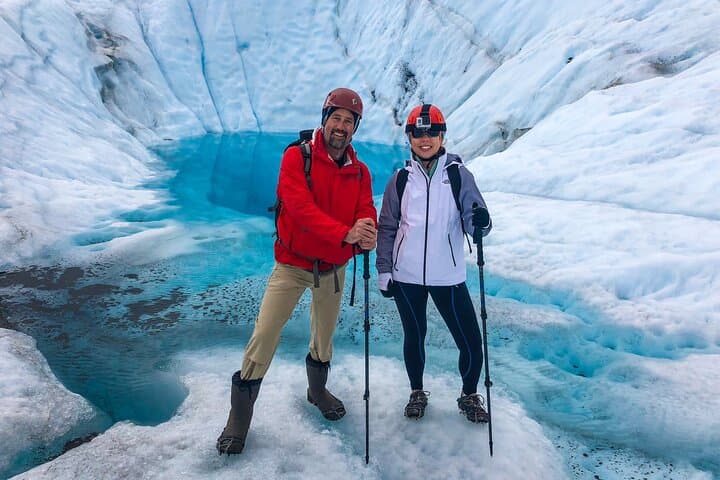
Practicalities matter. The tour provides helmets and ice cleats, but you need sturdy, stiff-soled footwear, layered clothing, warm hat and gloves, and sunglasses—the glare from blue ice is intense. Fitness needs are moderate: nimble footing and the ability to walk on uneven, slippery surfaces for a couple of hours. Weather changes fast; even in summer expect wind and brief sun. Bookings close 24 hours before departure for full refund; minimum age is 8 for shared tours. Pickup in Anchorage is available, and the drive along the Glenn Highway delivers postcard stops—pull over for river overlooks and distant peaks.
If you’re chasing a single, honest Alaskan moment—close, textured, and a little raw—walking the Matanuska is as instructive as it is humbling. Pack layers, bring a camera with polarizer, and let the glacier do the rest.
moderate.
8 hours (full day).
Moderate fitness: able to walk 2–3 miles on uneven, icy terrain and manage short climbs and descents.
Expect about 2 to 2.5 hours one-way depending on traffic and stops; the full day itinerary includes the scenic drive along the Glenn Highway.
Yes—glacier travel equipment (ice cleats and safety helmets) and the services of a professional local glacier guide are included.
The minimum age for the shared tour is 8 years old; younger participants should consider the private Matanuska Glacier option.
Tours operate in most weather; cancellations due to safety or insufficient travelers may occur—cancel at least 24 hours prior for a full refund.
Guides generally spend about two hours on the ice and walk roughly three miles, depending on conditions and daily route changes.
No technical climbing skills are required—guides lead the group and route-finding is handled by staff; basic mobility and surefootedness are needed.
The glacier carved the Matanuska Valley over thousands of years; Athabaskan peoples historically used the valley corridors and the area later supported homesteaders and miners.
The glacier is retreating with regional warming—stay on guided routes, pack out trash, and follow Leave No Trace principles to reduce impact.
Greatland Adventures operates guided outdoor trips and adventures with an emphasis on safety, stewardship, and memorable experiences.
The van eases off the Glenn Highway and the trees open like a curtain. Blue ice waits beyond a low moraine—honed, striated, and suddenly visible where the valley flattens and the Matanuska River spreads out. You step out into cold air that smells faintly of mineral and meltwater; guides fit helmets and ice cleats while the glacier’s rim glints with the pale, otherworldly light only old ice can hold. For the next half-day the glacier is not a postcard but a landscape that pushes back: crevasses yaw, ridgelines rise and fall, and every footfall sounds different on the compacted ice.
The van eases off the Glenn Highway and the trees open like a curtain. Blue ice waits beyond a low moraine—honed, striated, and suddenly visible where the valley flattens and the Matanuska River spreads out. You step out into cold air that smells faintly of mineral and meltwater; guides fit helmets and ice cleats while the glacier’s rim glints with the pale, otherworldly light only old ice can hold. For the next half-day the glacier is not a postcard but a landscape that pushes back: crevasses yaw, ridgelines rise and fall, and every footfall sounds different on the compacted ice.
This is Alaska’s largest road-accessible glacier, a 27-mile-long river of ice born high in the Chugach Mountains and fed by winter snow that compressed into blue granules over millennia. The valley itself—Matanuska—was carved by repeated advances and retreats of this glacier, leaving behind moraines and a braided river system that still dares you to read its channels. Native Athabaskan peoples traveled these valleys for generations; later miners and homesteaders used the same corridors the highway now follows. Today, Glacier View and Palmer serve as small voices of settlement against the scale of the ice.
Geology is obvious here: pressure squeezes air out of snow and forces crystal lattice to refract light deeper into the ice, which is why the glacier reads as blue. The toe—where most guided walks take place—changes yearly, so expect a dynamic route with ledges, shallow crevasses, and occasional melt pools. Guides spend roughly two hours on the ice and cover about three miles on foot; the total tour runs a full day (about eight hours) including scenic drives and a lunch stop at a local café with glacier views.
Practicalities matter. The tour provides helmets and ice cleats, but you need sturdy, stiff-soled footwear, layered clothing, warm hat and gloves, and sunglasses—the glare from blue ice is intense. Fitness needs are moderate: nimble footing and the ability to walk on uneven, slippery surfaces for a couple of hours. Weather changes fast; even in summer expect wind and brief sun. Bookings close 24 hours before departure for full refund; minimum age is 8 for shared tours. Pickup in Anchorage is available, and the drive along the Glenn Highway delivers postcard stops—pull over for river overlooks and distant peaks.
If you’re chasing a single, honest Alaskan moment—close, textured, and a little raw—walking the Matanuska is as instructive as it is humbling. Pack layers, bring a camera with polarizer, and let the glacier do the rest.