THE ADVENTURE COLLECTIVE® · Independent discovery and booking for outdoor travel

Step into a working Moroccan souk on this 2–4 hour tour of markets outside Marrakesh. Expect spice-scented air, livestock pens, and a guided introduction to regional trade rhythms—perfect for travelers wanting an authentic, compact cultural experience.
Step into a working Moroccan souk on this 2–4 hour tour of markets outside Marrakesh. Expect spice-scented air, livestock pens, and a guided introduction to regional trade rhythms—perfect for travelers wanting an authentic, compact cultural experience.
A low sun slants across packed earth as mule bells clip the morning—stalls line a dirt square, umbrellas throwing irregular shade on crates of oranges and woven trays of spices. This is a weekly souk outside Marrakesh: an economy that sets its own calendar, where names like “el had” and “khamiss” still map a town’s market day.
Verified experiences and guided adventures in the surrounding area.
Operated by Koutoubia Mosque · Marrakesh, Marrakech-Safi
A low sun slants across packed earth as mule bells clip the morning—stalls line a dirt square, umbrellas throwing irregular shade on crates of oranges and woven trays of spices. This is a weekly souk outside Marrakesh: an economy that sets its own calendar, where names like “el had” and “khamiss” still map a town’s market day.
These markets have run for centuries, shaped by trans-Saharan trade routes and the rhythms of Atlas foothill agriculture. Geologically, the plain around Marrakesh is an alluvial apron from the High Atlas; soils here support olive groves and vegetable plots that feed the stalls. Culturally, a souk is a social ledger—price, promise and gossip are exchanged alongside goats, textiles and preserved lemons. Local guides point out how market days align with weekly livestock rounds and seasonal harvests, and how trading terms carry Berber and Arabic echoes.
Practical guidance: tours last two to four hours and usually include transport and a local guide. Expect uneven, dusty ground—flat shoes are best. Bargaining is normal but polite; carry small bills and coins for produce, and ask before photographing people or livestock. Mornings are busiest and coolest; later afternoons mellow as sellers pack up.
Tips for timing and etiquette, what to bring, and how to use the market as a lens into rural Moroccan life round out the visit. The experience is vivid, tactile and accessible—an efficient window into the rhythms that keep Marrakesh’s hinterland moving.
easy.
2–4 hours.
Suitable for most fitness levels; involves standing and several short walks over uneven ground
The tour runs between two and four hours depending on the itinerary and travel time from Marrakesh.
Yes—polite haggling is common for textiles and crafts; for produce and small food items, paying the asking price is typical but you can offer a modest lower amount.
Many souks accommodate strollers and small children, though paths can be narrow and crowded—consider a baby carrier for easier mobility.
Guides commonly speak English, French and Spanish in addition to Arabic and local Berber dialects; confirm language at booking.
Weekly souks in Morocco predate modern municipalities; towns often take their name from the market day (e.g., “el had” for Sunday markets), reflecting the longstanding social role of market days.
Markets generate local waste and rely on regional agriculture—use reusable bags, avoid single-use plastics, and buy directly from producers to support small farms.
Koutoubia Mosque operates guided outdoor trips and adventures with an emphasis on safety, stewardship, and memorable experiences.
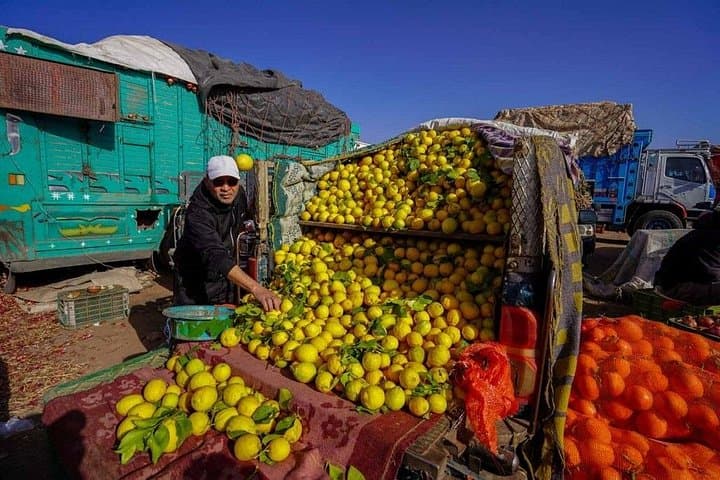
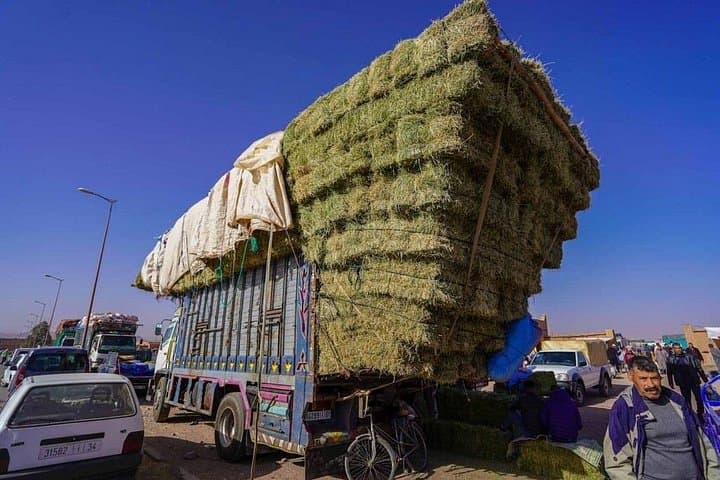
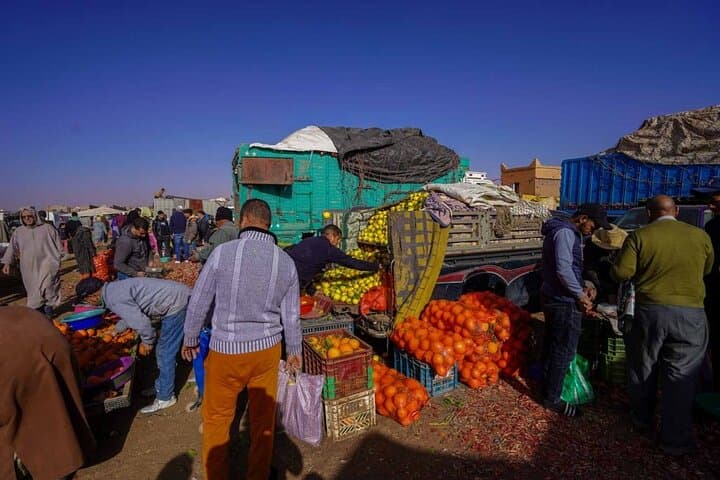
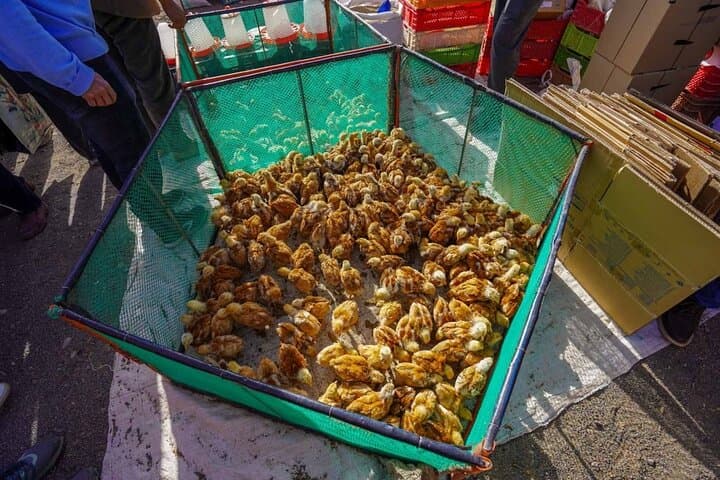
A low sun slants across packed earth as mule bells clip the morning—stalls line a dirt square, umbrellas throwing irregular shade on crates of oranges and woven trays of spices. This is a weekly souk outside Marrakesh: an economy that sets its own calendar, where names like “el had” and “khamiss” still map a town’s market day.
A low sun slants across packed earth as mule bells clip the morning—stalls line a dirt square, umbrellas throwing irregular shade on crates of oranges and woven trays of spices. This is a weekly souk outside Marrakesh: an economy that sets its own calendar, where names like “el had” and “khamiss” still map a town’s market day.
These markets have run for centuries, shaped by trans-Saharan trade routes and the rhythms of Atlas foothill agriculture. Geologically, the plain around Marrakesh is an alluvial apron from the High Atlas; soils here support olive groves and vegetable plots that feed the stalls. Culturally, a souk is a social ledger—price, promise and gossip are exchanged alongside goats, textiles and preserved lemons. Local guides point out how market days align with weekly livestock rounds and seasonal harvests, and how trading terms carry Berber and Arabic echoes.
Practical guidance: tours last two to four hours and usually include transport and a local guide. Expect uneven, dusty ground—flat shoes are best. Bargaining is normal but polite; carry small bills and coins for produce, and ask before photographing people or livestock. Mornings are busiest and coolest; later afternoons mellow as sellers pack up.
Tips for timing and etiquette, what to bring, and how to use the market as a lens into rural Moroccan life round out the visit. The experience is vivid, tactile and accessible—an efficient window into the rhythms that keep Marrakesh’s hinterland moving.