THE ADVENTURE COLLECTIVE® · Independent discovery and booking for outdoor travel

Wander narrow alleys of Marrakech’s medina with a local guide who knows the souks’ corners, craftsmen, and bargaining rhythms. This 2–3 hour private tour mixes practical shopping tips with cultural context and artisan visits.
Wander narrow alleys of Marrakech’s medina with a local guide who knows the souks’ corners, craftsmen, and bargaining rhythms. This 2–3 hour private tour mixes practical shopping tips with cultural context and artisan visits.
You step off the main square into a narrowing braid of alleys where light fractures through woven awnings and the air carries cinnamon, leather and orange blossom.
Verified experiences and guided adventures in the surrounding area.
Operated by COOKING CLASS WITH AHMED · Marrakech, Marrakech-Safi
You step off the main square into a narrowing braid of alleys where light fractures through woven awnings and the air carries cinnamon, leather and orange blossom.
A local guide threads the route with practiced ease, pointing out a copper brazier, a wall of hand-dyed rugs, and a spice stall that seems to hum. The medina of Marrakech grew from a 11th‑century kasbah into a living market—its souks are products of centuries of trade between North Africa, the Sahara and Mediterranean ports.
Geology shapes the city: the ochre clay of nearby plains lends the medina its earthy tones, while mountain-sourced dyes color textiles. Culturally, the souks are guild neighborhoods—metalworkers, dyers, carpet weavers—each alley a specialist. Listen for the rhythm of bargaining and the clink of tools; rooftop cafés offer quieter vantage points and a view of Jemaa el‑Fna’s changing theater.
Practical guidance: the tour lasts about 2–3 hours and covers uneven, busy pedestrian lanes—comfortable shoes and a small pack are recommended. Carry small bills (dirhams) for purchases and tipping, and keep valuables close in crowded stretches. Your guide can demonstrate bargaining etiquette and introduce you to artisans showing how carpets and copperwork are made.
Timing matters—mornings are cooler and less frenetic, late afternoon brings golden light for photos. Respect working spaces, ask before photographing people, and bring a reusable water bottle to cut plastic waste. Walk slowly; the souks reward attention.
easy.
2–3 hours.
Suitable for most fitness levels; involves walking, standing, and negotiating crowds.
Most tours meet near Jemaa el‑Fna or a centrally agreed point in the medina and loop through the souks, returning near the starting area; confirm exact meeting location with your operator.
Yes—bargaining is common and part of the souk culture; start lower than the asking price and negotiate politely, keeping transactions friendly.
Many small vendors accept cash only; some larger shops accept cards but bring dirhams for most purchases and tips.
The walking tour is family‑friendly but narrow alleys and crowds can make strollers difficult; discuss accessibility needs with the guide when booking.
The medina of Marrakech dates back to the 11th century and developed around caravan trade routes; souk guilds historically organized by craft and still influence market layout.
Shops increasingly use traditional, sustainably produced materials, and visitors can support conservation by minimizing plastic waste and choosing artisans who follow ethical sourcing.
COOKING CLASS WITH AHMED operates guided outdoor trips and adventures with an emphasis on safety, stewardship, and memorable experiences.

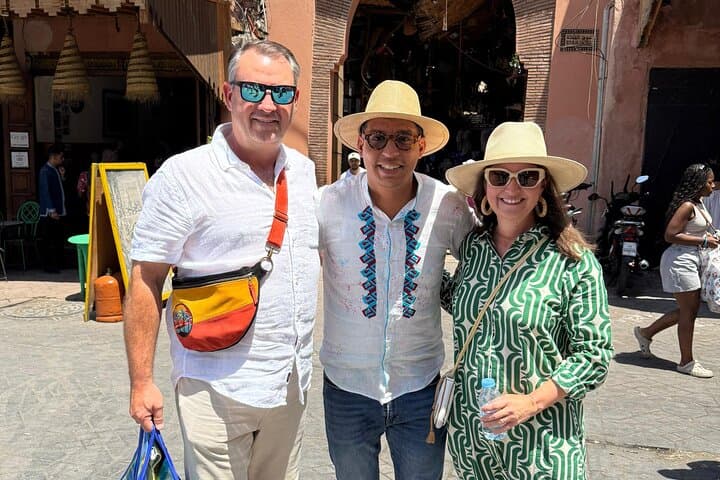
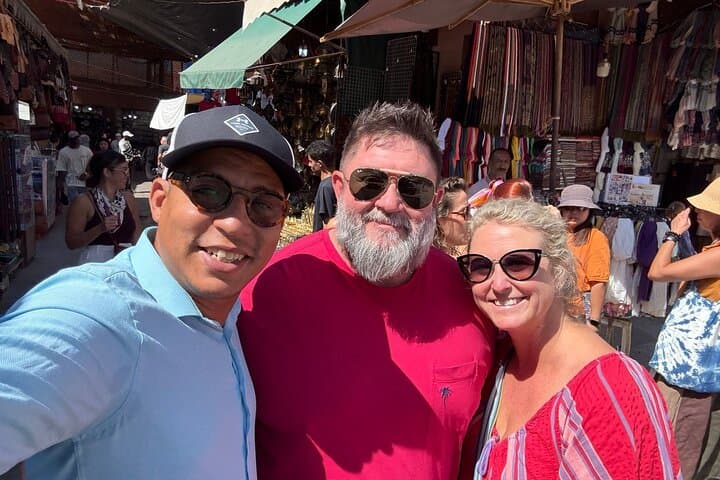
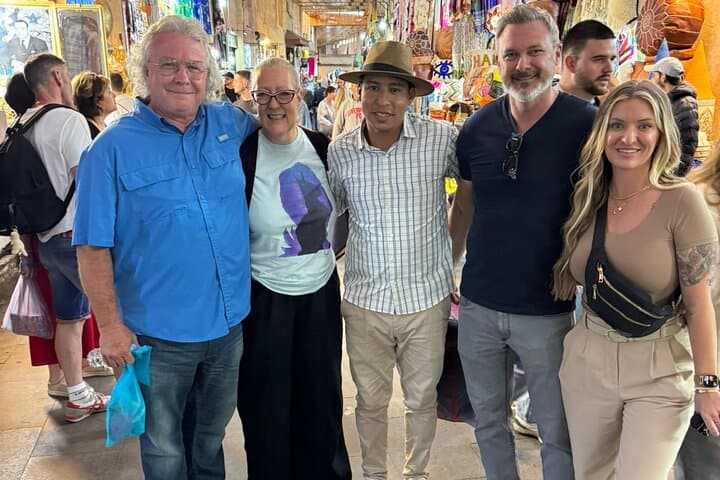
You step off the main square into a narrowing braid of alleys where light fractures through woven awnings and the air carries cinnamon, leather and orange blossom.
You step off the main square into a narrowing braid of alleys where light fractures through woven awnings and the air carries cinnamon, leather and orange blossom.
A local guide threads the route with practiced ease, pointing out a copper brazier, a wall of hand-dyed rugs, and a spice stall that seems to hum. The medina of Marrakech grew from a 11th‑century kasbah into a living market—its souks are products of centuries of trade between North Africa, the Sahara and Mediterranean ports.
Geology shapes the city: the ochre clay of nearby plains lends the medina its earthy tones, while mountain-sourced dyes color textiles. Culturally, the souks are guild neighborhoods—metalworkers, dyers, carpet weavers—each alley a specialist. Listen for the rhythm of bargaining and the clink of tools; rooftop cafés offer quieter vantage points and a view of Jemaa el‑Fna’s changing theater.
Practical guidance: the tour lasts about 2–3 hours and covers uneven, busy pedestrian lanes—comfortable shoes and a small pack are recommended. Carry small bills (dirhams) for purchases and tipping, and keep valuables close in crowded stretches. Your guide can demonstrate bargaining etiquette and introduce you to artisans showing how carpets and copperwork are made.
Timing matters—mornings are cooler and less frenetic, late afternoon brings golden light for photos. Respect working spaces, ask before photographing people, and bring a reusable water bottle to cut plastic waste. Walk slowly; the souks reward attention.