THE ADVENTURE COLLECTIVE® · Independent discovery and booking for outdoor travel

Move beyond the main square and into the medina’s quieter lanes on a private 3–4 hour shopping walk. An expert guide brings you to hidden ateliers, spice stalls and Souk Semmarin while sharing cultural context and practical shopping advice.
Move beyond the main square and into the medina’s quieter lanes on a private 3–4 hour shopping walk. An expert guide brings you to hidden ateliers, spice stalls and Souk Semmarin while sharing cultural context and practical shopping advice.
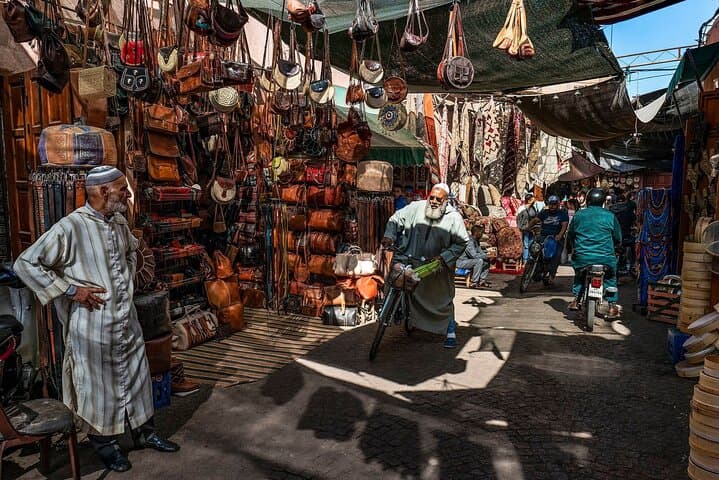
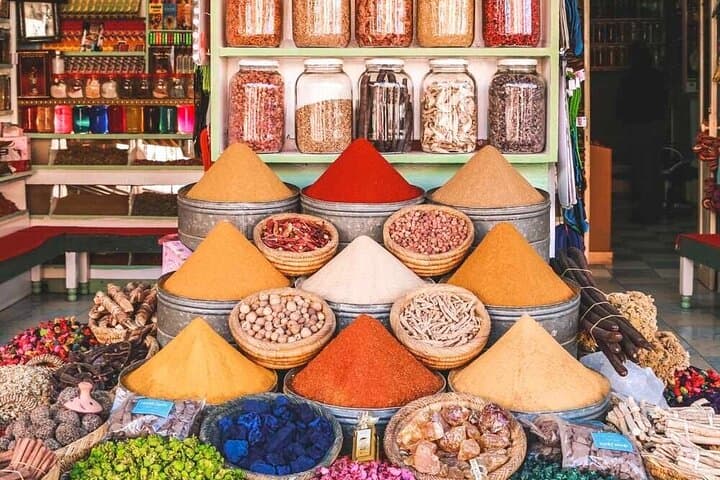
You step from the sunlight of Jemaa el-Fnaa into a cooler alley where the air smells of spices and oiled leather—shadows and chatter folding around you like a living map.
Verified experiences and guided adventures in the surrounding area.
Operated by MoroTrip · Marrakech, Marrakech-Safi
You step from the sunlight of Jemaa el-Fnaa into a cooler alley where the air smells of spices and oiled leather—shadows and chatter folding around you like a living map.
This private shopping tour threads the Old Medina of Marrakech, passing the 12th-century Koutoubia minaret and slipping into lanes where artisans have worked the same crafts for generations. The city sits on the Haouz plain at the foot of the High Atlas; its red, sun-baked clay gives buildings the warm ochre tone that marks Marrakech on the horizon.
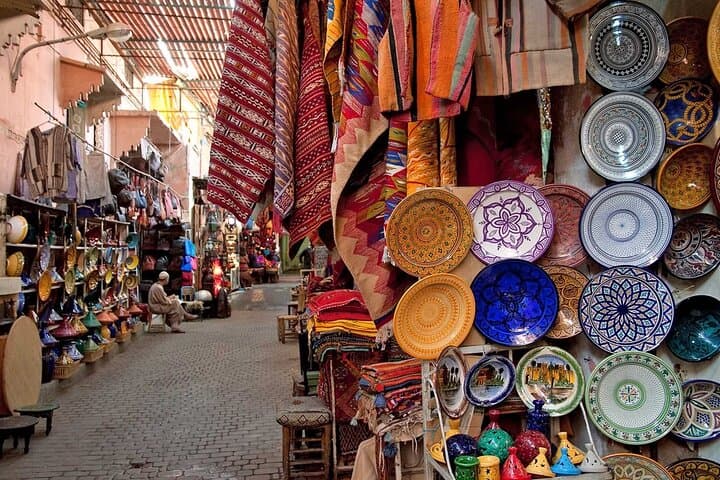
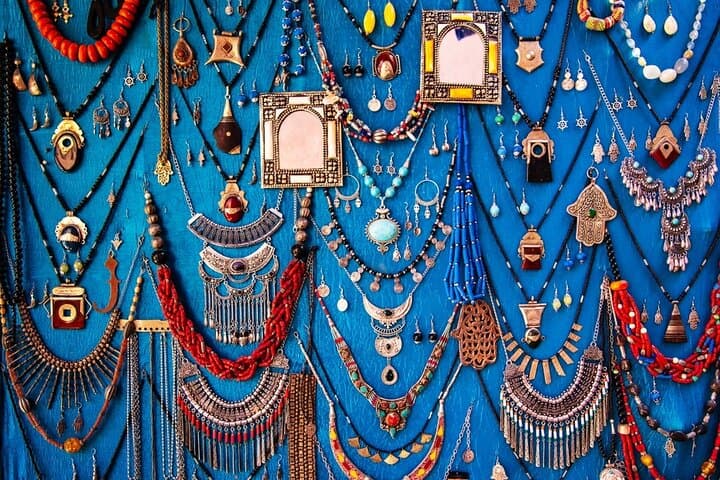
Historically the medina grew around trade routes linking sub-Saharan Africa, the Mediterranean and Iberia—souks organized by craft reflect that legacy. Expect narrow alleys lined with spice stalls, leather ateliers, metalworkers and carpet shops; artisans still use age-old techniques alongside contemporary designs.
Practical guide: this is a 3–4 hour, low-impact walking experience best done in the cooler morning or late afternoon. Bring cash in small denominations for purchases and bargaining, wear comfortable closed-toe shoes for uneven flagstones, and plan for multiple short stops—shops, demonstrations, and a guided detour to Souk Semmarin.
Tips for shopping: ask to see how an item is made, check natural dyes and stitch quality on textiles, and set a polite haggling range before you start.
Sustainability note: prioritizing shops that show workshop access and transparent sourcing helps support local craft traditions. The tour is wheelchair accessible and suitable for all fitness levels, making the medina’s rhythms and textures available to a wide range of travelers.
easy.
3–4 hours.
Suitable for most fitness levels; involves steady walking and short standing periods.
Yes—this tour is listed as wheelchair accessible with surfaces suitable for mobility devices, though some side alleys may be narrow.
Yes—private guides typically translate and advise on fair prices and customary bargaining tactics.
Many tours include free delivery of bulky purchases to your hotel; confirm specifics with your operator beforehand.
Tipping is customary; consider 5–10% for vendors if you negotiated a lower price and a modest tip for the guide depending on service quality.
The medina of Marrakech grew from 11th–12th century Almoravid and Almohad foundations; the Koutoubia minaret became a city landmark and orientation point for traders.
Support workshops that show transparent sourcing and avoid buying products made from endangered species; reducing plastic and using local services helps keep economic benefits in the community.
MoroTrip operates guided outdoor trips and adventures with an emphasis on safety, stewardship, and memorable experiences.
You step from the sunlight of Jemaa el-Fnaa into a cooler alley where the air smells of spices and oiled leather—shadows and chatter folding around you like a living map.
You step from the sunlight of Jemaa el-Fnaa into a cooler alley where the air smells of spices and oiled leather—shadows and chatter folding around you like a living map.
This private shopping tour threads the Old Medina of Marrakech, passing the 12th-century Koutoubia minaret and slipping into lanes where artisans have worked the same crafts for generations. The city sits on the Haouz plain at the foot of the High Atlas; its red, sun-baked clay gives buildings the warm ochre tone that marks Marrakech on the horizon.
Historically the medina grew around trade routes linking sub-Saharan Africa, the Mediterranean and Iberia—souks organized by craft reflect that legacy. Expect narrow alleys lined with spice stalls, leather ateliers, metalworkers and carpet shops; artisans still use age-old techniques alongside contemporary designs.
Practical guide: this is a 3–4 hour, low-impact walking experience best done in the cooler morning or late afternoon. Bring cash in small denominations for purchases and bargaining, wear comfortable closed-toe shoes for uneven flagstones, and plan for multiple short stops—shops, demonstrations, and a guided detour to Souk Semmarin.
Tips for shopping: ask to see how an item is made, check natural dyes and stitch quality on textiles, and set a polite haggling range before you start.
Sustainability note: prioritizing shops that show workshop access and transparent sourcing helps support local craft traditions. The tour is wheelchair accessible and suitable for all fitness levels, making the medina’s rhythms and textures available to a wide range of travelers.