THE ADVENTURE COLLECTIVE® · Independent discovery and booking for outdoor travel

Navigate Marrakech’s maze-like souks with a certified local guide on this four-hour private shopping tour. Discover spice stalls, artisans’ workshops and women’s cooperatives while learning bargaining customs and shipping options for larger finds.
Navigate Marrakech’s maze-like souks with a certified local guide on this four-hour private shopping tour. Discover spice stalls, artisans’ workshops and women’s cooperatives while learning bargaining customs and shipping options for larger finds.
You step out of Café de France into a pulse: vendors call across alleys, spices punch the air, and narrow lanes funnel you into the heart of the Medina.
Verified experiences and guided adventures in the surrounding area.
Operated by Amine Marrakech City Tours · Marrakech, Marrakech-Safi
You step out of Café de France into a pulse: vendors call across alleys, spices punch the air, and narrow lanes funnel you into the heart of the Medina.
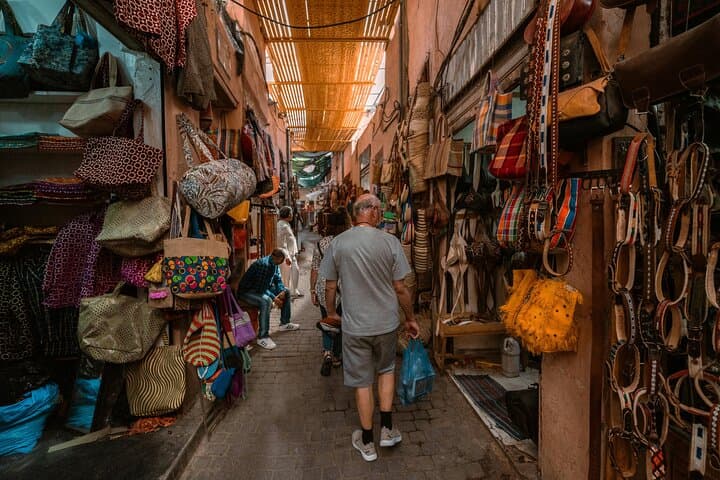
This four-hour private shopping tour threads through Jemaa el-Fnaa and the surrounding souks, led by a certified local guide who opens doors most visitors miss. The route moves from the spice stalls—where saffron, cumin and preserved lemons create an almost tactile map of Moroccan cuisine—to cooperatives where women weave tribal rugs and artisans hammer copper lanterns in back-alley workshops.
Marrakech’s Medina dates to the 11th century; its markets grew from trans-Saharan trade routes that brought goods, techniques and tastes across North Africa. The city’s red-earth walls and nearby plain sit on alluvial soils of the Haouz basin, while the High Atlas on the horizon frames centuries of craft traditions and urban growth.
Expect bargaining to be part of the rhythm: your guide demonstrates local etiquette, suggests fair starting prices, and helps vet quality. The experience mixes sensory discovery with cultural context—learn how argan is pressed, why leather is dyed the way it is, and how shipping arrangements work for larger purchases.
Practical notes: wear comfortable closed shoes for uneven flagstones, bring small-denomination Moroccan dirhams for purchases, and schedule tours for early morning or late afternoon to avoid mid-day heat. Hydrate and leave room in luggage for fragile items—your guide can advise packaging and shipping. A smart, calm approach turns a busy market into a productive, memorable shopping day.
easy.
4 hours.
Suitable for most fitness levels; requires standing and walking on uneven surfaces for several hours.
Yes — the certified local guide demonstrates polite bargaining techniques, suggests fair prices and can intervene if you need assistance.
Small vendors typically accept cash only; some workshops and galleries accept cards—bring dirhams for most purchases.
The tour lists wheelchair accessibility, but narrow alleys and uneven surfaces mean accessibility can vary—confirm specific needs when booking.
Yes—many workshops offer packing and shipping options; your guide can help arrange reputable shippers and estimate costs.
The Medina of Marrakech grew around markets established in the 11th–12th centuries; souks expanded as trade routes connected the city to sub-Saharan and Mediterranean exchanges.
Support local cooperatives and buy directly from artisans when possible; avoid overpackaged items and ask about sustainable materials to reduce environmental impact.
Amine Marrakech City Tours operates guided outdoor trips and adventures with an emphasis on safety, stewardship, and memorable experiences.

You step out of Café de France into a pulse: vendors call across alleys, spices punch the air, and narrow lanes funnel you into the heart of the Medina.
You step out of Café de France into a pulse: vendors call across alleys, spices punch the air, and narrow lanes funnel you into the heart of the Medina.
This four-hour private shopping tour threads through Jemaa el-Fnaa and the surrounding souks, led by a certified local guide who opens doors most visitors miss. The route moves from the spice stalls—where saffron, cumin and preserved lemons create an almost tactile map of Moroccan cuisine—to cooperatives where women weave tribal rugs and artisans hammer copper lanterns in back-alley workshops.
Marrakech’s Medina dates to the 11th century; its markets grew from trans-Saharan trade routes that brought goods, techniques and tastes across North Africa. The city’s red-earth walls and nearby plain sit on alluvial soils of the Haouz basin, while the High Atlas on the horizon frames centuries of craft traditions and urban growth.
Expect bargaining to be part of the rhythm: your guide demonstrates local etiquette, suggests fair starting prices, and helps vet quality. The experience mixes sensory discovery with cultural context—learn how argan is pressed, why leather is dyed the way it is, and how shipping arrangements work for larger purchases.
Practical notes: wear comfortable closed shoes for uneven flagstones, bring small-denomination Moroccan dirhams for purchases, and schedule tours for early morning or late afternoon to avoid mid-day heat. Hydrate and leave room in luggage for fragile items—your guide can advise packaging and shipping. A smart, calm approach turns a busy market into a productive, memorable shopping day.