THE ADVENTURE COLLECTIVE® · Independent discovery and booking for outdoor travel

Navigate Marrakech’s Medina with a local guide on a 3–4 hour walking tour that blends history, architecture and market life. Visit Koutoubia, Bahia Palace, Madrasa Ben Youssef, and the souks before finishing at Jemaa el‑Fna with insider tips for further exploration.
Navigate Marrakech’s Medina with a local guide on a 3–4 hour walking tour that blends history, architecture and market life. Visit Koutoubia, Bahia Palace, Madrasa Ben Youssef, and the souks before finishing at Jemaa el‑Fna with insider tips for further exploration.
You step out of a shaded riad courtyard into a maze of sun-baked alleys where ochre walls hold the heat of centuries. The call to prayer echoes past the Koutoubia’s sandstone minaret as your guide threads stories about Marrakech’s rise from a 11th-century Almoravid encampment to a thriving medieval capital.
Verified experiences and guided adventures in the surrounding area.
Operated by Amayyur · Marrakech, Marrakesh-Safi
You step out of a shaded riad courtyard into a maze of sun-baked alleys where ochre walls hold the heat of centuries. The call to prayer echoes past the Koutoubia’s sandstone minaret as your guide threads stories about Marrakech’s rise from a 11th-century Almoravid encampment to a thriving medieval capital.
The walk moves deliberately: a stop at Mellah introduces Jewish-Muslim urban layers, then Bahia Palace opens like a slow, ornate reveal — carved stucco and zellij tiles that map social hierarchy in stone. Passing Madrasa Ben Youssef, you’ll notice how light falls through controlled apertures onto student chambers carved in cedar. The souks are kinetic and tactile — leatherworkers pounding hides, metalworkers shaping lamps, and stalls brimming with olives, spices, and argan oil.
A rooftop coffee break gives both shade and perspective; the square below, Jemaa el-Fna, is an organized chaos where storytellers, snake charmers and food stalls claim the late afternoon. The guide leaves you at the square with clear directions, shopping tips, and local eatery recommendations so you can continue independently.
Practicalities: expect 3–4 hours of easy walking on uneven cobbles and narrow lanes, modest hiking stamina, and frequent stops. Wear sturdy shoes, carry water, and keep small bills for purchases. Photography is welcome but ask permission in sensitive areas. This tour gives close cultural context without rushing — a compact orientation to Marrakech’s monuments, markets, and everyday rhythms that prepares you to explore the city on your own terms.
easy.
3–4 hours.
Light walking fitness; able to cover 2–4 miles on uneven, often crowded surfaces
No—admission to Bahia Palace is not included; the guide will explain its history and point out highlights from inside if you choose to pay entry on-site.
Meeting details are provided at booking; tours typically begin near Jemaa el‑Fna or Koutoubia and end in Jemaa el‑Fna with advice for onward exploration.
The tour is rated easy but involves uneven surfaces and narrow passages; it’s family-friendly, though not fully wheelchair accessible.
Tours are intimate and personalized with up to 15 travelers; confirm language availability when booking and request private arrangements if needed.
Marrakech grew rapidly after its 11th-century founding; landmarks like Koutoubia (12th century) and Bahia Palace (19th century) reflect layered Islamic and Moroccan craftsmanship.
Tourism concentrates wear on the old Medina—support local artisans, avoid single-use plastics, and follow guide advice to respect fragile historic sites.
Amayyur operates guided outdoor trips and adventures with an emphasis on safety, stewardship, and memorable experiences.
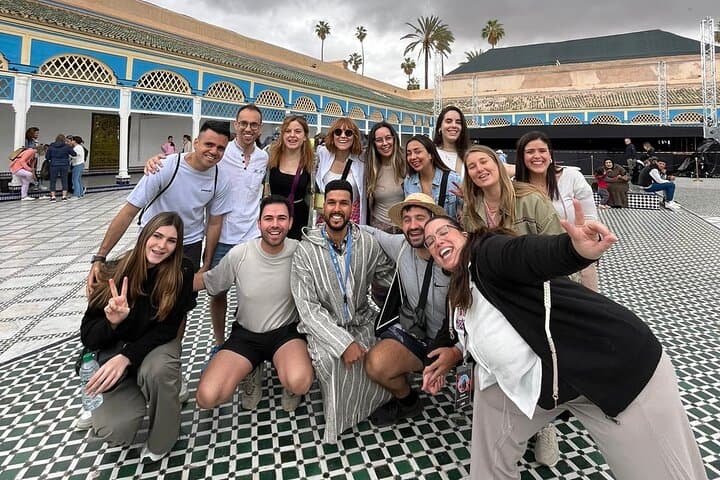


You step out of a shaded riad courtyard into a maze of sun-baked alleys where ochre walls hold the heat of centuries. The call to prayer echoes past the Koutoubia’s sandstone minaret as your guide threads stories about Marrakech’s rise from a 11th-century Almoravid encampment to a thriving medieval capital.
You step out of a shaded riad courtyard into a maze of sun-baked alleys where ochre walls hold the heat of centuries. The call to prayer echoes past the Koutoubia’s sandstone minaret as your guide threads stories about Marrakech’s rise from a 11th-century Almoravid encampment to a thriving medieval capital.
The walk moves deliberately: a stop at Mellah introduces Jewish-Muslim urban layers, then Bahia Palace opens like a slow, ornate reveal — carved stucco and zellij tiles that map social hierarchy in stone. Passing Madrasa Ben Youssef, you’ll notice how light falls through controlled apertures onto student chambers carved in cedar. The souks are kinetic and tactile — leatherworkers pounding hides, metalworkers shaping lamps, and stalls brimming with olives, spices, and argan oil.
A rooftop coffee break gives both shade and perspective; the square below, Jemaa el-Fna, is an organized chaos where storytellers, snake charmers and food stalls claim the late afternoon. The guide leaves you at the square with clear directions, shopping tips, and local eatery recommendations so you can continue independently.
Practicalities: expect 3–4 hours of easy walking on uneven cobbles and narrow lanes, modest hiking stamina, and frequent stops. Wear sturdy shoes, carry water, and keep small bills for purchases. Photography is welcome but ask permission in sensitive areas. This tour gives close cultural context without rushing — a compact orientation to Marrakech’s monuments, markets, and everyday rhythms that prepares you to explore the city on your own terms.